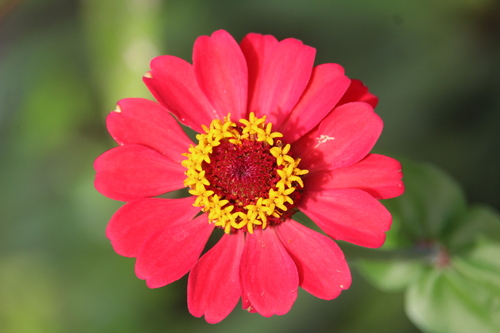
How to care for Elegant Zinnia
Watering
Elegant Zinnia (Zinnia elegans) is a fast-growing annual that wants steady moisture at the root zone while it builds leaves and flowers. Water deeply when the top 2-3 cm of soil feels dry, then let the surface dry slightly before the next watering. Keep the foliage as dry as possible, since its leaves are prone to powdery mildew in humid, still air. Plants in full sun during summer use water fastest, while those in containers dry out quicker than those in the ground.
Does it need water today?
Push a finger 2-3 cm into the soil near the stem. If it feels dry and crumbly, water now. If it feels cool and moist, wait a day. For pots, lift the container: a light pot needs water, a heavy one does not.
Water at the base of the plant in the morning so leaves dry before evening. Once flowering starts, consistent watering keeps blooms coming and reduces stress on the stems.
Overwatering
Elegant Zinnia has fleshy stems and fibrous roots that rot quickly in waterlogged soil, and wet leaves encourage fungal disease. Constantly soggy soil also limits oxygen to the roots, causing them to weaken.
Symptoms: Yellowing lower leaves, soft or blackened stem bases, wilting despite wet soil, and a sour smell from the soil.
Solutions: Stop watering and let the soil dry to the top 3 cm. Improve drainage with sandy potting mix or by raising the bed. Remove badly rotted stems and any leaves with white powdery coating, and space plants so air moves freely between them.
Underwatering
Young zinnias have shallow roots and wilt quickly when the soil dries, and heavy flowering plants consume more water than they seem to. Repeated drought stress stunts growth and reduces the number of blooms.
Symptoms: Drooping leaves that feel crisp, flowers that are small or fade early, and soil pulling away from the pot edges.
Solutions: Water thoroughly until moisture reaches the root zone, then water more often in hot weather. For dry containers, soak the root ball in a tray for 30 minutes. Add mulch around outdoor plants to slow evaporation.
Sunlight
Elegant Zinnia needs strong, direct sunlight to produce sturdy stems and a dense show of large, bright flowers. In shade, plants grow tall and thin, lean toward light, and bloom sparsely, with more disease on the leaves due to slow drying.
- Ideal: Full sun · 6-8 hours of direct sun daily
- Tolerates: Full sun, Partial sun
- Best spot in a room: At the window
- Artificial light: Indoors, a south-facing window is best, or use a full-spectrum grow light for 12-14 hours a day placed 15-30 cm above the plants. Rotate pots every few days so stems grow evenly.
Too little light
Zinnias are sun-loving annuals that rely on strong light to make the sugars needed for flowers. Low light makes their stems stretch and weakens the blooms they produce.
Symptoms: Tall, pale, floppy stems, leaves spaced far apart, few or no flower buds, and plants leaning sharply toward the nearest light source.
Solutions: Move the plant to the sunniest spot available, ideally outdoors in full sun. Add a grow light if growing indoors. Stake tall stems and pinch off weak growth so the plant's energy goes into sturdier shoots.
Too much sun
Elegant Zinnia tolerates intense sun well, but in very hot, dry climates the combined heat and light can scorch leaves and dry out the root zone rapidly. Containers in reflective spots heat up the most.
Symptoms: Brown or bleached patches on leaves, crispy leaf edges, flowers that fade quickly, and soil that dries within hours.
Solutions: In the hottest weeks, provide light afternoon shade with a shade cloth, and water more frequently. Move containers to a slightly shaded spot if the leaves scorch, and mulch the soil to keep roots cooler.
Temperature
Elegant zinnia is a warm-season annual from Mexico that thrives in full sun and heat. It grows best between 18 and 30°C and is killed by the first hard frost, so sow or plant it only after the last spring frost has passed and soil has warmed.
- Ideal: 18–30 °C
- Tolerates: 0–38 °C
- Hardiness zones: 10-11 (grown as an annual elsewhere)
Fertilizing
Elegant zinnia is a heavy bloomer and benefits from moderate feeding, but it is not a heavy feeder. Too much nitrogen produces lush leafy growth with few flowers, so favor balanced or bloom-focused products and avoid overfeeding.
- Slow-release fertilizer: Once at planting time in spring, mix a light slow-release granular fertilizer into the soil. No further slow-release feeding is needed during the season.
- Balanced liquid fertilizer such as 10-10-10 or 20-20-20, Low-nitrogen flowering formula such as a tomato or bloom booster, Compost or well-rotted manure as a gentle soil amendment, Slow-release granular fertilizer with a balanced ratio
Soil
Zinnia elegans needs sharp drainage and full sun-warmed soil; heavy, waterlogged ground invites stem rot and powdery mildew. Its roots need air, so loosen compacted soil before planting and avoid mixes that stay soggy.
- Well-drained potting mix: Peat-free compost or a general potting mix blended with about 20 percent perlite or coarse sand
- Garden loam for beds: Roughly 50 percent topsoil, 30 percent well-rotted compost, and 20 percent coarse sand or grit
- pH 6–7.5
Repotting
Zinnia elegans has a taproot and dislikes root disturbance, so move seedlings while they are small, handle them by the leaves rather than the stem, and keep the root ball intact.
- How often: Zinnia elegans is an annual that is normally sown directly or raised in cell trays and never repotted; if you grow one in a container for a short season, transplant it once when seedlings are 5-8 cm tall, then not again
- New pot: Use a container 25-30 cm wide and 25-30 cm deep for a single mature plant, with at least one drainage hole; a 10 cm cell tray or 9 cm pot is right for seedlings
- Repotting season: Spring, Summer
How to repot
- Gently squeeze the sides of the cell tray to loosen the root ball, then lift it out by the leaves
- Dig a planting hole in the new pot slightly larger than the root ball
- Set the seedling at the same depth it grew before, with the first true leaves just above the soil
- Firm the mix gently around the roots with your fingers, avoiding pressure on the stem
- Water thoroughly until it drains from the base, then keep the soil lightly moist for a week
Pruning
Use clean, sharp bypass pruners and disinfect them between plants. Remove only soft stems and spent flower heads; zinnias have brittle stems that can splinter if crushed.
Pruning season: Spring, Summer, Autumn
How to prune
- When the plant is about 20 cm tall, pinch off the top 2 to 3 cm of the main stem just above a leaf node.
- Let side shoots develop, then pinch them again if you want an even denser plant.
- Each week or two during summer, cut spent flower heads back to the first set of healthy leaves below the bloom.
- Remove yellowing or diseased leaves at the base to keep air moving through the plant.
- In autumn, after the first hard frost, cut the plants down to ground level and add the debris to your compost only if it is free of disease.
Propagation
Direct seeding · Spring, Summer
- Wait until the last spring frost has passed and night temperatures stay above 10 °C.
- Choose a sunny spot with well-drained soil; Zinnia elegans dislikes wet roots.
- Loosen the top 15 cm of soil and rake it smooth.
- Sow seeds about 6 mm deep and 15 to 30 cm apart, depending on the variety's expected height.
- Water gently so the soil stays evenly moist but not soggy.
- Expect seedlings in 5 to 10 days at warm temperatures, and thin them to the strongest plants once they are a few centimeters tall.
Indoor seed starting · Spring
- Sow seeds in pots or trays of seed-starting mix about 4 to 6 weeks before your last frost date.
- Keep the mix warm, around 21 to 24 °C, and moist.
- Place the pots under strong light or a grow light for 14 to 16 hours a day.
- Harden seedlings off over 7 to 10 days by moving them outdoors for longer periods each day.
- Transplant after frost, handling the roots gently because young zinnias resent root disturbance.
Stem cuttings · Summer
- Take a 10 cm cutting from a healthy, non-flowering shoot tip in early summer.
- Remove the lower leaves and dip the cut end in rooting hormone if you have it.
- Insert the cutting into moist perlite or a sandy mix and keep it in bright, indirect light.
- Maintain high humidity by covering the pot with a clear bag, venting it daily.
- Expect roots in about 2 to 3 weeks; cuttings often fail, so take several at once.
Sow a few seeds every two to three weeks from late spring to midsummer for flowers until frost. Deadhead spent blooms to encourage new ones, and keep foliage dry by watering at the base to reduce powdery mildew.
About Elegant Zinnia
Also known as: Common zinnia, Youth-and-old-age, Garden zinnia, Elegant zinnia
- Plant type: herb, annual flower
- Lifespan: annual
- Distribution: Native to Mexico and parts of Central America, growing in dry, open, often disturbed habitats.
- Mature height: 30-90 cm
- Bloom time: Mid-summer until the first frost
Pets · People
Pets: Safe · People: Safe. Zinnia elegans is not listed as toxic to dogs, cats, or horses by the ASPCA. Handling the foliage may irritate sensitive skin, and ingesting large amounts may cause mild stomach upset in pets.
Common problems
- Powdery mildew: White powdery coating on leaves, especially in humid, crowded conditions; choose resistant cultivars and improve airflow.
- Bacterial leaf spot: Dark, water-soaked spots on leaves in wet weather; remove affected leaves and avoid overhead watering.
- Aphids: Clusters of sap-sucking insects on young shoots and buds; wash off with water or use insecticidal soap.
- Root rot: Yellowing and collapse caused by waterlogged soil; ensure good drainage and water only when the topsoil is dry.
- Leaf-eating beetles: Cucumber beetles and Japanese beetles chew leaves and flowers; handpick or use row covers early in the season.
Uses
Zinnia elegans is grown mainly as an ornamental for bedding, borders, containers, and cut-flower production, valued for its vivid colours and long vase life. Breeders have produced dwarf, double, and cactus-flowered cultivars that have made it a staple of summer gardens worldwide.
Is it edible?
Not edible; the foliage and flowers are not used as food and should not be eaten.
History & legends
Zinnias were introduced to Europe in the late 18th century and grew into popular garden flowers during the 19th century, especially after breeders developed double forms in Germany and France. In Mexico, the plant has long been a part of local flower traditions, and it is widely grown for ceremonies and home gardens.
Did you know?
Zinnias were named by Johann Gottfried Zinn, a German professor of medicine and botany, and the species was sent to Europe from Mexico in the 1790s.
Frequently asked questions
How often should I water Elegant Zinnia?
every 3 days. Elegant Zinnia (Zinnia elegans) is a fast-growing annual that wants steady moisture at the root zone while it builds leaves and flowers. Water deeply when the top 2-3 cm of soil feels dry, then let the surface dry slightly before the next watering. Keep the foliage as dry as possible, since its leaves are prone to powdery mildew in humid, still air. Plants in full sun during summer use water fastest, while those in containers dry out quicker than those in the ground. Push a finger 2-3 cm into the soil near the stem. If it feels dry and crumbly, water now. If it feels cool and moist, wait a day. For pots, lift the container: a light pot needs water, a heavy one does not.
How much light does Elegant Zinnia need?
Full sun (6-8 hours of direct sun daily). Elegant Zinnia needs strong, direct sunlight to produce sturdy stems and a dense show of large, bright flowers. In shade, plants grow tall and thin, lean toward light, and bloom sparsely, with more disease on the leaves due to slow drying.
What temperature does Elegant Zinnia like?
18–30 °C. Elegant zinnia is a warm-season annual from Mexico that thrives in full sun and heat. It grows best between 18 and 30°C and is killed by the first hard frost, so sow or plant it only after the last spring frost has passed and soil has warmed.
Is Elegant Zinnia toxic to cats and dogs?
It is safe for cats and dogs. Zinnia elegans is not listed as toxic to dogs, cats, or horses by the ASPCA. Handling the foliage may irritate sensitive skin, and ingesting large amounts may cause mild stomach upset in pets.
What are the most common problems of Elegant Zinnia?
Powdery mildew: White powdery coating on leaves, especially in humid, crowded conditions; choose resistant cultivars and improve airflow. Bacterial leaf spot: Dark, water-soaked spots on leaves in wet weather; remove affected leaves and avoid overhead watering. Aphids: Clusters of sap-sucking insects on young shoots and buds; wash off with water or use insecticidal soap. Root rot: Yellowing and collapse caused by waterlogged soil; ensure good drainage and water only when the topsoil is dry. Leaf-eating beetles: Cucumber beetles and Japanese beetles chew leaves and flowers; handpick or use row covers early in the season.
When should I repot Elegant Zinnia?
Zinnia elegans is an annual that is normally sown directly or raised in cell trays and never repotted; if you grow one in a container for a short season, transplant it once when seedlings are 5-8 cm tall, then not again. Zinnia elegans has a taproot and dislikes root disturbance, so move seedlings while they are small, handle them by the leaves rather than the stem, and keep the root ball intact.
How do I propagate Elegant Zinnia?
Direct seeding, Indoor seed starting, Stem cuttings. Wait until the last spring frost has passed and night temperatures stay above 10 °C. Choose a sunny spot with well-drained soil; Zinnia elegans dislikes wet roots. Loosen the top 15 cm of soil and rake it smooth. Sow seeds about 6 mm deep and 15 to 30 cm apart, depending on the variety's expected height. Water gently so the soil stays evenly moist but not soggy. Expect seedlings in 5 to 10 days at warm temperatures, and thin them to the strongest plants once they are a few centimeters tall.
How this guide was written
Verdiss writes each guide with AI from botanical references and checks the species against iNaturalist and Plants of the World Online (Kew). Readers can rate every guide in the app.
Sources
Verdiss's information is for general guidance. Never eat or use a plant as medicine based on an app: ask a professional.