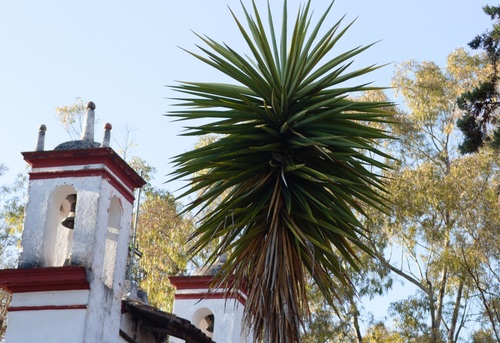
How to care for Spineless Yucca
Watering
Spineless Yucca (Yucca gigantea) is a drought-tolerant plant that stores water in its thick trunk and fleshy leaves, so it needs far less water than most houseplants. Water thoroughly when the soil has dried out deeply, then let the pot drain completely. In winter, when growth slows, water only sparingly. Always use a pot with drainage holes and a fast-draining mix such as cactus or succulent soil with added perlite or grit.
Does it need water today?
Push a finger or a wooden chopstick about 5 cm (2 inches) into the soil. If it comes out dry and clean, it is time to water. You can also lift the pot: a dry pot feels noticeably lighter than one that has just been watered. If the soil is still damp at that depth, wait a few more days.
Water less rather than more. Spineless Yucca tolerates drought far better than soggy roots, and most losses come from keeping the soil wet. When in doubt, wait one more week.
Overwatering
Spineless Yucca evolved in dry, rocky ground in Mexico and Central America, so its roots rot quickly in wet soil. Its water-storing trunk can hide the problem for weeks, which makes overwatering easy to miss until damage is advanced.
Symptoms: Soft, mushy, or dark trunk near the soil line, leaves turning yellow and dropping from the bottom, a sour or musty smell from the soil, and fungus gnats hovering around the pot.
Solutions: Stop watering immediately and move the plant to a bright, airy spot. Gently remove it from the pot, cut away any black or mushy roots with clean scissors, and let the root ball dry for several days. Repot into fresh, gritty cactus mix in a pot with drainage holes. Resume watering only when the soil is fully dry.
Underwatering
Spineless Yucca stores water in its trunk, so it handles dry spells well. Long droughts in a hot room or a very porous pot can still drain those reserves and stress the plant.
Symptoms: Leaves becoming dull, limp, or slightly wrinkled, lower leaves browning at the tips and dying, and soil pulling away from the pot edges.
Solutions: Give the plant a thorough soak using the top watering method, letting it drain fully. If the soil is bone dry and hydrophobic, set the pot in water for 30 minutes to rehydrate it. Healthy new growth should appear within a few weeks. Remove completely dead leaves, but leave green ones alone.
Sunlight
Spineless Yucca grows best in full sun and develops its strongest, most compact form with plenty of light. In bright indirect light it survives and grows slowly, but it may become leggy and lean toward the light source. It handles partial shade only for short periods and does not do well in deep shade. Acclimate it gradually when moving it outdoors so the leaves do not scorch.
- Ideal: Full sun · 6 or more hours of direct sun per day
- Tolerates: Full sun, Partial sun, Bright, indirect light
- Best spot in a room: At the window
- Artificial light: In rooms with weak winter light, use a full-spectrum LED grow light placed 20 to 40 cm (8 to 16 inches) above the plant for 12 to 14 hours a day. Rotate the pot every week or two so the trunk grows evenly.
Too little light
Light is what drives the growth of Spineless Yucca's trunk and leaf rosette. Without enough light it stretches, produces thin, pale leaves, and grows slowly, and the trunk may bend toward the window.
Symptoms: Long, pale, weak growth with wide spacing between leaves, a leaning or bent trunk, and new leaves smaller than older ones.
Solutions: Move the plant closer to the brightest window, ideally a south- or west-facing one. Add a full-spectrum grow light during darker months. Rotate the pot regularly, and in summer consider placing it outdoors in a sunny, sheltered spot.
Too much sun
Plants grown indoors behind glass or moved suddenly into strong outdoor sun can be scorched. Spineless Yucca can handle intense sun once acclimated, but the leaf tips are vulnerable when sudden changes occur.
Symptoms: Bleached, pale, or papery patches on the leaves facing the sun, brown crispy edges or tips, and leaves curling inward during the hottest part of the day.
Solutions: Move the plant a little farther from the window or filter the light with a sheer curtain during the hottest hours. When moving it outdoors, increase sun exposure over one to two weeks. Damaged leaf tissue will not recover, so trim brown tips with clean scissors if desired, but leave the rest of the leaf intact.
Temperature
Spineless Yucca (Yucca gigantea) is a warm-climate plant that thrives in heat and full sun. It tolerates brief frosts once established, but cold, wet winters are its main threat. Keep it warm during the growing season and protect it from prolonged cold below freezing.
- Ideal: 15–30 °C
- Tolerates: -5–40 °C
- Hardiness zones: 9-11
Fertilizing
Spineless Yucca grows in poor, sandy, fast-draining soil in its native range, so it needs very little feeding. Too much fertilizer, especially nitrogen, produces soft, weak growth that rots easily. Feed lightly during the warm growing season and stop completely in autumn.
- Slow-release fertilizer: Apply once a year in early spring, just as new growth begins, unless the soil is already rich in organic matter.
- Slow-release balanced granular fertilizer (such as a 10-10-10 or similar), Cactus and succulent fertilizer with moderate nitrogen, Diluted balanced liquid houseplant fertilizer, Well-rotted compost as a gentle soil amendment
Soil
Spineless Yucca (Yucca gigantea) needs soil that drains quickly after rain or watering. Its water-storing roots tolerate dry periods but rot in heavy, wet, or compacted soil.
- Cactus and succulent mix: About 50-60% mineral grit such as pumice or coarse sand, 20-30% coarse potting soil, and 10-20% perlite or horticultural charcoal.
- Loam-based potting mix with grit: Two parts standard peat-free potting soil to one part coarse sand or perlite, which keeps moisture available without holding water around the roots.
- Free-draining mineral mix for in-ground planting: Native garden soil amended with coarse sand or crushed gravel, roughly one part amendment to two parts native soil, to lift the root zone above waterlogged ground.
- pH 6–8
Repotting
Spineless Yucca (Yucca gigantea) has fleshy, water-storing roots that rot quickly in soggy soil. Use a heavy pot with a drainage hole and fast-draining mix, and repot only when the plant is actively growing and warm.
- How often: every 3-4 years, or when roots fill the pot
- New pot: Move up only one pot size (about 3-5 cm wider) at a time; Yucca gigantea develops a thick trunk and large root mass, so an oversized pot holds wet soil around the roots and invites rot.
- Repotting season: Spring, Summer
How to repot
- Lay the plant on its side or tip the pot gently and slide the root ball out. Support the trunk with one hand.
- Loosen the outer roots with your fingers. Trim any roots that are black, mushy, or smell sour using clean, sharp shears.
- Place a layer of fresh mix in the new pot so the top of the root ball sits about 2-3 cm below the rim.
- Set the plant upright, centre the trunk, and fill around the roots with mix, firming gently as you go.
- Leave the soil surface at the same level it was in the old pot. Burying the trunk can cause rot.
- Wait 5-7 days before the first watering, which lets any small root cuts heal.
Pruning
Spineless Yucca tolerates pruning well, but a cut trunk does not regrow from the same point, so make cuts where you want new branching or where you can accept losing that height. Always leave at least 10 cm of living trunk above any cut to give the plant a good chance to recover.
Pruning season: Spring, Summer
How to prune
- Remove dead, brown, or fully yellow lower leaves by cutting them close to the trunk with clean shears, without tearing the bark.
- Cut off spent flower stalks at the base once the blooms have faded, unless you want to save seed.
- To reduce height, mark the spot on the trunk about 10 to 15 cm above a leaf scar, then cut straight across with a sharp saw.
- Dust the cut surface with fungicide powder or sulfur and leave the plant in a bright, airy spot to heal.
- Water lightly for the next 2 to 3 weeks, then return to your normal watering schedule once you see new growth.
- Dispose of any diseased cuttings in the trash, not the compost, to avoid spreading rot.
Propagation
Offsets (pups) from the base · Spring, Summer
- Look for small offsets growing from the base of the Spineless Yucca, usually when they are at least 15 cm tall with some roots of their own.
- Loosen the soil around the offset with a clean hand trowel and find where it joins the parent plant.
- Cut the connection cleanly with a sharp, sterilized knife, keeping as many roots on the pup as possible.
- Let the cut end dry in a shaded, airy spot for 2 to 3 days so it forms a callus.
- Plant the offset in a 15 cm pot filled with a fast-draining cactus or succulent mix, and water lightly once.
- Keep it in bright, indirect light at 18 to 27°C and water only when the soil is fully dry, about every 2 to 3 weeks.
Stem cuttings (cane sections) · Spring, Summer
- Choose a healthy, mature trunk at least 30 cm long with a few living leaves at the top.
- Cut the trunk into sections of 10 to 15 cm, making sure each section has at least one visible growth node or leaf scar.
- Mark the top of each section with a small dot of paint or tape so you remember which end is up.
- Dust the cut ends with a fungicide powder or sulfur, then let them callus in a dry, shaded spot for 1 to 2 weeks.
- Stand each section upright, bottom end down, in moist but well-draining potting mix, burying about one third of its length.
- Place the pots in bright, indirect light at 20 to 27°C and keep the mix barely moist; new leaves usually appear within 1 to 3 months.
Seed · Spring
- Collect ripe seed capsules in autumn, then dry them and remove the flat black seeds.
- Soak the seeds in lukewarm water for 24 hours before sowing.
- Sow them about 1 cm deep in a fast-draining seed mix in a shallow tray.
- Keep the tray warm, around 24 to 27°C, and lightly moist, covered with a clear lid to hold humidity.
- Expect germination in several weeks to a few months, and move seedlings to individual pots once they have two or three true leaves.
Cuttings and offsets both need to dry before planting, because wet cut ends rot easily. Water sparingly until you see new leaf growth, since too much moisture is the most common reason Spineless Yucca cuttings fail.
About Spineless Yucca
Also known as: Spineless Yucca, Giant Yucca, Yucca de Tronco
- Plant type: tree-like shrub, succulent, monocot perennial
- Lifespan: perennial
- Distribution: Native to southern Mexico and Central America, from Oaxaca region southward through dry lowland and montane forests.
- Mature height: 3-8 m in the wild, often less in cultivation
- Bloom time: late spring to summer
Pets · People
Pets: Mildly toxic · People: Mildly toxic. Contains saponins and calcium oxalate crystals in the leaves and sap that can cause vomiting, diarrhea and mouth irritation if chewed; contact with sap may irritate the skin.
Common problems
- Root rot: Caused by waterlogged soil and slow-draining pots; the trunk may soften at the base.
- Overwatering in winter: Keeping the soil moist during cooler months leads to rot and leaf drop.
- Leaf spots: Fungal spotting appears in humid, poorly ventilated conditions; remove affected leaves.
- Scale insects: Small brown bumps on leaves and stems; wipe off with alcohol on a cotton swab.
- Leaning trunk: Tall plants grown in low light stretch and become unstable; provide more sun.
Uses
Widely grown as an ornamental landscape and container plant in warm climates. Fibers from the leaves have been used locally for cordage and basketry, and the plant is valued in xeriscape design.
Is it edible?
Flower stalks and flowers are edible when cooked, but raw parts are mildly toxic; not recommended without thorough cooking.
History & legends
Yucca species were used by Mesoamerican peoples for fibers, food and ceremonial purposes. In Mexican folk culture, yucca plants often mark boundaries of fields and homesteads.
Did you know?
Its flowers open at night in some populations and are pollinated by yucca moths, a mutualism in which the moth lays eggs in the ovary while carrying pollen.
Frequently asked questions
How often should I water Spineless Yucca?
every 21 days. Spineless Yucca (Yucca gigantea) is a drought-tolerant plant that stores water in its thick trunk and fleshy leaves, so it needs far less water than most houseplants. Water thoroughly when the soil has dried out deeply, then let the pot drain completely. In winter, when growth slows, water only sparingly. Always use a pot with drainage holes and a fast-draining mix such as cactus or succulent soil with added perlite or grit. Push a finger or a wooden chopstick about 5 cm (2 inches) into the soil. If it comes out dry and clean, it is time to water. You can also lift the pot: a dry pot feels noticeably lighter than one that has just been watered. If the soil is still damp at that depth, wait a few more days.
How much light does Spineless Yucca need?
Full sun (6 or more hours of direct sun per day). Spineless Yucca grows best in full sun and develops its strongest, most compact form with plenty of light. In bright indirect light it survives and grows slowly, but it may become leggy and lean toward the light source. It handles partial shade only for short periods and does not do well in deep shade. Acclimate it gradually when moving it outdoors so the leaves do not scorch.
What temperature does Spineless Yucca like?
15–30 °C. Spineless Yucca (Yucca gigantea) is a warm-climate plant that thrives in heat and full sun. It tolerates brief frosts once established, but cold, wet winters are its main threat. Keep it warm during the growing season and protect it from prolonged cold below freezing.
Is Spineless Yucca toxic to cats and dogs?
It is mildly toxic to cats and dogs. Contains saponins and calcium oxalate crystals in the leaves and sap that can cause vomiting, diarrhea and mouth irritation if chewed; contact with sap may irritate the skin.
What are the most common problems of Spineless Yucca?
Root rot: Caused by waterlogged soil and slow-draining pots; the trunk may soften at the base. Overwatering in winter: Keeping the soil moist during cooler months leads to rot and leaf drop. Leaf spots: Fungal spotting appears in humid, poorly ventilated conditions; remove affected leaves. Scale insects: Small brown bumps on leaves and stems; wipe off with alcohol on a cotton swab. Leaning trunk: Tall plants grown in low light stretch and become unstable; provide more sun.
When should I repot Spineless Yucca?
every 3-4 years, or when roots fill the pot. Spineless Yucca (Yucca gigantea) has fleshy, water-storing roots that rot quickly in soggy soil. Use a heavy pot with a drainage hole and fast-draining mix, and repot only when the plant is actively growing and warm.
How do I propagate Spineless Yucca?
Offsets (pups) from the base, Stem cuttings (cane sections), Seed. Look for small offsets growing from the base of the Spineless Yucca, usually when they are at least 15 cm tall with some roots of their own. Loosen the soil around the offset with a clean hand trowel and find where it joins the parent plant. Cut the connection cleanly with a sharp, sterilized knife, keeping as many roots on the pup as possible. Let the cut end dry in a shaded, airy spot for 2 to 3 days so it forms a callus. Plant the offset in a 15 cm pot filled with a fast-draining cactus or succulent mix, and water lightly once. Keep it in bright, indirect light at 18 to 27°C and water only when the soil is fully dry, about every 2 to 3 weeks.
How this guide was written
Verdiss writes each guide with AI from botanical references and checks the species against iNaturalist and Plants of the World Online (Kew). Readers can rate every guide in the app.
Sources
Verdiss's information is for general guidance. Never eat or use a plant as medicine based on an app: ask a professional.