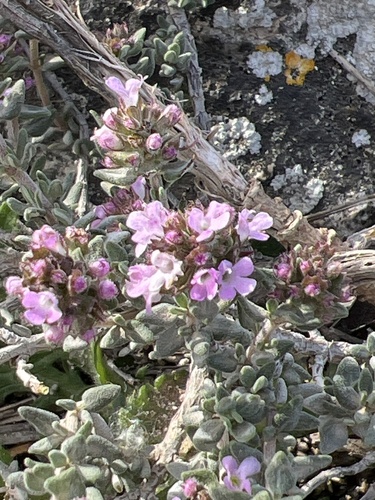
How to care for common thyme
Watering
Common thyme (Thymus vulgaris) is a Mediterranean herb adapted to dry, rocky soils, so it prefers to dry out between waterings. Water deeply when the top 2-3 cm of soil is dry, then let the pot drain completely. Never let it sit in water, as soggy roots quickly cause rot. Use a pot with drainage holes and a gritty, fast-draining mix such as cactus or herb compost blended with perlite or sand.
Does it need water today?
Push a finger 2-3 cm into the soil. If it feels dry, water thoroughly; if it feels cool and damp, wait. Lift the pot too: a light pot needs water, a heavy one does not. Thyme leaves that feel thin and slightly grey-green and wiry often signal it is ready for a drink, while yellowing, soft stems suggest you have watered too much.
Water in the morning at the base of the plant, not over the foliage, so leaves dry quickly and fungal problems stay away. In winter, indoor thyme needs much less water because growth slows and the soil stays damp longer.
Overwatering
Common thyme comes from dry Mediterranean hillsides where its roots are used to sharp drainage and air around them. Its woody, low-growing stems and fine roots suffer quickly when constantly wet, making root rot the most common cause of death for this herb.
Symptoms: Yellowing or browning leaves, a soft or blackened base of the stems, a sour or musty smell from the soil, and fungus gnats hovering around the pot.
Solutions: Stop watering immediately and let the soil dry out. Lift the plant out, trim away any black or mushy roots with clean scissors, and repot into fresh gritty compost in a pot with drainage holes. Cut back any dead stems and leave the plant in bright light until new growth appears.
Underwatering
Thyme stores little water in its small leaves and relies on regular, moderate moisture when grown in containers, where the soil dries out faster than in the ground. Because its woody stems do not wilt quickly, underwatering can go unnoticed until the plant is badly stressed.
Symptoms: Dry, crispy or brittle leaves that snap off easily, grey and shrivelled stems, a pot that feels light and soil pulling away from the sides, and slow or stalled new growth.
Solutions: Water the plant thoroughly until water drains from the base. If the soil is very dry and hydrophobic, soak the pot in a tray of water for 20-30 minutes. Prune off completely dead stems and keep the soil evenly moist but never soggy over the next few weeks while the plant recovers.
Sunlight
Common thyme (Thymus vulgaris) grows best in strong, direct sunlight, which keeps its stems compact and its essential oils concentrated for better flavour. In partial shade it becomes leggy, sparse and less aromatic. Rotate indoor pots every week or so so the plant grows evenly rather than leaning toward the light.
- Ideal: Full sun · 6-8 hours of direct sun a day
- Tolerates: Full sun, Partial sun
- Best spot in a room: At the window
- Artificial light: If natural light is weak, use a full-spectrum LED grow light placed 15-30 cm above the plant for 12-14 hours a day. Thyme indoors in winter often needs this supplement to stay healthy and bushy.
Too little light
Thyme's fine, woody growth is built for intense Mediterranean sun, so low light makes it stretch and lose its compact shape and strong aroma. Its leaves become less oily and flavourful when the plant does not get enough energy to produce its characteristic essential oils.
Symptoms: Tall, thin, floppy stems with long gaps between leaves, pale green or yellowish foliage, weak aroma, and a plant that flops over or stops producing new shoots.
Solutions: Move the plant to the sunniest south- or west-facing window, or outdoors into a sunny spot. Add a grow light if needed, and prune the leggy stems back by about one third to encourage bushy new growth.
Too much sun
Thyme tolerates strong sun well because it evolved on sunny, dry slopes, but in very hot conditions behind glass or on a paved patio its shallow roots and small pots can overheat. Heat stress is more of a problem for container plants than for thyme growing in open ground.
Symptoms: Leaves that turn bleached, pale or brown at the edges, crispy tips, and a plant that looks wilted in the afternoon even though the soil is still moist.
Solutions: Move the pot to a spot with morning sun and light afternoon shade during heatwaves, or place it slightly back from a hot south-facing window. Water in the morning to keep the roots cool, and trim any badly scorched stems once temperatures drop.
Temperature
Common thyme (Thymus vulgaris) is a Mediterranean herb that thrives in warm, sunny, well-drained conditions. It tolerates cold winters well once established, but it dislikes waterlogged roots and humid heat.
- Ideal: 10–27 °C
- Tolerates: -20–35 °C
- Hardiness zones: 5-9
Fertilizing
Common thyme needs very little feeding. Too much nitrogen produces soft, weak growth with less aroma, so feed lightly and never heavily.
- Slow-release fertilizer: Once a year in early spring, apply a light dose of slow-release fertilizer or a thin layer of compost. Skip it entirely in poor soil if growth is already vigorous.
- Balanced organic compost, Low-nitrogen slow-release granules for Mediterranean herbs, Diluted seaweed or fish emulsion with low nitrogen, Sandy, mineral-rich soil amendment
Soil
Common thyme (Thymus vulgaris) grows naturally on rocky, limestone-rich, sunny Mediterranean slopes. It needs soil that drains quickly and does not stay wet around the roots. Slightly alkaline to neutral soil suits it best, and rich, heavy, or waterlogged soil will quickly cause woody stems to rot.
- Gritty Mediterranean mix: Two parts standard potting mix, one part coarse sand or horticultural grit, and one part perlite or pumice
- Garden loam with added grit: Two parts sandy loam, one part compost, and one part fine gravel or crushed limestone chips, mixed into a raised bed or border
- Cactus or succulent mix: Commercial cactus mix, with extra perlite added if the mix looks dense; suitable for pots that are kept on the dry side
- pH 6.5–8
Repotting
Common thyme (Thymus vulgaris) is a woody, Mediterranean sub-shrub that forms a dense mat of fine roots. It needs fast-draining soil and a pot that dries out between waterings, so repot into fresh, gritty mix with good drainage.
- How often: Every 2-3 years, or when roots fill the pot or grow out of the drainage holes
- New pot: Choose a pot only 2-5 cm wider than the current root ball, with at least one large drainage hole; common thyme dislikes wet roots and oversized pots hold excess moisture.
- Repotting season: Spring
How to repot
- Gently tip the pot on its side and ease the thyme out, supporting the stems at the base
- Tease apart the outer roots with your fingers and trim any brown, mushy, or circling roots with clean scissors
- Remove about a quarter of the old soil from the root ball if it is dense or sour-smelling
- Set the plant in the new pot so the top of the root ball sits about 1 cm below the rim, then fill around it with the gritty mix
- Firm the soil gently with your fingers to remove large air pockets, without packing it tightly
- Water thoroughly until it drains from the holes, then let the pot drain completely before placing it back in its spot
Pruning
Use clean, sharp snips and never cut into bare old wood that has no green leaves, because common thyme often does not regrow from it. Aim to leave at least a third of the green growth on the plant at each cut.
Pruning season: Spring, Summer, Autumn
How to prune
- In early spring, once new growth starts at the base, remove any dead, brown, or woody stems you can see by cutting them back to healthy green tissue or to the soil line.
- Throughout the growing season, snip off the top 2 to 4 cm of stems regularly, just above a leaf pair. This encourages branching and keeps the plant from sprawling.
- After the first summer flush of flowers fades, trim the plant back by about a third to keep it tidy and to stimulate a fresh flush of leaves.
- Avoid cutting the plant back hard at once. Shape it gradually over several seasons so it keeps a mound shape of about 20 to 30 cm tall.
- In early autumn, do a light final trim to remove soft growth that could be damaged by frost, but leave the woody base intact for winter protection.
Propagation
Stem cuttings · Spring, Summer
- Take 8 to 10 cm cuttings from non-flowering shoot tips of common thyme in late spring or early summer, when new growth is firm but not woody.
- Strip the leaves from the bottom 2 to 3 cm of each cutting.
- Dip the cut end in rooting hormone powder if you have it, then tap off the excess.
- Push the cutting 2 to 3 cm deep into a pot of moist, gritty mix such as equal parts potting soil and perlite or sand.
- Keep the pot in bright, indirect light at about 18 to 24 °C, and water only when the mix feels dry an inch down.
- Roots usually form in 3 to 6 weeks. Gently tug the cutting; resistance means roots have formed. Pot it up once new leaves appear.
Layering · Spring, Summer, Autumn
- Choose a long, flexible low-growing stem of common thyme that reaches the soil surface.
- Scrape a small patch of bark off the underside of the stem where it touches the soil, about the size of a fingernail.
- Pin that spot into the soil with a bent wire hairpin or a small stone, leaving the tip above ground.
- Keep the soil around the pinned section lightly moist throughout the season.
- After 6 to 8 weeks, check for roots. Once established, cut the stem free from the parent plant and transplant the new plant.
Division · Spring, Autumn
- Dig up an established clump of common thyme in early spring, before strong growth begins, or in early autumn.
- Shake off loose soil and look for natural sections with their own roots and woody base.
- Cut or gently pull the clump apart into pieces, each with healthy roots and several shoots.
- Replant the divisions at the same depth they grew before, spacing them about 30 cm apart.
- Water well after planting and keep the soil lightly moist for the next two weeks.
Seed sowing · Spring
- Sow common thyme seed indoors about 8 to 10 weeks before the last spring frost, since the seed is very fine and slow to germinate.
- Scatter seed on the surface of a fine seed-starting mix and press it in gently without covering it, because light helps germination.
- Keep the tray at about 18 to 21 °C and mist the surface often so it stays damp but not waterlogged.
- Germination can take 2 to 3 weeks. Thin seedlings to about 5 cm apart once they have a few true leaves.
- Harden off the seedlings over 7 to 10 days before planting them outdoors after all frost has passed.
Common thyme roots most reliably from stem cuttings taken from the current season's growth. Woody old stems rarely root, so choose soft green tips, and keep the cuttings a little drier than you would for most herbs to prevent rot.
About common thyme
Also known as: garden thyme, common thyme, French thyme
- Plant type: subshrub, herb, aromatic perennial
- Lifespan: perennial
- Distribution: Native to the western Mediterranean region, from Spain and southern France east to Italy and the western Balkans.
- Mature height: 15-30 cm
- Bloom time: late spring to early summer
Pets · People
Pets: Safe · People: Safe. Thymus vulgaris is listed as non-toxic to cats and dogs by the ASPCA; culinary amounts are harmless, though large quantities of the essential oil can upset a pet's stomach.
Common problems
- Root rot: Caused by waterlogged or heavy soil, leading to yellowing and collapse of the plant; prevent with fast-draining grit-rich mix.
- Woody decline: Older plants become bare and leggy at the base as stems age without renewal; regular light pruning and replacement after 4-5 years help.
- Spider mites: Fine webbing and stippled leaves appear in hot, dry indoor conditions; rinse plants and improve air circulation.
- Powdery mildew: White powder on leaves in humid, crowded conditions; improve airflow and avoid overhead watering.
- Thrips: Tiny insects that cause silvery streaks on young leaves; remove affected shoots and use insecticidal soap if needed.
Uses
Thyme is one of the most widely used culinary herbs in European and Middle Eastern cooking, flavouring meats, soups, stews, and sauces. Its essential oil, rich in thymol, is used in antiseptic mouthwashes, cough remedies, and natural cleaning products. It is also a classic ornamental edging and groundcover plant in herb and cottage gardens.
Is it edible?
Leaves and flowering tops are edible, used fresh or dried; the flowers are also edible and make a pleasant garnish.
History & legends
Thyme has been valued since antiquity for its scent and healing properties; Greeks burned it as incense and Roman writers praised it as a flavouring and tonic. In medieval Europe it was associated with courage, and ladies embroidered sprigs of thyme on knights' scarves as a token of bravery. Its name is linked to the Greek word thymos, meaning spirit or courage.
Did you know?
Ancient Egyptians used thyme in embalming, and the Romans burned it in temples and added it to their cheese and baths, believing it brought courage.
Frequently asked questions
How often should I water common thyme?
every 14 days. Common thyme (Thymus vulgaris) is a Mediterranean herb adapted to dry, rocky soils, so it prefers to dry out between waterings. Water deeply when the top 2-3 cm of soil is dry, then let the pot drain completely. Never let it sit in water, as soggy roots quickly cause rot. Use a pot with drainage holes and a gritty, fast-draining mix such as cactus or herb compost blended with perlite or sand. Push a finger 2-3 cm into the soil. If it feels dry, water thoroughly; if it feels cool and damp, wait. Lift the pot too: a light pot needs water, a heavy one does not. Thyme leaves that feel thin and slightly grey-green and wiry often signal it is ready for a drink, while yellowing, soft stems suggest you have watered too much.
How much light does common thyme need?
Full sun (6-8 hours of direct sun a day). Common thyme (Thymus vulgaris) grows best in strong, direct sunlight, which keeps its stems compact and its essential oils concentrated for better flavour. In partial shade it becomes leggy, sparse and less aromatic. Rotate indoor pots every week or so so the plant grows evenly rather than leaning toward the light.
What temperature does common thyme like?
10–27 °C. Common thyme (Thymus vulgaris) is a Mediterranean herb that thrives in warm, sunny, well-drained conditions. It tolerates cold winters well once established, but it dislikes waterlogged roots and humid heat.
Is common thyme toxic to cats and dogs?
It is safe for cats and dogs. Thymus vulgaris is listed as non-toxic to cats and dogs by the ASPCA; culinary amounts are harmless, though large quantities of the essential oil can upset a pet's stomach.
What are the most common problems of common thyme?
Root rot: Caused by waterlogged or heavy soil, leading to yellowing and collapse of the plant; prevent with fast-draining grit-rich mix. Woody decline: Older plants become bare and leggy at the base as stems age without renewal; regular light pruning and replacement after 4-5 years help. Spider mites: Fine webbing and stippled leaves appear in hot, dry indoor conditions; rinse plants and improve air circulation. Powdery mildew: White powder on leaves in humid, crowded conditions; improve airflow and avoid overhead watering. Thrips: Tiny insects that cause silvery streaks on young leaves; remove affected shoots and use insecticidal soap if needed.
When should I repot common thyme?
Every 2-3 years, or when roots fill the pot or grow out of the drainage holes. Common thyme (Thymus vulgaris) is a woody, Mediterranean sub-shrub that forms a dense mat of fine roots. It needs fast-draining soil and a pot that dries out between waterings, so repot into fresh, gritty mix with good drainage.
How do I propagate common thyme?
Stem cuttings, Layering, Division, Seed sowing. Take 8 to 10 cm cuttings from non-flowering shoot tips of common thyme in late spring or early summer, when new growth is firm but not woody. Strip the leaves from the bottom 2 to 3 cm of each cutting. Dip the cut end in rooting hormone powder if you have it, then tap off the excess. Push the cutting 2 to 3 cm deep into a pot of moist, gritty mix such as equal parts potting soil and perlite or sand. Keep the pot in bright, indirect light at about 18 to 24 °C, and water only when the mix feels dry an inch down. Roots usually form in 3 to 6 weeks. Gently tug the cutting; resistance means roots have formed. Pot it up once new leaves appear.
How this guide was written
Verdiss writes each guide with AI from botanical references and checks the species against iNaturalist and Plants of the World Online (Kew). Readers can rate every guide in the app.
Sources
Verdiss's information is for general guidance. Never eat or use a plant as medicine based on an app: ask a professional.