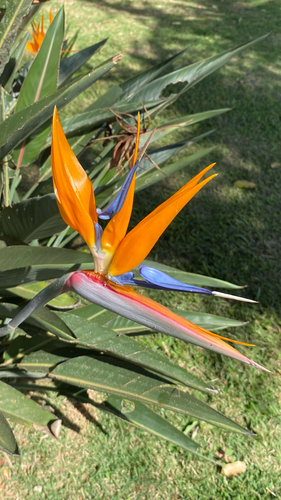
How to care for common bird-of-paradise flower
Watering
Strelitzia reginae, the bird-of-paradise flower, has thick fleshy roots that store water, so it tolerates drying out far better than it tolerates soggy soil. Water thoroughly until it drains from the pot, then wait until the top 5 cm of the mix is dry before watering again. Use a free-draining mix with perlite or coarse sand, and always empty the saucer after watering. Water less in winter, when growth slows and the roots use less moisture.
Does it need water today?
Push a finger 5 cm into the soil near the edge of the pot. If it feels dry, water it. You can also lift the pot: a dry plant feels noticeably lighter than one that was just watered. Drooping, slightly curled leaves in the middle of the day can be normal in heat, so check the soil before reacting.
Water in the morning so the plant can use the moisture during the day, and aim the water at the soil rather than into the crown, where water can sit and cause rot.
Overwatering
Strelitzia reginae comes from the coastal fynbos of South Africa, where its roots are adapted to drain quickly after rain. Sitting in wet mix suffocates these fleshy roots, so they rot faster than the plant can recover from. Because the roots store water, the leaves can look unhealthy long after the damage begins.
Symptoms: Yellowing lower leaves, soft or mushy stem bases, a sour smell from the soil, black or brown roots that pull away easily, and leaves that wilt even though the soil is wet.
Solutions: Stop watering immediately and let the mix dry out. Remove the plant from its pot, cut away soft, dark roots with clean scissors, and dust cut areas with cinnamon or sulfur powder. Repot into fresh, fast-draining mix in a pot with drainage holes, then wait several days before the first watering.
Underwatering
Although Strelitzia reginae stores water in its roots, a long dry spell still stresses it, especially in bright light or warm rooms. The plant sheds leaves and stops flowering to conserve moisture. Repeated drought also weakens the root system over time.
Symptoms: Leaves that curl inward, turn crispy at the edges, or hang limply. Dry, compacted soil that pulls away from the pot edge. Fewer flower spathes and slower new leaf growth.
Solutions: Water deeply until it drains from the bottom, then keep a regular schedule. If the mix has become dry and hard, soak the pot in a tray of water for 30 minutes. Trim badly damaged leaves at the base once new growth starts, and move the plant to a slightly cooler, brighter spot to reduce stress.
Sunlight
Strelitzia reginae is a sun-loving plant that needs strong light to produce its famous orange and blue flowers. Indoors, it grows best in the brightest spot available, ideally with direct sun for several hours each day. Plants in low light grow tall, thin leaves and rarely flower. Rotate the pot every few weeks so growth stays even.
- Ideal: Full sun · 6-8 hours of direct sun per day
- Tolerates: Full sun, Partial sun, Bright, indirect light
- Best spot in a room: At the window
- Artificial light: If natural light is weak, use a full-spectrum LED grow light placed 30 to 45 cm above the foliage, running 12 to 14 hours per day. Keep the light on a timer so the plant gets consistent exposure. Move the plant closer to the light in winter, when days are shorter.
Too little light
Strelitzia reginae evolved in open, sunny habitats where it receives intense light most of the year. Without enough light, it cannot build the energy reserves needed for flowering, so it stretches toward any available brightness and becomes weak.
Symptoms: Long, leggy leaf stalks that lean toward the window, small or pale leaves, dark green color that fades slowly, and no flower spathes after two or more years.
Solutions: Move the plant to a south- or west-facing window, or outdoors into full sun once nights stay above 10 °C. Increase light gradually over one to two weeks to avoid leaf scorch. Add an LED grow light during the darker months.
Too much sun
Strelitzia reginae is naturally adapted to strong sun, but a sudden jump from low indoor light to intense outdoor sun can burn its broad leaves. Glass that magnifies sunlight or hot south-facing windows in summer can also cause damage.
Symptoms: Pale, bleached patches on the leaves, brown dry spots or edges, and leaves that look crispy and papery. Flowers may fade quickly in extreme heat.
Solutions: Acclimate the plant over one to two weeks by giving it a little more sun each day. In summer, move it a short distance back from a hot window or provide light shade during the strongest afternoon hours. Remove badly scorched leaves at the base once they are fully brown.
Temperature
Strelitzia reginae, the common bird-of-paradise flower, is a South African plant that thrives in warm, bright conditions. Keep it between 15 and 27°C for steady growth and flowering. Avoid sudden swings, drafts, and cold windows in winter.
- Ideal: 15–27 °C
- Tolerates: 5–35 °C
- Hardiness zones: 9-11
Fertilizing
Feed Strelitzia reginae during its active growing season, from spring through early autumn. It is a heavy feeder, but too much nitrogen gives lush leaves and few flowers. Stop feeding in late autumn and winter, when growth slows.
- Slow-release fertilizer: Apply once a year in early spring, just as new growth begins, for potted plants. Garden plants in the ground usually need it once a year in spring.
- Balanced liquid houseplant fertilizer (such as 10-10-10 or 20-20-20), Slow-release granular fertilizer with micronutrients, Phosphorus-moderate flowering plant fertilizer for encouraging blooms
Soil
Bird-of-paradise flower needs fast-draining soil that still holds some moisture between waterings. Its thick roots rot quickly in dense, waterlogged mixes, so the soil must allow air to reach the roots. Avoid heavy clay and pure peat, which stay wet for too long.
- Free-draining potting mix: Two parts peat-free potting compost, one part coarse perlite or pumice, and one part garden loam or coir for some structure
- Chunky outdoor mix: Equal parts loamy garden soil, coarse sand or grit, and well-rotted leaf mould or compost
- pH 6–7.5
Repotting
Use a deep, heavy pot with drainage holes. Bird-of-paradise flower forms a large, deep root mass and tips over easily in lightweight containers, so choose terracotta or glazed ceramic with a wide base.
- How often: Every 3-4 years, or when roots fill the pot and push up through the drainage holes
- New pot: Move up only one size, about 2-5 cm wider in diameter, because bird-of-paradise flower has thick fleshy roots that sit in wet soil for too long when the pot is oversized
- Repotting season: Spring, Summer
How to repot
- Tip the pot on its side and gently ease the root ball out, supporting the clump so the thick rhizomes are not snapped
- Shake off loose old soil and tease the outer roots apart with your fingers
- Trim away any soft, black, or mushy roots with clean shears and dust cut surfaces with ground cinnamon or a fungicide if available
- If the clump is very large, divide it into sections with at least two or three healthy growth points each, and pot them separately
- Set the root ball in the new pot so the top of the rhizome sits about 2 cm below the rim, then fill around it with fresh mix
- Firm the soil gently with your hands, removing large air pockets, and leave a 2-3 cm gap below the rim for watering
- Water thoroughly until it drains freely from the holes, then let the surplus drain away completely
Pruning
Use sharp, clean bypass pruners or a knife. Cut only the leaf stalk (petiole) at its base, close to the soil line, and never tear leaves off. Remove no more than a third of the foliage at one time, since the leaves feed the plant. Remove a flower stalk once all of its flowers have faded and the stalk turns brown.
Pruning season: Spring, Summer, Autumn
How to prune
- Inspect the whole plant and identify leaves that are fully brown, yellow, or badly torn.
- Follow each damaged leaf stalk down to where it meets the soil or the rhizome.
- Cut the stalk cleanly at its base with your sterilized pruners, leaving no stub.
- Remove spent flower stalks at the base once every flower has finished and the stalk has dried.
- Wipe your tools with rubbing alcohol before moving to the next plant.
- Water lightly afterward and keep the plant in bright light to help it recover.
Propagation
Division of clumps · Spring
- Wait until the plant is mature, with at least four to five fans of leaves and a thick, crowded root mass, usually after several years.
- Water the plant a day before you start so the roots are moist and less likely to break.
- Tip the pot on its side, slide the root ball out, and gently loosen the soil from the roots with your fingers.
- Using a clean, sharp knife or spade, cut through the rhizome so each section has at least two or three fans of leaves and some healthy roots.
- Pot each division into a container only slightly larger than its root ball, filled with a free-draining mix of potting soil and perlite or coarse sand.
- Water lightly, then keep the soil barely moist for the next few weeks while new roots form. Place the pots in bright, indirect light.
Seed sowing · Spring, Summer
- Collect seeds from a mature seed pod, which splits open to reveal bright orange seeds, usually in late summer or early autumn after flowering.
- Soak the seeds in warm water for 24 hours before sowing, because the hard seed coat slows germination.
- Sow each seed about 1 cm deep in a pot of moist, well-draining seed compost.
- Keep the pot warm, around 24 to 27 °C, in bright indirect light. Keep the soil lightly moist but never soggy.
- Germination can take several weeks to a few months. Seedlings grow slowly and may take three to five years to flower, so be patient.
Bird-of-paradise plants often flower best when slightly root-bound, so do not divide a healthy clump just to make it bigger. Divide it when it is crowding its pot or when you want more plants.
About common bird-of-paradise flower
Also known as: Bird of paradise, Crane flower, Isiqalaba
- Plant type: herb, perennial, clumping plant
- Lifespan: perennial
- Distribution: Native to the eastern Cape Province of South Africa, growing in coastal thicket and fynbos.
- Mature height: 1-1.5 m
- Bloom time: Mainly winter to spring, sometimes repeating in warm years
Pets · People
Pets: Safe · People: Mildly toxic. The seeds and rhizome are considered mildly toxic if eaten in quantity and may cause stomach upset. Keep the seeds away from children and pets, as they can be attractive. Handling the plant is generally safe.
Common problems
- Failure to bloom: Usually caused by insufficient light, too small a pot, or lack of a cool, dry rest in winter.
- Root and rhizome rot: Caused by overwatering in heavy or poorly draining soil, leading to yellowing leaves and soft base.
- Leaf splitting: Strong winds or sudden changes in light can tear the blades; this is cosmetic and natural.
- Spider mites: Appear in dry indoor air, causing stippled leaves and fine webbing on the undersides.
- Scale insects: Brown bumps on stems and leaf stalks that suck sap and weaken the plant if untreated.
Uses
Grown worldwide as an ornamental for gardens, conservatories and interiors. Its blooms are a major cut flower in the floristry trade, valued for their long vase life and bold form.
Is it edible?
Not edible. The seeds and rhizome contain compounds that may cause mild illness if eaten.
History & legends
The plant was introduced to Europe in the late eighteenth century and was named in 1788 by botanist Joseph Banks, who honoured Queen Charlotte of Mecklenburg-Strelitz. Its flower quickly became a symbol of exotic botanical discovery and luxury in Victorian Europe.
Did you know?
Each flower is held in a boat-shaped bract, and pollination is carried out by sunbirds, which land on the bract and use it as a perch.
Frequently asked questions
How often should I water common bird-of-paradise flower?
every 7 days. Strelitzia reginae, the bird-of-paradise flower, has thick fleshy roots that store water, so it tolerates drying out far better than it tolerates soggy soil. Water thoroughly until it drains from the pot, then wait until the top 5 cm of the mix is dry before watering again. Use a free-draining mix with perlite or coarse sand, and always empty the saucer after watering. Water less in winter, when growth slows and the roots use less moisture. Push a finger 5 cm into the soil near the edge of the pot. If it feels dry, water it. You can also lift the pot: a dry plant feels noticeably lighter than one that was just watered. Drooping, slightly curled leaves in the middle of the day can be normal in heat, so check the soil before reacting.
How much light does common bird-of-paradise flower need?
Full sun (6-8 hours of direct sun per day). Strelitzia reginae is a sun-loving plant that needs strong light to produce its famous orange and blue flowers. Indoors, it grows best in the brightest spot available, ideally with direct sun for several hours each day. Plants in low light grow tall, thin leaves and rarely flower. Rotate the pot every few weeks so growth stays even.
What temperature does common bird-of-paradise flower like?
15–27 °C. Strelitzia reginae, the common bird-of-paradise flower, is a South African plant that thrives in warm, bright conditions. Keep it between 15 and 27°C for steady growth and flowering. Avoid sudden swings, drafts, and cold windows in winter.
Is common bird-of-paradise flower toxic to cats and dogs?
It is safe for cats and dogs. The seeds and rhizome are considered mildly toxic if eaten in quantity and may cause stomach upset. Keep the seeds away from children and pets, as they can be attractive. Handling the plant is generally safe.
What are the most common problems of common bird-of-paradise flower?
Failure to bloom: Usually caused by insufficient light, too small a pot, or lack of a cool, dry rest in winter. Root and rhizome rot: Caused by overwatering in heavy or poorly draining soil, leading to yellowing leaves and soft base. Leaf splitting: Strong winds or sudden changes in light can tear the blades; this is cosmetic and natural. Spider mites: Appear in dry indoor air, causing stippled leaves and fine webbing on the undersides. Scale insects: Brown bumps on stems and leaf stalks that suck sap and weaken the plant if untreated.
When should I repot common bird-of-paradise flower?
Every 3-4 years, or when roots fill the pot and push up through the drainage holes. Use a deep, heavy pot with drainage holes. Bird-of-paradise flower forms a large, deep root mass and tips over easily in lightweight containers, so choose terracotta or glazed ceramic with a wide base.
How do I propagate common bird-of-paradise flower?
Division of clumps, Seed sowing. Wait until the plant is mature, with at least four to five fans of leaves and a thick, crowded root mass, usually after several years. Water the plant a day before you start so the roots are moist and less likely to break. Tip the pot on its side, slide the root ball out, and gently loosen the soil from the roots with your fingers. Using a clean, sharp knife or spade, cut through the rhizome so each section has at least two or three fans of leaves and some healthy roots. Pot each division into a container only slightly larger than its root ball, filled with a free-draining mix of potting soil and perlite or coarse sand. Water lightly, then keep the soil barely moist for the next few weeks while new roots form. Place the pots in bright, indirect light.
How this guide was written
Verdiss writes each guide with AI from botanical references and checks the species against iNaturalist and Plants of the World Online (Kew). Readers can rate every guide in the app.
Sources
Verdiss's information is for general guidance. Never eat or use a plant as medicine based on an app: ask a professional.