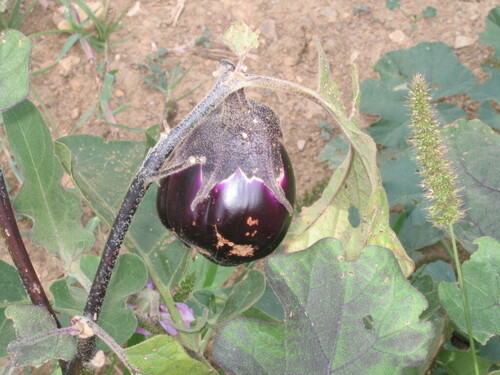
How to care for eggplant
Watering
Eggplant (Solanum melongena) is a thirsty fruiting plant with deep, steady water needs. Keep the soil evenly moist but never soggy, and water at the base so the leaves stay dry, which helps prevent fungal disease. Irregular watering during fruiting causes bitter, misshapen or split fruit, so consistency matters more than the exact day count. Container plants dry out faster than garden plants and may need water every day in midsummer heat.
Does it need water today?
Push a finger 3-4 cm into the soil. If it feels dry, water. Also lift the pot: a light pot means the soil is dry. Outdoors, wilting in the afternoon that recovers by evening is normal on hot days, but wilting that persists in the morning means the plant needs water now.
Water deeply in the early morning so the top layer dries during the day. A thick layer of mulch such as straw or compost around the base keeps soil moisture steady and reduces the number of watering days.
Overwatering
Eggplant roots need air as well as water. Its roots are fleshy and sensitive, so soggy soil quickly causes rot, especially in containers without good drainage or in heavy garden clay.
Symptoms: Yellowing lower leaves, soft or blackened stem at soil level, a sour smell from the soil, wilting even though the soil is wet, and flowers dropping without setting fruit.
Solutions: Stop watering and let the top few centimeters dry out. Improve drainage by adding perlite or grit to containers, or by raising garden beds. Remove badly rotted leaves and check the stem base; if it is black and mushy, take cuttings from healthy growth as a backup.
Underwatering
Eggplant has large leaves that lose a lot of water through transpiration, so it wilts quickly when the soil dries. Dry spells during flowering and fruit set are especially harmful because they cause flower drop and small, tough fruit.
Symptoms: Drooping leaves that perk up after watering, dry crispy leaf edges, flowers falling off, fruit that stays small or develops a bitter taste, and dry, pulling-away soil around the pot edges.
Solutions: Water thoroughly until moisture reaches the root zone, then keep the soil evenly moist over the next week. For dry containers, soak the pot in a tray for 30 minutes because dry soil can repel water. Add mulch to slow evaporation.
Sunlight
Eggplant (Solanum melongena) is a warm-season crop that needs strong, direct sun to flower and set fruit well. Plants in full sun grow sturdier, produce more fruit and ripen it with better color and flavor. In partial shade they still grow, but yields drop and ripening slows, especially in cool summers.
- Ideal: Full sun · 6-8 hours of direct sun per day
- Tolerates: Full sun, Partial sun
- Best spot in a room: At the window
- Artificial light: Indoors, a south-facing window is the best option. In winter or low-light rooms, use a full-spectrum LED grow light 15-30 cm above the plant for 12-14 hours a day. Rotate the pot weekly so all sides receive light and the plant grows upright rather than leaning.
Too little light
Eggplant needs a lot of light energy to build the fruit it produces. Without enough sun, it stretches toward the light, flowers less and fruits poorly, and it becomes more prone to pests and disease.
Symptoms: Tall, thin, pale stems that lean toward the window, small leaves spaced far apart, few or no flowers, and fruit that stays small or drops off.
Solutions: Move the plant to the sunniest spot available, ideally outdoors in full sun once nights stay above 10°C. Indoors, add a grow light for 12-14 hours daily. Stake the plant to support weak stems while it recovers.
Too much sun
In very hot climates with intense afternoon sun, eggplant leaves can overheat and lose water faster than roots can replace it. This is most common for container plants on hot patios or in south-facing spots in summer heat above 35°C.
Symptoms: Leaves bleaching to a pale or whitish color, scorched brown patches on the leaves facing the sun, leaves curling or wilting in the afternoon, and fruit with sunburned, leathery patches.
Solutions: Provide light afternoon shade with shade cloth or by placing the pot where a taller plant or wall shades it from 1-4 pm. Water more often during heat waves, and mulch to keep roots cool.
Temperature
Eggplant (Solanum melongena) is a tropical perennial grown as an annual. It needs warm days and warm nights to set fruit. Keep it above 15°C at night and never let it sit near freezing. Plant out only after all frost danger has passed and the soil has warmed to at least 16°C.
- Ideal: 21–29 °C
- Tolerates: 10–35 °C
- Hardiness zones: 10-12
Fertilizing
Eggplant is a heavy feeder that needs steady nutrients from transplanting through harvest. Potassium and phosphorus support flowering and fruit, while too much nitrogen gives lush leaves and few fruits. Feed after the plant is established, and once fruit begins to form, switch to a lower-nitrogen feed.
- Slow-release fertilizer: Once a year at planting time, mix a balanced slow-release granular fertilizer into the soil or potting mix. Do not repeat it during the season.
- Balanced liquid fertilizer such as 10-10-10 or 5-5-5, Tomato or vegetable fertilizer with moderate nitrogen, Compost or well-rotted manure as a soil amendment, Slow-release granular vegetable fertilizer, Liquid seaweed or fish emulsion as a gentle supplement
Soil
Eggplant (Solanum melongena) is a heavy feeder that grows best in deep, fertile, well-drained soil that stays evenly moist. Waterlogged or cold, compacted soil stunts growth and encourages root rot, so good drainage matters as much as nutrients.
- Rich potting mix for vegetables: A blend of peat-free compost, coir or peat, perlite or pumice, and a slow-release organic fertiliser.
- Garden loam with compost: About one part well-rotted compost mixed into two parts loamy garden soil, with sand added if the soil is heavy clay.
- Raised bed mix: Equal parts topsoil, compost, and coarse horticultural sand or grit, enriched with aged manure or a balanced organic feed.
- pH 5.8–6.8
Repotting
Eggplant (Solanum melongena) has a fleshy, fairly sensitive root system that dislikes disturbance, so repot early in the season while the plant is young and before it flowers. Keep the root ball intact and never let it dry out during the move.
- How often: Every year for container plants, because eggplant is a fast-growing annual that quickly fills its pot with roots.
- New pot: Move up one size at a time, typically from a 20 cm starter pot to a 30-40 cm pot (about 10-15 litres) for a mature plant, with drainage holes in the base.
- Repotting season: Spring, Summer
How to repot
- Gently tip the plant sideways and ease it out of the old pot, supporting the stem near the soil line.
- Loosen any tightly coiled roots with your fingers, trimming only dead or mushy roots with clean scissors.
- Set the root ball in the new pot and fill around it with fresh mix, firming lightly with your hands.
- Water thoroughly until water drains from the holes, then place the pot in partial shade for a few days before returning it to full sun.
- Stake the plant at this stage if it is tall, since eggplant stems become brittle as the fruit forms.
Pruning
Eggplant bears fruit on new growth, so pruning mainly shapes the plant and sends energy to developing fruit. Pinch and prune lightly. Never remove more than about one third of the foliage at one time, because the plant needs leaves to make the sugars that fill the fruit.
Pruning season: Spring, Summer
How to prune
- Pinch out the growing tip above the fourth or fifth true leaf once the plant is about 30 cm tall to encourage side branching.
- Keep two to four strong main stems and remove the rest of the suckers that form in the leaf axils below the first fork.
- Remove yellowing, torn, or spotted leaves at the base of the stem so air moves freely through the canopy.
- Cut off any flowers that open before the plant is well established, especially in the first few weeks after transplanting.
- When fruit is set, remove extra flowers and tiny fruit so each main stem carries only three to five good eggplants at a time.
- Stake or tie main stems to a support as they grow heavy, using soft ties that will not cut the stem.
- Cut mature fruit from the plant with snips rather than pulling, leaving a short stalk, once the skin is glossy and the flesh springs back when pressed.
Propagation
Seed sowing · Winter, Spring
- Sow eggplant (Solanum melongena) seed indoors 8 to 10 weeks before your last spring frost date.
- Fill small pots or a seed tray with a light seed-starting mix and press one seed about 0.5 cm deep in each cell.
- Keep the mix evenly moist and hold it at 25 to 30 °C; eggplant seed is slow and needs consistent warmth to germinate, usually in 7 to 14 days.
- Move seedlings to a bright south-facing window or under grow lights for 14 to 16 hours a day once they emerge.
- Harden seedlings off over 7 to 10 days before planting outdoors once night temperatures stay above 12 °C.
Stem cuttings · Spring, Summer
- Take 10 to 15 cm cuttings from a healthy, non-flowering tip of an established eggplant plant, cutting just below a leaf node.
- Remove the lower leaves and any flowers or fruit from the cutting.
- Dip the cut end in rooting hormone if you have it, then insert it into moist perlite or a 1:1 mix of perlite and peat.
- Place the cutting in bright, indirect light at about 24 °C and keep the medium damp but not soggy.
- Expect roots in 2 to 4 weeks; pot it up once you feel resistance when you gently tug the cutting.
Eggplant seed germinates best with bottom heat. A heat mat set near 27 °C can cut germination time noticeably and gives more even seedlings.
About eggplant
Also known as: Aubergine, Brinjal, Guinea squash
- Plant type: herb, shrub
- Lifespan: Tender perennial, usually grown as an annual outdoors in cold climates.
- Distribution: Native to the Indian subcontinent and Southeast Asia, where it was first domesticated.
- Mature height: 0.6 to 1.5 m
- Bloom time: Summer
Pets · People
Pets: Toxic · People: Toxic. Per ASPCA, the unripe fruit, leaves, stems and other green parts contain solanine and related glycoalkaloids, which can cause gastrointestinal upset and, in larger amounts, neurological symptoms. Ripe, cooked fruit is commonly eaten by people, but pets and children should be kept away from the plant itself.
Common problems
- Flea beetles: Tiny beetles chew small round holes in leaves, especially in young plants; protect seedlings with row cover.
- Blossom end rot: Dark sunken patches on fruit caused by irregular watering and calcium uptake; keep soil moisture consistent.
- Verticillium wilt: Soil-borne fungus causing wilting and yellowing; rotate crops and choose resistant varieties.
- Aphids: Clusters of sap-sucking insects on new growth; wash off with water or use insecticidal soap.
- Bud drop: Flowers fall without setting fruit, often due to temperatures above 32 °C or very low night temperatures.
Uses
Eggplant is grown mainly as a culinary vegetable and features in many cuisines, including Indian, Middle Eastern, Mediterranean and East Asian dishes, where it is roasted, fried, stewed or pickled. Ornamental cultivars with decorative fruits are also grown in flower borders and containers.
Is it edible?
The ripe fruit is edible when cooked; raw fruit and all green parts, including leaves and stems, are not edible.
History & legends
Eggplant was domesticated in South Asia and spread along trade routes to China, the Middle East and then the Mediterranean, where it was described by Arab and European writers during the medieval period. In parts of Europe it was once viewed with suspicion and was associated with madness, a belief that faded as cooking traditions developed.
Did you know?
Eggplant is botanically a berry, and it is closely related to tomatoes and potatoes.
Frequently asked questions
How often should I water eggplant?
every 2 days. Eggplant (Solanum melongena) is a thirsty fruiting plant with deep, steady water needs. Keep the soil evenly moist but never soggy, and water at the base so the leaves stay dry, which helps prevent fungal disease. Irregular watering during fruiting causes bitter, misshapen or split fruit, so consistency matters more than the exact day count. Container plants dry out faster than garden plants and may need water every day in midsummer heat. Push a finger 3-4 cm into the soil. If it feels dry, water. Also lift the pot: a light pot means the soil is dry. Outdoors, wilting in the afternoon that recovers by evening is normal on hot days, but wilting that persists in the morning means the plant needs water now.
How much light does eggplant need?
Full sun (6-8 hours of direct sun per day). Eggplant (Solanum melongena) is a warm-season crop that needs strong, direct sun to flower and set fruit well. Plants in full sun grow sturdier, produce more fruit and ripen it with better color and flavor. In partial shade they still grow, but yields drop and ripening slows, especially in cool summers.
What temperature does eggplant like?
21–29 °C. Eggplant (Solanum melongena) is a tropical perennial grown as an annual. It needs warm days and warm nights to set fruit. Keep it above 15°C at night and never let it sit near freezing. Plant out only after all frost danger has passed and the soil has warmed to at least 16°C.
Is eggplant toxic to cats and dogs?
It is toxic to cats and dogs: keep it out of their reach. Per ASPCA, the unripe fruit, leaves, stems and other green parts contain solanine and related glycoalkaloids, which can cause gastrointestinal upset and, in larger amounts, neurological symptoms. Ripe, cooked fruit is commonly eaten by people, but pets and children should be kept away from the plant itself.
What are the most common problems of eggplant?
Flea beetles: Tiny beetles chew small round holes in leaves, especially in young plants; protect seedlings with row cover. Blossom end rot: Dark sunken patches on fruit caused by irregular watering and calcium uptake; keep soil moisture consistent. Verticillium wilt: Soil-borne fungus causing wilting and yellowing; rotate crops and choose resistant varieties. Aphids: Clusters of sap-sucking insects on new growth; wash off with water or use insecticidal soap. Bud drop: Flowers fall without setting fruit, often due to temperatures above 32 °C or very low night temperatures.
When should I repot eggplant?
Every year for container plants, because eggplant is a fast-growing annual that quickly fills its pot with roots.. Eggplant (Solanum melongena) has a fleshy, fairly sensitive root system that dislikes disturbance, so repot early in the season while the plant is young and before it flowers. Keep the root ball intact and never let it dry out during the move.
How do I propagate eggplant?
Seed sowing, Stem cuttings. Sow eggplant (Solanum melongena) seed indoors 8 to 10 weeks before your last spring frost date. Fill small pots or a seed tray with a light seed-starting mix and press one seed about 0.5 cm deep in each cell. Keep the mix evenly moist and hold it at 25 to 30 °C; eggplant seed is slow and needs consistent warmth to germinate, usually in 7 to 14 days. Move seedlings to a bright south-facing window or under grow lights for 14 to 16 hours a day once they emerge. Harden seedlings off over 7 to 10 days before planting outdoors once night temperatures stay above 12 °C.
How this guide was written
Verdiss writes each guide with AI from botanical references and checks the species against iNaturalist and Plants of the World Online (Kew). Readers can rate every guide in the app.
Sources
Verdiss's information is for general guidance. Never eat or use a plant as medicine based on an app: ask a professional.