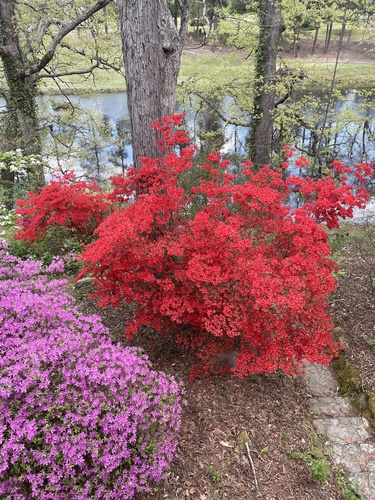
How to care for Red Azalea
Watering
Rhododendron simsii, the Red Azalea, has shallow, fine roots that cannot tolerate drying out completely, yet they rot quickly in soggy soil. Use rainwater or distilled water when possible, because tap water high in lime slowly yellows the leaves. Water thoroughly until it runs out of the drainage holes, then empty the saucer after 15 minutes. Keep the root ball evenly moist, never wet and never bone dry.
Does it need water today?
Push a finger about 2 cm into the soil. If it feels dry, water now. If it feels cool and damp, wait. You can also lift the pot: a dry pot feels light, while a freshly watered one feels heavy.
Water in the morning with room-temperature water. Cold water on the roots can shock an azalea and cause bud drop.
Overwatering
Red Azalea roots need air as much as water, and its fine root hairs suffocate in waterlogged compost. Constantly soggy soil quickly leads to root rot, which is the most common cause of death for this species indoors.
Symptoms: Yellowing leaves that drop, wilting even though the soil is wet, a sour smell from the pot, and blackened, mushy roots.
Solutions: Stop watering and let the top 3 cm dry out. Check that the pot drains well and empties its saucer. If roots are rotten, repot into fresh acidic azalea compost in a pot with drainage holes, trimming any black roots.
Underwatering
Because Rhododendron simsii has such a shallow root system, the root ball dries out faster than in most houseplants. Once the compost pulls away from the pot edge, water runs straight through without wetting the roots.
Symptoms: Drooping leaves, dry brown leaf edges, and flower buds that fall off before opening.
Solutions: Soak the pot in a sink of water for 30 minutes until bubbles stop rising, then drain well. Mist the leaves in the meantime and move the plant out of hot, dry drafts. Water more often until the foliage firms up again.
Sunlight
Red Azaleas flower best with bright light but not harsh midday sun, which scorches their thin leaves. Cool, bright conditions also help the flower buds develop. Outdoors, they prefer dappled shade under tall trees or on the east side of a building.
- Ideal: Bright, indirect light · 4-6 hours of bright, filtered light daily
- Tolerates: Partial sun, Bright, indirect light
- Best spot in a room: At the window
- Artificial light: If natural light is weak, use a full-spectrum LED grow light 20 to 30 cm above the plant for 10 to 12 hours a day during winter. Keep the light on a timer to give the plant a steady rhythm.
Too little light
Rhododendron simsii needs strong light to form flower buds for the next season. In dim corners the plant grows long, weak stems and rarely blooms.
Symptoms: Leggy growth with long spaces between leaves, pale green foliage, and few or no flower buds.
Solutions: Move the plant closer to a bright east or north window, or supplement with grow lights. Rotate the pot a quarter turn each week so growth stays even.
Too much sun
Direct afternoon sun, especially through glass, overheats the leaves of this azalea. Its thin foliage loses water faster than the roots can replace it.
Symptoms: Bleached or brown scorched patches on the leaves, crisp edges, and flowers that fade within a few days.
Solutions: Shift the plant a metre back from the window or add a sheer curtain during midday. Outdoors, move it into dappled shade and water a little more often during heat.
Temperature
Red Azalea (Rhododendron simsii) is a subtropical evergreen shrub that prefers cool, bright, humid conditions. Keep it between 10 and 18 °C while it is in bud and bloom, and avoid hot, dry rooms and cold drafts. Protect it from frost and from temperatures above 27 °C, which can cause flower drop and leaf scorch.
- Ideal: 10–18 °C
- Tolerates: 0–27 °C
- Hardiness zones: 8-10
Fertilizing
Red Azalea grows best in acidic, well-drained soil, so feed it with fertilizers made for acid-loving plants. Feed lightly during bud formation and early growth, then stop in late summer so new growth can harden before winter. Avoid lime and alkaline fertilizers, which cause yellowing leaves.
- Slow-release fertilizer: Apply a slow-release acid fertilizer once a year in early spring, just after flowering finishes, or in late winter before new growth starts.
- Acid-loving azalea or rhododendron fertilizer, Ammonium-based fertilizer with iron and magnesium, Slow-release acidifying fertilizer formulated for ericaceous plants
Soil
Red Azalea needs very acidic, well-draining soil rich in organic matter that holds moisture without becoming waterlogged. Ordinary garden soil or standard potting mix is usually too alkaline and dense for it.
- Acidic azalea mix: Peat-free ericaceous compost blended with equal parts pine bark fines and perlite or coarse sand
- Lightly enriched peat mix: Two parts sphagnum peat, one part perlite and a small handful of composted pine bark per pot
- Outdoor raised bed mix: Acidic topsoil mixed with composted pine needles or oak leaf mould, with a little grit added for drainage
- pH 4.5–5.5
Repotting
Red Azalea (Rhododendron simsii) has fine, shallow, fibrous roots that are easily damaged and dislike wet, compacted soil, so repot gently and only when needed, ideally just after flowering.
- How often: every 2-3 years, or when roots fill the pot
- New pot: Move up only 2-5 cm in pot diameter; use a shallow, well-draining pot with drainage holes, ideally unglazed clay or a breathable plastic pot.
- Repotting season: Spring, Summer
How to repot
- Gently tip the plant out of its pot, supporting the base of the stem
- Loosen the outer roots with your fingers; trim only dead or mushy roots with clean shears
- Place a layer of fresh mix in the new pot so the root crown sits slightly above the rim
- Set the plant centrally, fill around the roots with mix and firm lightly without packing it hard
- Water thoroughly with rainwater until it drains freely, then keep the pot out of direct hot sun
Pruning
Red Azalea flowers form on the previous season's growth, so prune immediately after flowering, when the blooms fade in late spring or early summer. Pruning later in the year removes the buds that would bloom the following spring.
Pruning season: Spring, Summer
How to prune
- Remove faded flower heads by snapping or cutting them just above the first set of healthy leaves, taking care not to damage the buds that form below.
- Cut out any dead, dried, or brittle stems right back to the base or to healthy wood.
- Thin out crowded or crossing branches, removing the weaker of each pair to open the centre of the plant.
- Shorten long, leggy shoots by up to one third, cutting just above a leaf node or a healthy bud.
- Avoid cutting old, leafless wood deep into the plant, as Red Azalea regrows poorly from bare stems.
- Keep plants well watered for a few weeks after pruning, and feed lightly with an ericaceous fertiliser once new growth appears.
Propagation
Semi-hardwood cuttings · Summer
- In early to mid summer, after the spring flush has finished and the new shoots have partly firmed, choose healthy non-flowering shoots about 8 to 10 cm long.
- Cut just below a leaf node with clean, sharp secateurs, then strip the lower leaves so that two or three pairs remain at the top.
- Dip the cut end in a rooting hormone powder for Rhododendron or a weak indole butyric acid solution.
- Insert the cutting into a pot of moist mix of equal parts peat-free ericaceous compost and perlite or coarse sand, about 3 cm deep.
- Cover the pot with a clear plastic bag held up on stakes, keep it bright but out of direct sun, and hold the temperature around 18 to 22 °C.
- Check weekly that the mix stays damp but not soggy. Roots usually form in 6 to 10 weeks. Pot the rooted cutting into ericaceous compost once a gentle tug meets resistance.
Layering · Spring, Summer
- In spring, choose a low, flexible branch of an established Red Azalea that can reach the soil without snapping.
- Scrape a 2 cm strip of bark off the underside of the branch about 30 cm from its tip, and remove any flowers from that section.
- Pin the wounded section into a shallow hole in ericaceous soil with a bent wire or a stone, leaving the tip upright.
- Keep the soil moist and mulched with pine needles or bark chips throughout the season.
- By the following autumn or spring, roots should have formed. Cut the branch free from the parent plant and transplant the new shrub.
Seed sowing · Spring
- Collect dry seed capsules in autumn or winter once they have turned brown and split open.
- In late winter or early spring, sow the very fine seed on the surface of a tray of moist, sterile ericaceous seed compost. Do not cover the seed, as it needs light to germinate.
- Mist the surface gently and cover the tray with glass or clear plastic to hold humidity.
- Keep the tray bright, around 15 to 20 °C, and out of direct sun. Seedlings can take several weeks to appear.
- Once seedlings have two true leaves, prick them out into individual small pots. Seedlings grow slowly and may take two to three years to reach flowering size.
Water cuttings and seedlings with rainwater or soft tap water, since hard, alkaline water quickly leads to yellowing leaves and poor root growth in Red Azalea.
About Red Azalea
Also known as: Sims azalea, Chinese azalea, Indian azalea
- Plant type: shrub, evergreen azalea
- Lifespan: perennial
- Distribution: Native to southern China, Taiwan and northern Southeast Asia, growing in forest margins and scrub on mountain slopes.
- Mature height: 0.5-2 m
- Bloom time: Late winter to spring
Pets · People
Pets: Toxic · People: Toxic. All parts of Rhododendron simsii contain grayanotoxins, which can cause vomiting, drooling, low blood pressure, weakness and, in large amounts, coma; honey made from its nectar can also be toxic. Seek veterinary or medical advice promptly if ingestion is suspected.
Common problems
- Chlorosis (yellowing leaves): Leaves turn pale with green veins when the compost is alkaline or tap water is hard, limiting iron uptake.
- Bud drop: Flower buds fall off when the plant is too warm, too dry or moved after budding.
- Root rot: Waterlogged compost causes roots to decay, leading to wilting despite wet soil.
- Lace bugs: Small sap-sucking insects leave speckled, bleached leaves with dark spots underneath.
- Spider mites: In hot, dry rooms, fine webbing and stippled leaves indicate mite damage.
Uses
Primarily ornamental, grown as a flowering pot plant for homes, conservatories and gift markets, and as a parent of many hybrid azaleas used in gardens. In parts of China it is valued in traditional garden design and bonsai.
Is it edible?
Not edible; all parts are toxic.
History & legends
Introduced to European gardens in the early 1800s through plants sent from China, it quickly became popular in Britain and the Netherlands. Breeders then developed the florist's azaleas of the Indica group from it, which were traded widely in the nineteenth and twentieth centuries.
Did you know?
Sims azalea was named after John Sims, an English botanist and editor of the Botanical Magazine, who described it from plants grown in England in the early 19th century.
Frequently asked questions
How often should I water Red Azalea?
every 5 days. Rhododendron simsii, the Red Azalea, has shallow, fine roots that cannot tolerate drying out completely, yet they rot quickly in soggy soil. Use rainwater or distilled water when possible, because tap water high in lime slowly yellows the leaves. Water thoroughly until it runs out of the drainage holes, then empty the saucer after 15 minutes. Keep the root ball evenly moist, never wet and never bone dry. Push a finger about 2 cm into the soil. If it feels dry, water now. If it feels cool and damp, wait. You can also lift the pot: a dry pot feels light, while a freshly watered one feels heavy.
How much light does Red Azalea need?
Bright, indirect light (4-6 hours of bright, filtered light daily). Red Azaleas flower best with bright light but not harsh midday sun, which scorches their thin leaves. Cool, bright conditions also help the flower buds develop. Outdoors, they prefer dappled shade under tall trees or on the east side of a building.
What temperature does Red Azalea like?
10–18 °C. Red Azalea (Rhododendron simsii) is a subtropical evergreen shrub that prefers cool, bright, humid conditions. Keep it between 10 and 18 °C while it is in bud and bloom, and avoid hot, dry rooms and cold drafts. Protect it from frost and from temperatures above 27 °C, which can cause flower drop and leaf scorch.
Is Red Azalea toxic to cats and dogs?
It is toxic to cats and dogs: keep it out of their reach. All parts of Rhododendron simsii contain grayanotoxins, which can cause vomiting, drooling, low blood pressure, weakness and, in large amounts, coma; honey made from its nectar can also be toxic. Seek veterinary or medical advice promptly if ingestion is suspected.
What are the most common problems of Red Azalea?
Chlorosis (yellowing leaves): Leaves turn pale with green veins when the compost is alkaline or tap water is hard, limiting iron uptake. Bud drop: Flower buds fall off when the plant is too warm, too dry or moved after budding. Root rot: Waterlogged compost causes roots to decay, leading to wilting despite wet soil. Lace bugs: Small sap-sucking insects leave speckled, bleached leaves with dark spots underneath. Spider mites: In hot, dry rooms, fine webbing and stippled leaves indicate mite damage.
When should I repot Red Azalea?
every 2-3 years, or when roots fill the pot. Red Azalea (Rhododendron simsii) has fine, shallow, fibrous roots that are easily damaged and dislike wet, compacted soil, so repot gently and only when needed, ideally just after flowering.
How do I propagate Red Azalea?
Semi-hardwood cuttings, Layering, Seed sowing. In early to mid summer, after the spring flush has finished and the new shoots have partly firmed, choose healthy non-flowering shoots about 8 to 10 cm long. Cut just below a leaf node with clean, sharp secateurs, then strip the lower leaves so that two or three pairs remain at the top. Dip the cut end in a rooting hormone powder for Rhododendron or a weak indole butyric acid solution. Insert the cutting into a pot of moist mix of equal parts peat-free ericaceous compost and perlite or coarse sand, about 3 cm deep. Cover the pot with a clear plastic bag held up on stakes, keep it bright but out of direct sun, and hold the temperature around 18 to 22 °C. Check weekly that the mix stays damp but not soggy. Roots usually form in 6 to 10 weeks. Pot the rooted cutting into ericaceous compost once a gentle tug meets resistance.
How this guide was written
Verdiss writes each guide with AI from botanical references and checks the species against iNaturalist and Plants of the World Online (Kew). Readers can rate every guide in the app.
Sources
Verdiss's information is for general guidance. Never eat or use a plant as medicine based on an app: ask a professional.