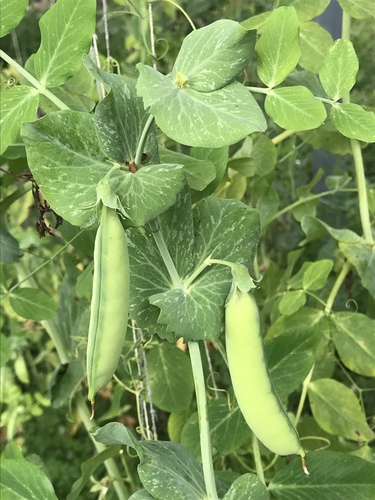
How to care for Common Pea
Watering
Common Pea (Pisum sativum) needs steady, even moisture, especially from flowering through pod filling. Keep the soil evenly damp, never soggy, and water at the base of the plant so the leaves stay dry and mildew-free. Indoor pea plants in pots dry out faster than garden plants, so check them often.
Does it need water today?
Push a finger 2-3 cm into the soil. If it feels dry at that depth, water now. If it feels cool and moist, wait a day and check again. A pot that feels noticeably light when lifted also means it is thirsty.
Water deeply in the morning rather than little and often. Mulching the soil around outdoor peas with straw keeps moisture steady through warm spells.
Overwatering
Common Pea roots rot quickly in waterlogged soil because they need air around them to take up nutrients and nitrogen-fixing bacteria work best in well-drained ground. Constantly wet soil also invites damping-off in seedlings and root rot in mature plants.
Symptoms: Yellowing lower leaves, wilting even when the soil is wet, a sour smell from the soil, fuzzy mould on the surface, and seedlings that collapse at the soil line.
Solutions: Stop watering and let the top few centimetres dry out. Improve drainage by adding grit or compost to the soil, make sure pots have drainage holes, and move seedlings to a drier, airier spot. Remove badly rotted plants to prevent spread.
Underwatering
Common Pea has shallow roots and large leaves that lose water quickly in warm air. Dry soil during flowering causes flowers to drop and pods to stay small and tough.
Symptoms: Drooping, curled or crisp leaf edges, flowers and young pods falling off, slow growth, and soil pulling away from the pot edges.
Solutions: Water thoroughly until moisture runs out of the drainage holes, then keep the soil evenly damp. For dry containers, bottom water for 20 minutes. Add mulch outdoors to slow evaporation and check plants daily during hot weather.
Sunlight
Common Pea grows best in full sun, which fuels strong stems, abundant flowers and sweet pods. In partial shade, plants grow leggy, flower less and produce fewer pods. Cool-season peas also appreciate morning sun, which dries dew quickly and reduces disease.
- Ideal: Full sun · 6-8 hours of direct sun per day
- Tolerates: Full sun, Partial sun
- Best spot in a room: At the window
- Artificial light: Indoors, a south-facing window is best in the Northern Hemisphere. If natural light is weak, use a full-spectrum LED grow light placed 15-30 cm above the plants for 12-14 hours a day during seedling and flowering stages.
Too little light
Common Pea needs strong light to photosynthesise enough sugar to build sturdy stems and set pods. Low light causes the plant to stretch toward any available brightness.
Symptoms: Tall, weak, pale stems that flop over, small leaves spaced far apart, few or no flowers, and pods that fail to form.
Solutions: Move the plant to the sunniest spot available, or provide a grow light for 12-14 hours daily. Outdoors, choose a site that gets full sun most of the day and support stems with a trellis or netting.
Too much sun
Common Pea is a cool-season crop that copes poorly with intense, prolonged heat. Strong afternoon sun combined with hot air stresses the plant and speeds up water loss.
Symptoms: Scorched or bleached leaf patches, leaves curling or turning brown at the edges, flowers dropping during heat spells, and pods that become tough or fail to fill.
Solutions: Provide light shade during the hottest part of the afternoon, using a shade cloth or a taller companion plant. Keep the soil consistently moist, mulch well and move indoor plants slightly back from direct sun during heatwaves.
Temperature
Common Pea grows best in cool weather. Seeds germinate at about 4 to 10°C, and plants thrive when days stay between 10 and 21°C. Flowering and pod set slow down sharply once temperatures pass about 24°C, so plant early in spring or in late summer for autumn harvest.
- Ideal: 10–21 °C
- Tolerates: -4–30 °C
- Hardiness zones: Annual; grown in USDA zones 3-10 as a cool-season crop
Fertilizing
Common Pea is a legume that fixes its own nitrogen through root nodules with Rhizobium leguminosarum bacteria. It needs little nitrogen fertilizer, and too much leads to lush leaves with few pods. Phosphorus and potassium support flowering and pod filling, so feed those rather than nitrogen.
- Slow-release fertilizer: Not needed in most gardens. If the soil is poor, mix a balanced slow-release granular fertilizer into the bed once at planting time in spring.
- Low-nitrogen balanced granular fertilizer (such as 5-10-10), Phosphorus and potassium rich bulb or root fertilizer (such as bone meal), Well-rotted compost or leaf mould, Liquid seaweed or fish emulsion, diluted to half strength
Soil
Common Pea grows best in fertile, well-drained soil that is neutral to slightly alkaline. Soggy, waterlogged ground causes seed rot, and very acidic soil slows nodulation by the root bacteria that fix nitrogen for the plant.
- Loam-based garden bed mix: About 40 percent topsoil, 30 percent well-rotted compost, and 30 percent coarse sand or perlite for drainage.
- Peat-free potting mix with compost: Commercial peat-free multipurpose compost mixed with 20 percent garden compost and a little perlite.
- Sandy loam for early sowing: Sandy loam with added compost, suited to early direct sowing before the soil fully warms.
- pH 6–7.5
Repotting
Common Pea has a shallow but fragile taproot and dislikes root disturbance, so start seeds in biodegradable pots or direct-sow where they will grow. Transplant only when seedlings are 5 to 8 cm tall and night temperatures stay above 5 °C.
- How often: Not needed for a single crop. Common Pea (Pisum sativum) is sown fresh each season; move container-grown seedlings once, into their final pot, and avoid repeated moves.
- New pot: At least 25 cm wide and 25 to 30 cm deep for a dwarf or bush variety. Tall climbing types need a larger container of at least 40 cm deep, plus a trellis.
- Repotting season: Spring
How to repot
- Dig a hole in the new pot slightly wider than the root ball and at the same depth the seedling was growing.
- Hold the seedling by a leaf, not the stem, and slide it out of its old pot with the root ball intact.
- Place the seedling in the hole, firm the soil gently around it, and leave a small dip to hold water.
- Water thoroughly at the base to settle the soil around the roots.
- Keep the pot out of strong wind for about a week and attach the stems loosely to the support.
Pruning
Common Pea is an annual, so it does not need heavy pruning like woody shrubs. Light pinching and removing damaged growth are the only pruning tasks needed.
Pruning season: Spring, Summer
How to prune
- Pinch out the growing tips of tall, bushy-type plants when they reach about 30 cm, to encourage side branches and a fuller crop.
- Remove yellowed, spotted, or diseased leaves at the base with clean snips, and bin them rather than composting.
- Once flowering finishes, cut off any spent flowers that will not form pods to save the plant's energy.
- Trim back weak or crowded side shoots so that light and air reach the lower leaves and developing pods.
- After the final harvest, pull up the whole plant and add the roots to the soil, since peas fix nitrogen and enrich the bed for the next crop.
- Clean pruning tools with rubbing alcohol between plants to avoid spreading disease.
Propagation
Direct sowing from seed · Spring, Autumn
- Sow Pisum sativum seeds directly outdoors as soon as the soil can be worked in early spring, typically when soil temperature reaches about 7°C.
- Choose a sunny spot with well-drained soil and add compost before sowing.
- Push seeds 2.5 to 5 cm deep and about 5 cm apart in a row, leaving 45 cm between rows.
- Water gently after sowing and keep the soil evenly moist until seedlings emerge, usually in 7 to 14 days.
- Install a sturdy trellis, netting, or pea sticks at sowing time so the tendrils have something to climb.
Autumn sowing for an early spring crop · Autumn
- In mild regions, sow hardy pea varieties in late September or October.
- Protect young plants with cloches or fleece if hard frosts arrive, since very cold weather can kill seedlings.
- Resume growth in spring and expect harvests several weeks earlier than spring-sown peas.
Saving seed from mature pods · Summer, Autumn
- Leave a few healthy pods on the strongest plants until they turn dry, papery, and brown on the vine.
- Pick the dry pods and split them open over a tray.
- Spread the seeds in a warm, dry, airy place for two weeks until they are hard and fully dry.
- Store seeds in a labeled paper envelope in a cool, dry place. Use them within two to three years for good germination.
Peas are legumes and do not need to be grown from cuttings. Sow only a few seeds at a time, several weeks apart, to harvest over a longer period. Do not save seed from plants with any sign of pea mildew or viral disease.
About Common Pea
Also known as: Garden pea, Field pea, Snow pea, Sugar snap pea
- Plant type: herb, climber, annual legume
- Lifespan: annual
- Distribution: Native to the Near East, Mediterranean and Caucasus region, where its wild ancestors still grow.
- Mature height: 0.5-2 m depending on cultivar
- Bloom time: Late spring to early summer
Pets · People
Pets: Safe · People: Safe. Fresh and cooked peas are non-toxic to pets and children according to ASPCA-style guidance. Dried peas and raw pods can cause bloating or choking in pets and small children, and some people react to raw peas; eat in moderation.
Common problems
- Powdery mildew: White powdery patches on leaves and stems in warm, humid, crowded conditions; improve airflow and choose resistant cultivars.
- Pea aphids: Clusters of small green aphids on shoots and pods that stunt growth; spray with water or use insecticidal soap.
- Root rot: Fusarium and Pythium rots cause yellowing and collapse in waterlogged soil; use rotation and well-drained beds.
- Pea weevil: Larvae feed inside developing seeds, leaving small holes; cover crops with fine netting during flowering.
- Downy mildew: Yellow-brown patches on upper leaves with grey fuzz beneath in cool, damp weather; water at the base and rotate crops.
Uses
Peas are grown as a vegetable for fresh pods, snap peas and dried seeds, and as a field crop for livestock feed and protein. Dried peas are central to soups and stews, and pea protein is used in plant-based foods and industrial products.
Is it edible?
The seeds, young pods (snow peas) and mature pods (sugar snap peas) are edible; shoots and tendrils are eaten in some cuisines. Dry seeds should be cooked before eating.
History & legends
Peas were one of the first crops domesticated in the Fertile Crescent, and archaeological seeds have been found in Neolithic sites in the Near East. In ancient Egypt and Greece, peas were a common food for the poor, and they were later spread across Europe and Asia by trade.
Did you know?
Gregor Mendel used garden peas in the 1850s and 1860s to discover the basic laws of heredity, counting thousands of plants with traits such as smooth or wrinkled seeds.
Frequently asked questions
How often should I water Common Pea?
every 3 days. Common Pea (Pisum sativum) needs steady, even moisture, especially from flowering through pod filling. Keep the soil evenly damp, never soggy, and water at the base of the plant so the leaves stay dry and mildew-free. Indoor pea plants in pots dry out faster than garden plants, so check them often. Push a finger 2-3 cm into the soil. If it feels dry at that depth, water now. If it feels cool and moist, wait a day and check again. A pot that feels noticeably light when lifted also means it is thirsty.
How much light does Common Pea need?
Full sun (6-8 hours of direct sun per day). Common Pea grows best in full sun, which fuels strong stems, abundant flowers and sweet pods. In partial shade, plants grow leggy, flower less and produce fewer pods. Cool-season peas also appreciate morning sun, which dries dew quickly and reduces disease.
What temperature does Common Pea like?
10–21 °C. Common Pea grows best in cool weather. Seeds germinate at about 4 to 10°C, and plants thrive when days stay between 10 and 21°C. Flowering and pod set slow down sharply once temperatures pass about 24°C, so plant early in spring or in late summer for autumn harvest.
Is Common Pea toxic to cats and dogs?
It is safe for cats and dogs. Fresh and cooked peas are non-toxic to pets and children according to ASPCA-style guidance. Dried peas and raw pods can cause bloating or choking in pets and small children, and some people react to raw peas; eat in moderation.
What are the most common problems of Common Pea?
Powdery mildew: White powdery patches on leaves and stems in warm, humid, crowded conditions; improve airflow and choose resistant cultivars. Pea aphids: Clusters of small green aphids on shoots and pods that stunt growth; spray with water or use insecticidal soap. Root rot: Fusarium and Pythium rots cause yellowing and collapse in waterlogged soil; use rotation and well-drained beds. Pea weevil: Larvae feed inside developing seeds, leaving small holes; cover crops with fine netting during flowering. Downy mildew: Yellow-brown patches on upper leaves with grey fuzz beneath in cool, damp weather; water at the base and rotate crops.
When should I repot Common Pea?
Not needed for a single crop. Common Pea (Pisum sativum) is sown fresh each season; move container-grown seedlings once, into their final pot, and avoid repeated moves.. Common Pea has a shallow but fragile taproot and dislikes root disturbance, so start seeds in biodegradable pots or direct-sow where they will grow. Transplant only when seedlings are 5 to 8 cm tall and night temperatures stay above 5 °C.
How do I propagate Common Pea?
Direct sowing from seed, Autumn sowing for an early spring crop, Saving seed from mature pods. Sow Pisum sativum seeds directly outdoors as soon as the soil can be worked in early spring, typically when soil temperature reaches about 7°C. Choose a sunny spot with well-drained soil and add compost before sowing. Push seeds 2.5 to 5 cm deep and about 5 cm apart in a row, leaving 45 cm between rows. Water gently after sowing and keep the soil evenly moist until seedlings emerge, usually in 7 to 14 days. Install a sturdy trellis, netting, or pea sticks at sowing time so the tendrils have something to climb.
How this guide was written
Verdiss writes each guide with AI from botanical references and checks the species against iNaturalist and Plants of the World Online (Kew). Readers can rate every guide in the app.
Sources
Verdiss's information is for general guidance. Never eat or use a plant as medicine based on an app: ask a professional.