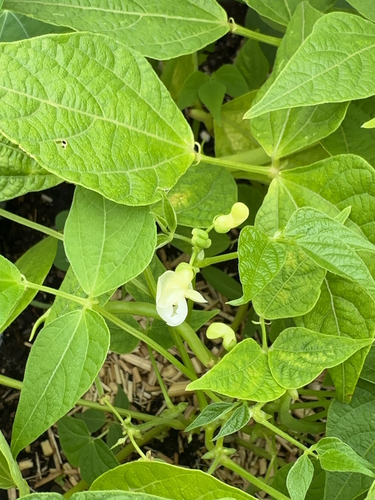
How to care for Common Bean
Watering
Common Bean (Phaseolus vulgaris) grows best in evenly moist, well-drained soil. Keep the root zone damp but never soggy, especially during flowering and pod set. Water deeply at the base of the plant rather than little and often, so roots grow downward.
Does it need water today?
Push a finger 3 cm into the soil near the roots. If it feels dry, water. If it feels moist, wait a day. For pots, lift the container: a light pot needs water, a heavy one does not.
Beans are sensitive to both drought and waterlogging. Water in the morning so leaves dry before evening, which helps prevent fungal disease. Mulch around the plants to hold moisture.
Overwatering
Common Bean has fleshy, shallow roots that suffocate in waterlogged soil, and it is prone to root rot from Pythium and Fusarium fungi when soil stays wet. Poor drainage quickly causes problems in this species.
Symptoms: Yellowing lower leaves, wilting despite wet soil, blackened or mushy stems at soil level, and seedlings that collapse.
Solutions: Stop watering and let the top 5 cm dry. Improve drainage by adding compost or perlite and ensure pots have holes. Remove badly rotted plants to prevent spread.
Underwatering
Common Bean is shallow-rooted and reacts quickly to drought, especially while flowering. Lack of water causes flowers to drop and pods to stay small and stringy.
Symptoms: Drooping leaves in the afternoon, dry crisp leaf edges, flowers falling without setting pods, and dry cracked soil pulling away from the pot edge.
Solutions: Water deeply at the base until the soil is evenly moist. Mulch to reduce evaporation and water again in the early morning during heat waves.
Sunlight
Common Bean is a warm-season annual that needs strong sunlight to flower and produce pods. Plants grown in too little light become tall, leggy, and produce few beans. Full sun gives the heaviest harvest.
- Ideal: Full sun · 6-8 hours of direct sun per day
- Tolerates: Full sun, Partial sun
- Best spot in a room: At the window
- Artificial light: Indoors, a full-spectrum grow light placed 15 to 30 cm above the plants for 12 to 14 hours per day can support growth. Beans are rarely grown indoors successfully, so a sunny outdoor spot is preferred.
Too little light
Common Bean relies on strong light to produce energy for flowering and pod development. Shade stretches stems toward light and reduces flower formation, which lowers yield.
Symptoms: Tall, weak, pale stems that flop over, small leaves spaced far apart, and few or no flowers or pods.
Solutions: Move the plant to the sunniest location available, ideally a south-facing spot. Outdoors, choose a site free from tree or building shade. Thin nearby plants so light reaches all leaves.
Too much sun
Common Bean tolerates strong sun but can suffer in extreme heat combined with intense midday light. Leaves can scorch and flowers may drop when temperatures stay above about 30°C.
Symptoms: Bleached or crispy leaf patches, leaves curling or wilting at midday, and flowers falling during heat waves.
Solutions: Provide light afternoon shade with shade cloth during heat waves. Mulch the soil and water in the morning to keep roots cool and moist.
Temperature
Common Bean grows best in warm weather between about 15 and 27 °C. Seeds rot in cold, wet soil, so sow only when the soil has warmed to at least 15 °C and frost has passed. The plant is killed by any frost, so keep it covered or move pots indoors if a late cold snap is forecast.
- Ideal: 15–27 °C
- Tolerates: 0–35 °C
- Hardiness zones: annual, grown as a summer crop in zones 3-11
Fertilizing
Common Bean is a legume that makes much of its own nitrogen through root bacteria, so it needs little nitrogen fertilizer. Too much nitrogen gives lush leaves but few beans. Phosphorus and potassium support flowering and pod filling, so feed for those once plants start to bloom.
- Slow-release fertilizer: Mix a balanced slow-release granular fertilizer into the soil once at planting time in late spring. Do not repeat it during the season.
- Balanced granular fertilizer labelled around 5-10-10 or similar, Compost or well-rotted manure worked into the soil before sowing, Liquid seaweed or fish emulsion for a gentle feed, Low-nitrogen liquid tomato or bean feed when flowering begins
Soil
Common Bean grows best in fertile, well-drained soil that is rich in organic matter. Waterlogged or compacted soil causes root rot, so good drainage matters more than fertility. Warm soil, at least 15 °C, is needed for good germination.
- Loamy garden soil: Roughly 40 percent sand, 40 percent silt, and 20 percent clay, with good organic matter.
- Light potting mix: Peat- or coir-based mix blended with about 20 percent perlite or coarse sand and a small amount of compost.
- Sandy loam: Mostly sand with silt and a moderate amount of compost worked in for water retention.
- pH 6–7.5
Repotting
Common Bean (Phaseolus vulgaris) has a delicate taproot that resents disturbance, so avoid repotting once plants are growing well. Sow seeds directly in the final pot whenever possible. If you start seedlings indoors, use biodegradable pots so the roots are not disturbed at planting time.
- How often: Usually once per crop. Common Bean is a fast annual that is sown in its final container or bed, so repotting is only needed when moving seedlings started indoors.
- New pot: Bush varieties: 25 to 30 cm wide and 25 cm deep. Pole varieties: at least 35 to 40 cm deep, with a sturdy support.
- Repotting season: Spring, Summer
How to repot
- Dig a hole in the new pot or bed that is slightly deeper and wider than the root ball.
- If using a peat or paper pot, tear off the top rim so it does not wick moisture away from the roots, then place the whole pot in the hole.
- If the seedling is in a plastic cell, gently squeeze the base and slide the root ball out without pulling on the stem.
- Set the seedling at the same depth it was growing before, firm the soil lightly around it, and water thoroughly.
- Space bush plants about 10 to 15 cm apart and pole plants about 15 to 20 cm apart. Leave room for air to move between leaves.
Pruning
Common beans need very little pruning. Pinching and removing damaged or diseased growth is the main task. Never remove more than a small share of the leaves at once, since the plant makes its food through its leaves.
Pruning season: Summer, Autumn
How to prune
- When bush beans are about 15 cm tall, pinch out the growing tip with your fingers to encourage side branching and a bushier plant.
- Remove yellowing, spotted, or wilted leaves at the base of the stem as soon as you see them.
- On pole beans, pinch out the top growth once the vine reaches the top of its support so it fills in lower and produces more pods.
- Cut off any faded flowers that are not forming pods to keep energy going toward developing beans.
- Stop pruning about two weeks before your final harvest to avoid stressing the plant while pods mature.
Propagation
Direct sowing of seed · Spring, Summer
- Wait until the top 10 cm of soil reaches at least 15 °C and frost has passed, usually two to three weeks after the last spring frost.
- Choose a sunny spot with well-drained soil that has not grown beans or peas in the last three years.
- Sow seeds 2.5 to 4 cm deep and 8 to 10 cm apart in rows about 45 cm apart, or in small clusters for bush types.
- Water gently after sowing and keep the soil evenly moist but not soggy until seedlings emerge in about 7 to 10 days.
- Thin weak seedlings so the strongest plants stand at the final spacing, leaving the healthiest one in each spot.
Starting seed indoors · Spring
- Sow seeds 2.5 cm deep in 8 cm pots about three to four weeks before your last expected frost date.
- Keep pots at 18 to 24 °C in a bright window or under grow lights until seedlings appear.
- Harden seedlings off over seven to ten days by setting them outside for gradually longer periods in mild weather.
- Transplant carefully in late spring, minimizing root disturbance, since common beans dislike having their roots handled.
Saving seed from your own plants · Autumn
- Leave a few of the healthiest pods on the plant until they turn dry, brown, and rattle when shaken.
- Pick the dry pods on a dry day and open them over a tray to release the seeds.
- Spread seeds on a screen in a warm, dry, airy room for about two weeks until they are hard and brittle.
- Store seeds in a labeled paper envelope in a cool, dry, dark place. Viable seed usually lasts three years or more.
Do not soak common bean seed before planting in cold soil, as this can cause the seed coat to split and the seed to rot. Plant in warm soil and water only when the top layer is dry.
About Common Bean
Also known as: Kidney bean, Common bean, French bean, Haricot bean
- Plant type: herb, climber, annual vegetable
- Lifespan: annual
- Distribution: Native to Mesoamerica and the Andes of South America, where it was domesticated.
- Mature height: Bush types 30-60 cm; climbing types 2-3 m
- Bloom time: Early to mid summer, about 6-8 weeks after sowing
Pets · People
Pets: Toxic · People: Toxic. Raw or undercooked beans contain phytohaemagglutinin (lectins) and can cause vomiting and diarrhea; cooked beans are safe. Sprouts and raw pods should not be eaten. ASPCA lists the plant as toxic to dogs, cats and horses when ingested in quantity.
Common problems
- Bean rust: Orange-brown pustules form on leaves, reducing photosynthesis; avoid overhead watering and remove affected leaves.
- Root rot: Waterlogged or cold soil causes blackened roots and wilting; improve drainage and avoid sowing too early.
- Aphids: Clusters on young shoots and pods that distort growth; spray off with water or use insecticidal soap.
- Bean common mosaic virus: Mottled, puckered leaves spread by aphids and seed; use certified seed and remove infected plants.
- Poor pod set: Flowers drop when temperatures exceed about 30 °C or nights are cold, or when nitrogen is too high.
Uses
Dried beans, fresh green beans and shell beans are staples in cuisines across the Americas, Europe, Africa and Asia. Beans provide protein, fibre and iron, and the dried seeds store well for months. Plants are also grown as cover crops and green manure to improve soil fertility.
Is it edible?
Seeds (dry or fresh), immature pods (green beans) and shelled seeds must be cooked thoroughly; raw seeds and pods are toxic.
History & legends
Archaeological finds in Mexico and Peru show beans were cultivated more than 7,000 years ago, and they became one of the Three Sisters with maize and squash in Indigenous North American agriculture. Beans spread to Europe and the rest of the world after 1492 and quickly became staple foods in many regions.
Did you know?
Beans are legumes that partner with Rhizobium bacteria in root nodules, which convert atmospheric nitrogen into usable forms, so a bean crop often leaves the soil richer than it found it.
Frequently asked questions
How often should I water Common Bean?
every 3 days. Common Bean (Phaseolus vulgaris) grows best in evenly moist, well-drained soil. Keep the root zone damp but never soggy, especially during flowering and pod set. Water deeply at the base of the plant rather than little and often, so roots grow downward. Push a finger 3 cm into the soil near the roots. If it feels dry, water. If it feels moist, wait a day. For pots, lift the container: a light pot needs water, a heavy one does not.
How much light does Common Bean need?
Full sun (6-8 hours of direct sun per day). Common Bean is a warm-season annual that needs strong sunlight to flower and produce pods. Plants grown in too little light become tall, leggy, and produce few beans. Full sun gives the heaviest harvest.
What temperature does Common Bean like?
15–27 °C. Common Bean grows best in warm weather between about 15 and 27 °C. Seeds rot in cold, wet soil, so sow only when the soil has warmed to at least 15 °C and frost has passed. The plant is killed by any frost, so keep it covered or move pots indoors if a late cold snap is forecast.
Is Common Bean toxic to cats and dogs?
It is toxic to cats and dogs: keep it out of their reach. Raw or undercooked beans contain phytohaemagglutinin (lectins) and can cause vomiting and diarrhea; cooked beans are safe. Sprouts and raw pods should not be eaten. ASPCA lists the plant as toxic to dogs, cats and horses when ingested in quantity.
What are the most common problems of Common Bean?
Bean rust: Orange-brown pustules form on leaves, reducing photosynthesis; avoid overhead watering and remove affected leaves. Root rot: Waterlogged or cold soil causes blackened roots and wilting; improve drainage and avoid sowing too early. Aphids: Clusters on young shoots and pods that distort growth; spray off with water or use insecticidal soap. Bean common mosaic virus: Mottled, puckered leaves spread by aphids and seed; use certified seed and remove infected plants. Poor pod set: Flowers drop when temperatures exceed about 30 °C or nights are cold, or when nitrogen is too high.
When should I repot Common Bean?
Usually once per crop. Common Bean is a fast annual that is sown in its final container or bed, so repotting is only needed when moving seedlings started indoors.. Common Bean (Phaseolus vulgaris) has a delicate taproot that resents disturbance, so avoid repotting once plants are growing well. Sow seeds directly in the final pot whenever possible. If you start seedlings indoors, use biodegradable pots so the roots are not disturbed at planting time.
How do I propagate Common Bean?
Direct sowing of seed, Starting seed indoors, Saving seed from your own plants. Wait until the top 10 cm of soil reaches at least 15 °C and frost has passed, usually two to three weeks after the last spring frost. Choose a sunny spot with well-drained soil that has not grown beans or peas in the last three years. Sow seeds 2.5 to 4 cm deep and 8 to 10 cm apart in rows about 45 cm apart, or in small clusters for bush types. Water gently after sowing and keep the soil evenly moist but not soggy until seedlings emerge in about 7 to 10 days. Thin weak seedlings so the strongest plants stand at the final spacing, leaving the healthiest one in each spot.
How this guide was written
Verdiss writes each guide with AI from botanical references and checks the species against iNaturalist and Plants of the World Online (Kew). Readers can rate every guide in the app.
Sources
Verdiss's information is for general guidance. Never eat or use a plant as medicine based on an app: ask a professional.