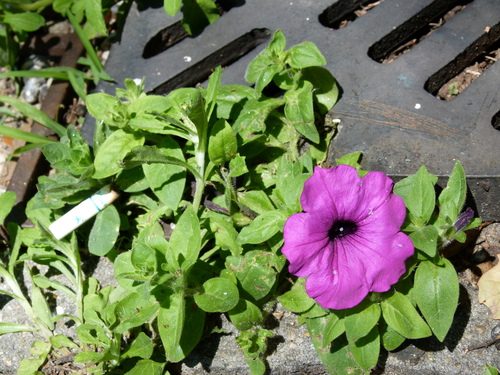
How to care for garden petunia
Watering
Garden petunia (Petunia × atkinsiana) likes evenly moist soil that is never soggy. Its large, papery flowers wilt fast when thirsty, but it also rots easily in waterlogged pots. Water deeply when the top layer of soil dries, and use a free-draining potting mix. In summer, plants in hanging baskets or containers may need water every day in hot, windy weather.
Does it need water today?
Push a finger 2 cm into the soil. If it feels dry, water it. You can also lift the pot: a dry pot feels light, while a freshly watered pot feels heavy. Wilting in the afternoon is a sign it needs water, but check the soil first, because petunias can also wilt in the heat after a good watering.
Water the soil, not the flowers. Wet petals and leaves encourage grey mould (Botrytis) and make blooms look ragged. Water in the morning so foliage can dry before evening.
Overwatering
Garden petunias have fine, shallow roots that need air as well as water. Soggy soil starves them of oxygen, and the roots can quickly rot, which is a common reason petunias die in containers.
Symptoms: Yellowing lower leaves, a mushy or dark stem near the soil line, a sour smell from the soil, and sudden wilting even though the soil is wet.
Solutions: Stop watering and let the top 5 cm of soil dry out. Make sure the pot has drainage holes and empty any saucer after watering. If the roots look brown and mushy, tip the plant out, cut away rotten roots, and repot in fresh, free-draining mix. Trim damaged stems back to healthy green tissue.
Underwatering
Petunias have big, thin-walled flowers and soft leaves, so they lose water quickly in heat and wind. Their blooms collapse fast, though a well-grown plant usually recovers within hours of a good drink.
Symptoms: Drooping leaves and flowers, dry or crispy leaf edges, soil pulling away from the pot edge, and fewer new buds.
Solutions: Water thoroughly until it drains from the base. If the soil is very dry and hard, soak the pot in a bucket of water for 20 minutes. Move hanging baskets and containers to a cooler, shadier spot during heat waves, and mulch the soil surface if the plant is in the ground.
Sunlight
Garden petunia (Petunia × atkinsiana) is a sun-loving bedding plant. The more direct sun it gets, the more flowers it will produce. In partial shade it grows taller, becomes leggy, and blooms less, but it can still flower. Full sun is best outdoors, and a sunny balcony, patio, or south-facing window suits it indoors.
- Ideal: Full sun · 6-8 hours of direct sun a day
- Tolerates: Full sun, Partial sun
- Best spot in a room: At the window
- Artificial light: Petunias grown indoors need a strong grow light for 12 to 14 hours a day. A full-spectrum LED placed 15 to 30 cm above the plants works well. Keep the light on a timer so the plant gets a consistent day length.
Too little light
Garden petunias rely on strong sunlight to make the energy needed for flowering. Without enough light, they stretch toward the nearest light source and stop blooming well.
Symptoms: Long, thin, pale stems, leaves spaced far apart, few or no flowers, and plants leaning toward a window.
Solutions: Move the plant to the sunniest spot you have, such as a south-facing windowsill or outdoors on a sunny patio. Rotate the pot every few days so it grows evenly. Pinch back the tips to encourage bushier growth, and add a grow light if the plant is indoors.
Too much sun
Petunias can handle plenty of sun, but in extreme heat and intense midday light, especially in very hot climates, the large flowers and leaves can scorch and fade quickly.
Symptoms: Crispy brown patches on leaves, faded or bleached flower colour, and flowers that close early or wilt by midday even when the soil is moist.
Solutions: Water well in the morning and move containers to lighter shade during the hottest part of the afternoon. Remove scorched leaves and dead flowers. Choosing a sheltered spot with morning sun and afternoon shade usually solves the problem.
Temperature
Garden petunia (Petunia × atkinsiana) is a warm-season bedding plant that thrives in mild sunny days and cool nights. It is tender and will be killed by any hard frost, so plant it outdoors only after the last frost has passed. Heat above about 30°C slows flowering, and sustained heat with dry soil can stop blooms entirely.
- Ideal: 15–24 °C
- Tolerates: -2–35 °C
- Hardiness zones: 9-11 as a perennial; annual elsewhere
Fertilizing
Garden petunia is a heavy, continuous bloomer and needs regular feeding to keep flowering through summer. Feed container plants more often than those in the ground, since frequent watering washes nutrients out of the pot. Stop feeding in late summer as growth slows, and avoid fertilizing a plant that is wilting from drought or heat.
- Slow-release fertilizer: Once at planting time in spring, mixing a granular slow-release fertilizer into the soil or potting mix; no further slow-release application is usually needed for a single season.
- Balanced liquid fertilizer such as 20-20-20 for flowering annuals, Higher-phosphorus bloom booster such as 10-30-20 for more flowers, used sparingly, Slow-release granular fertilizer formulated for bedding plants or containers, Well-rotted compost worked into garden soil before planting
Soil
Garden petunias grow best in a fertile, well-drained, slightly acidic medium. The soil must hold moisture without becoming soggy, because wet roots are the main threat to this hybrid. Rich organic matter supports the continuous blooming it is known for.
- Peat-free multipurpose compost: A blend of coir or composted bark with added perlite or sand, often with a slow-release feed. This is the easiest choice for containers and beds.
- Loam-based potting mix: Sterilised loam with grit, peat-free or peat-based, which holds nutrients and supports heavy flowering in large pots.
- Free-draining garden bed soil: Fertile garden loam mixed with 20 to 30 percent compost and a handful of horticultural grit per square metre to prevent waterlogging.
- pH 5.5–6.5
Repotting
Garden petunia (Petunia × atkinsiana) is a fast-growing hybrid with shallow, spreading roots and heavy flowering. It needs room for roots, sharp drainage, and fresh compost, because crowded or waterlogged pots quickly lead to yellow leaves and fewer blooms.
- How often: Every year or replace plants each season; garden petunias are short-lived and usually grown as annuals, so repot young plants once when they outgrow their pot.
- New pot: Move seedlings or nursery plants up one pot size, typically from a 10 cm pot to a 15 to 25 cm pot (or a hanging basket of 25 to 30 cm). Choose a container with drainage holes.
- Repotting season: Spring, Summer
How to repot
- Fill the new pot with a layer of compost so the top of the root ball sits about 2 cm below the rim.
- Tip the plant out by holding the stem at the base and gently squeezing the pot.
- Loosen the outer roots with your fingers. Tease apart any tight circles at the base.
- Set the plant in the centre of the new pot at the same depth it grew before.
- Fill around the root ball with compost and firm it lightly with your fingers. Leave a gap of about 2 cm at the top for watering.
- Water thoroughly until water drains from the holes, then keep the pot out of strong afternoon sun for a few days.
Pruning
Garden petunia is a tender perennial grown as an annual in most climates. Pinch or cut back the stems rather than cutting into old, bare wood, because stems that have lost all leaves seldom regrow well.
Pruning season: Spring, Summer, Autumn
How to prune
- Deadhead regularly by pinching off faded flowers at the point where they join the stem, or snip just above a leaf node.
- In mid-summer, when the plant becomes leggy or flowering slows, cut the longest stems back by about one third to one half, to just above a set of healthy leaves.
- Pinch out the growing tips of young plants when they are about 10 cm tall to encourage side branching early in the season.
- Remove yellowed, damaged or diseased leaves at the base of the plant to keep the centre open to air.
- Feed with a balanced liquid fertiliser for a week or two after a hard cutback, so the plant can push out fresh growth and bloom again.
- In autumn, remove the whole plant if it is an annual in your area or if frost has blackened it; do not leave dead stems on the soil surface.
Propagation
Stem cuttings · Spring, Summer
- Take 8 to 10 cm cuttings from healthy, non-flowering tips of a vigorous Petunia × atkinsiana plant in the morning.
- Strip the lower leaves so that two or three sets of leaves remain at the top.
- Dip the cut end in rooting hormone if you have it, then insert it into moist seed-starting mix or a 50:50 mix of perlite and peat.
- Cover loosely with a clear plastic bag or dome to hold humidity, and keep at about 20 to 24 °C in bright, indirect light.
- Check after two to three weeks; a gentle tug that meets resistance means roots have formed. Remove the cover and pot up into a small container.
Seed sowing · Winter, Spring
- Sow the very fine seed indoors about 10 to 12 weeks before the last spring frost, since garden petunia seed is very small and slow to grow.
- Fill a tray with fine, sterile seed-starting mix, moisten it, then scatter the seed on the surface without covering it, because light helps germination.
- Cover the tray with a clear lid and keep at about 21 to 24 °C. Seed usually sprouts in 7 to 14 days.
- Once seedlings have two true leaves, mist them lightly or water from below, and keep them under bright grow lights or a sunny window.
- Prick out seedlings into individual cells once they are large enough to handle, and harden them off over one to two weeks before planting outdoors after frost.
Garden petunia cuttings root most reliably when taken from the tips of young shoots in late spring or early summer. Avoid overly wet mix, since damping-off and grey mould are the main reasons cuttings fail.
About garden petunia
Also known as: Garden petunia, Hybrid petunia, Common petunia
- Plant type: herb, bedding plant
- Lifespan: Perennial in frost-free climates, but grown as an annual in most gardens.
- Distribution: The parent species are native to Argentina, Uruguay and southern Brazil; the hybrid itself exists only in cultivation.
- Mature height: 20-60 cm
- Bloom time: late spring to first frosts
Pets · People
Pets: Safe · People: Safe. Petunia is not listed as toxic to cats, dogs or horses by the ASPCA. Eating large amounts may cause mild stomach upset, so keep plants out of reach of chewing pets.
Common problems
- Aphids: Colonies gather on young shoots and flower buds, distorting growth; wash them off with water or use insecticidal soap.
- Spider mites: Hot, dry conditions cause stippled, bronzed leaves and fine webbing; raise humidity around the plant and spray with water.
- Grey mould (Botrytis): Wet, crowded foliage and faded flowers become covered in grey fuzz; improve airflow and remove dead flowers promptly.
- Root rot: Waterlogged compost causes wilting despite wet soil; use free-draining mix and pots with drainage holes.
- Leggy growth: Insufficient light stretches stems and reduces flowering; move the plant to a sunnier position and pinch regularly.
Uses
Petunia × atkinsiana is grown almost entirely as an ornamental, used in summer bedding, hanging baskets, window boxes and containers, valued for its long flowering season and wide colour choice. It is also a common plant in public planting schemes in towns and parks.
Is it edible?
not edible
History & legends
Petunias were first described in the early nineteenth century after collectors brought the South American species to Europe. Breeders soon began crossing them, and the hybrid lines that appeared in the nineteenth and twentieth centuries became the flowers now seen in gardens worldwide. No single myth is firmly attached to the hybrid itself.
Did you know?
Petunias get their name from the Tupi word petun, meaning tobacco, because they belong to the same family, Solanaceae, as tobacco and potato.
Frequently asked questions
How often should I water garden petunia?
every 3 days. Garden petunia (Petunia × atkinsiana) likes evenly moist soil that is never soggy. Its large, papery flowers wilt fast when thirsty, but it also rots easily in waterlogged pots. Water deeply when the top layer of soil dries, and use a free-draining potting mix. In summer, plants in hanging baskets or containers may need water every day in hot, windy weather. Push a finger 2 cm into the soil. If it feels dry, water it. You can also lift the pot: a dry pot feels light, while a freshly watered pot feels heavy. Wilting in the afternoon is a sign it needs water, but check the soil first, because petunias can also wilt in the heat after a good watering.
How much light does garden petunia need?
Full sun (6-8 hours of direct sun a day). Garden petunia (Petunia × atkinsiana) is a sun-loving bedding plant. The more direct sun it gets, the more flowers it will produce. In partial shade it grows taller, becomes leggy, and blooms less, but it can still flower. Full sun is best outdoors, and a sunny balcony, patio, or south-facing window suits it indoors.
What temperature does garden petunia like?
15–24 °C. Garden petunia (Petunia × atkinsiana) is a warm-season bedding plant that thrives in mild sunny days and cool nights. It is tender and will be killed by any hard frost, so plant it outdoors only after the last frost has passed. Heat above about 30°C slows flowering, and sustained heat with dry soil can stop blooms entirely.
Is garden petunia toxic to cats and dogs?
It is safe for cats and dogs. Petunia is not listed as toxic to cats, dogs or horses by the ASPCA. Eating large amounts may cause mild stomach upset, so keep plants out of reach of chewing pets.
What are the most common problems of garden petunia?
Aphids: Colonies gather on young shoots and flower buds, distorting growth; wash them off with water or use insecticidal soap. Spider mites: Hot, dry conditions cause stippled, bronzed leaves and fine webbing; raise humidity around the plant and spray with water. Grey mould (Botrytis): Wet, crowded foliage and faded flowers become covered in grey fuzz; improve airflow and remove dead flowers promptly. Root rot: Waterlogged compost causes wilting despite wet soil; use free-draining mix and pots with drainage holes. Leggy growth: Insufficient light stretches stems and reduces flowering; move the plant to a sunnier position and pinch regularly.
When should I repot garden petunia?
Every year or replace plants each season; garden petunias are short-lived and usually grown as annuals, so repot young plants once when they outgrow their pot.. Garden petunia (Petunia × atkinsiana) is a fast-growing hybrid with shallow, spreading roots and heavy flowering. It needs room for roots, sharp drainage, and fresh compost, because crowded or waterlogged pots quickly lead to yellow leaves and fewer blooms.
How do I propagate garden petunia?
Stem cuttings, Seed sowing. Take 8 to 10 cm cuttings from healthy, non-flowering tips of a vigorous Petunia × atkinsiana plant in the morning. Strip the lower leaves so that two or three sets of leaves remain at the top. Dip the cut end in rooting hormone if you have it, then insert it into moist seed-starting mix or a 50:50 mix of perlite and peat. Cover loosely with a clear plastic bag or dome to hold humidity, and keep at about 20 to 24 °C in bright, indirect light. Check after two to three weeks; a gentle tug that meets resistance means roots have formed. Remove the cover and pot up into a small container.
How this guide was written
Verdiss writes each guide with AI from botanical references and checks the species against iNaturalist and Plants of the World Online (Kew). Readers can rate every guide in the app.
Sources
Verdiss's information is for general guidance. Never eat or use a plant as medicine based on an app: ask a professional.