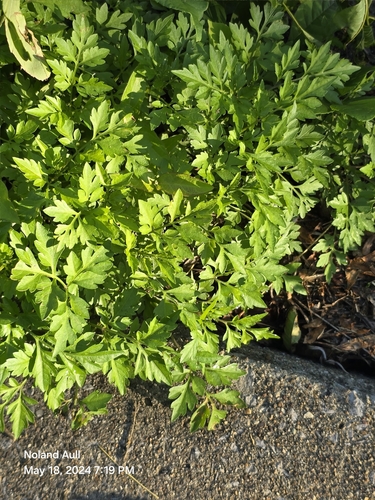
How to care for garden parsley
Watering
Garden parsley (Petroselinum crispum) likes evenly moist soil that never dries out completely, but it hates sitting in water. Its shallow, fleshy roots rot quickly in soggy pots. Water deeply when the top layer feels dry, and let the excess drain away. Pots need drainage holes, and parsley grown in containers usually needs more frequent watering than parsley in the ground. Keep foliage dry where possible, especially in cool weather, to reduce fungal problems.
Does it need water today?
Push your finger about 2 cm (roughly one knuckle) into the soil. If it feels dry, water now. If it feels cool and damp, wait a day and check again. For pots, lift the container: a light pot needs water, a heavy one does not. Parsley wilts dramatically when thirsty, but it recovers within hours after a drink; if it wilts often, the soil is drying out too fast.
Water at the base of the plant in the morning so the leaves dry before evening. Mulching bed parsley with straw or compost helps keep soil moisture steady through summer heat.
Overwatering
Garden parsley has thin, fleshy taproots that need oxygen in the soil to stay healthy. When the soil stays waterlogged, roots suffocate and rot, and the plant cannot take up water even when it is surrounded by it. Parsley is especially prone to this in heavy clay soil and in pots without drainage.
Symptoms: Yellowing lower leaves, a mushy or brown base of the stem, a sour or rotten smell from the soil, sudden wilting even when the soil is wet, and fungal spots or grey fuzz on stems.
Solutions: Stop watering and let the top few centimetres dry out. Check the roots: healthy ones are firm and pale, while rotten ones are brown and soft; cut away the damaged parts. Repot into fresh, well-drained soil in a container with drainage holes, or improve the bed with compost and grit. Remove yellow or damaged leaves and water only when the soil has dried slightly.
Underwatering
Parsley has shallow roots and large, thin leaves that lose water quickly, especially in warm sun or wind. Because its roots sit near the surface, dry soil stresses the plant within a day or two in summer. Persistent drought also makes parsley send up flower stalks early and turn bitter.
Symptoms: Drooping, limp leaves, dry or crispy leaf edges, slow regrowth, stems turning tough or woody, and early bolting (flower stalks forming) with bitter-tasting leaves.
Solutions: Water thoroughly until moisture reaches the root zone, then keep the soil evenly damp. In pots, water until it drains from the base. Move the plant out of hot, windy spots, and mulch outdoor beds. Trim off any badly damaged stems, and the plant will usually regrow new leaves within a couple of weeks.
Sunlight
Garden parsley (Petroselinum crispum) grows best in bright conditions and produces the most lush, flavourful leaves with about 4 to 6 hours of sun daily. It tolerates full sun in cool climates and partial shade in hot ones. Too little light makes plants leggy, with sparse leaves, while intense afternoon sun in summer can scorch foliage and speed up bolting.
- Ideal: Partial sun · 4-6 hours of direct sun per day, ideally morning sun with some afternoon shade in hot climates
- Tolerates: Full sun, Partial sun, Bright, indirect light
- Best spot in a room: At the window
- Artificial light: Parsley grown indoors needs a bright south- or west-facing window or a grow light set about 15 to 30 cm above the leaves for 12 to 14 hours a day. Without enough light, indoor parsley becomes pale and weak, so rotate the pot weekly so the plant grows evenly.
Too little light
Parsley is a leafy biennial that relies on steady light to build the sugars needed for lush leaf growth. In low light it stretches toward any available brightness and produces few leaves, which means less harvest and weaker plants that are more prone to pests and disease.
Symptoms: Tall, thin stems with long gaps between leaves, pale green or yellowish foliage, floppy growth that leans toward the window, and few new leaves over several weeks.
Solutions: Move the plant closer to the brightest window or outdoors to a sunnier spot. Add a grow light for indoor plants, and rotate the pot every few days. Trim leggy stems to encourage bushier growth, and avoid heavy feeding while light is low.
Too much sun
Although parsley enjoys sun, intense midday and summer heat can overwhelm its delicate leaves. Parsley is a cool-season plant at heart, so strong, hot light combined with dry air causes stress, scorching, and early flowering.
Symptoms: Bleached or white patches on leaves, crispy brown leaf edges, leaves that look dull or wilted at midday, and flower stalks forming quickly during hot weather.
Solutions: Provide light afternoon shade with a shade cloth or by placing parsley beside taller plants. Water consistently so leaves can cope with heat, and move potted plants to a more sheltered spot during heatwaves. Harvest regularly and remove flower stalks promptly to keep leaves tender.
Temperature
Garden parsley (Petroselinum crispum) is a cool-season biennial herb. It grows best in mild weather, bolts to flower when hot or long days arrive, and tolerates light frost well once established.
- Ideal: 13–24 °C
- Tolerates: -5–32 °C
- Hardiness zones: 5-9
Fertilizing
Garden parsley is a leafy herb, so it benefits most from nitrogen that supports leaf growth. Feed lightly and steadily, because too much fertilizer makes leaves weak and can reduce their flavor.
- Slow-release fertilizer: Once a year in early spring, mix a light handful of compost or a balanced slow-release granular fertilizer into the soil around the plants.
- Compost or well-rotted manure, Balanced liquid fertilizer such as 10-10-10 or fish emulsion, Nitrogen-rich slow-release granules in moderation, Liquid seaweed extract
Soil
Garden parsley grows best in deep, fertile, moisture-retentive soil that drains freely. Heavy, waterlogged soil invites root rot, while very dry, sandy soil produces small, tough leaves. Good soil also keeps the taproot straight and makes harvesting easier.
- Rich loam-based potting mix: Roughly 40 percent loam or good-quality peat-free compost, 30 percent perlite or coarse sand, and 30 percent well-rotted compost or leaf mold.
- Garden bed soil for parsley: Native loam enriched with 5 cm of well-rotted compost dug in to about 30 cm depth, with a little sand added if the soil is heavy clay.
- pH 6–7.5
Repotting
Garden parsley (Petroselinum crispum) resents root disturbance. Its taproot can be damaged during repotting, which may cause the plant to bolt or stall. Always handle the root ball gently and use a container with drainage holes.
- How often: Every 1-2 years, or when roots fill the pot. Parsley has a long taproot and is best grown from seed or young plants in its final container, so repot only when necessary.
- New pot: Choose a pot at least 25-30 cm deep and 20-25 cm wide for a single garden parsley plant. Deep containers matter more than wide ones because the taproot grows downward.
- Repotting season: Spring, Summer
How to repot
- Tip the pot on its side and gently ease the plant out, supporting the base of the stems.
- Loosen the outer roots with your fingers. Do not pull the taproot or break it.
- Check the root ball for rot. Trim any brown, mushy, or hollow roots with clean scissors.
- Set the plant in the new pot at the same depth it grew before, with the crown just above the soil line.
- Fill around the roots with fresh mix, firm it gently, and leave a 2 cm gap at the top for watering.
- Water thoroughly until water drains from the holes, then place the pot in a sheltered spot out of direct midday sun.
Pruning
Pinch or cut outer stems at the base rather than taking off only the tips, so the plant keeps producing new shoots from the centre. Never remove more than about one third of the foliage at once, because parsley relies on its leaves to rebuild its root reserves.
Pruning season: Spring, Summer, Autumn
How to prune
- Identify the outer, largest stems, which are the oldest and most mature leaves.
- Cut each chosen stem at its base, close to the crown, using clean scissors.
- Leave at least half of the leaves on the plant so it can keep growing.
- Remove any yellow or diseased leaves at the base at the same time.
- When flower stalks appear in the second year, cut them back to encourage leaf growth, unless you want to save seed.
- In autumn, cut back dead or damaged foliage and clear debris from around the crown to reduce overwintering pests.
Propagation
Seed sowing · Spring, Summer
- Sow parsley seed directly in the ground or in deep pots as soon as the soil can be worked in early spring, once it has reached about 10 °C.
- Soak the seeds in lukewarm water for 12 to 24 hours before sowing to speed germination, which is slow and can take 2 to 4 weeks.
- Sow seeds 0.5 cm deep and keep the soil evenly moist but not waterlogged.
- Thin seedlings to about 20 cm apart once they have two or three true leaves.
- Sow again every 3 to 4 weeks through early summer for a steady supply of leaves.
Division of clumps · Spring, Autumn
- Parsley has a long taproot and resents division, so this method works only on young, multi-crowned plants.
- In early spring, lift a young plant carefully with a garden fork, keeping as much root as possible.
- Gently tease apart any naturally separated crowns with your fingers and replant each piece at the same depth it grew before.
- Water well and shade the divisions for a few days while they recover.
Parsley dislikes root disturbance, so sow in its final position or in deep pots such as root trainers, and avoid transplanting seedlings with bare roots. Let a few plants bolt and flower in their second year, then collect the brown seed heads when dry for next season's sowing.
About garden parsley
Also known as: Curly parsley, Garden parsley, Persil frisé
- Plant type: herb, biennial plant
- Lifespan: biennial
- Distribution: Native to the central Mediterranean region, probably Sardinia and nearby North African coasts, and now naturalised across much of Europe.
- Mature height: 30-60 cm
- Bloom time: Summer of its second year
Pets · People
Pets: Toxic · People: Mildly toxic. Contains furanocoumarins and apiole, especially in seeds and roots; cats, dogs and horses can suffer vomiting, photosensitivity or kidney irritation if they eat large amounts. Culinary leaf quantities are generally harmless to people, but the seeds and roots are concentrated and should be avoided by children.
Common problems
- Bolting: Heat or long days trigger early flowering, making leaves bitter; pick often and sow in cooler seasons.
- Carrot rust fly: Larvae tunnel into roots and stems, causing wilting; use fine insect mesh and rotate planting areas.
- Parsley worms: Caterpillars of the swallowtail butterfly feed on foliage; hand-pick them, or leave some to protect the plant.
- Root rot: Waterlogged soil causes the taproot to decay; ensure drainage and avoid overwatering.
- Slow germination: Seeds can take 3 weeks or more to sprout; soak them overnight before sowing to speed things up.
Uses
Parsley is one of the most widely used culinary herbs, chopped fresh over soups, salads, potatoes, fish and sauces such as chimichurri and tabbouleh. It is also used in traditional medicine as a diuretic and digestive aid, and the dried leaves serve as a mild flavouring in commercial seasonings.
Is it edible?
The leaves and stems are edible fresh or dried; the roots and seeds are also edible and used in cooking, but in larger amounts they are concentrated and better avoided during pregnancy.
History & legends
Ancient Greeks associated parsley with death and used it to crown victors and decorate tombs, as in the legend that it sprang from the blood of Archemorus. Romans considered it a symbol of mourning, and its use spread through medieval Europe as a medicinal and culinary herb.
Did you know?
Parsley seeds can take three or more weeks to germinate, and old folklore claimed they had to pass through the devil seven times before sprouting.
Frequently asked questions
How often should I water garden parsley?
every 3 days. Garden parsley (Petroselinum crispum) likes evenly moist soil that never dries out completely, but it hates sitting in water. Its shallow, fleshy roots rot quickly in soggy pots. Water deeply when the top layer feels dry, and let the excess drain away. Pots need drainage holes, and parsley grown in containers usually needs more frequent watering than parsley in the ground. Keep foliage dry where possible, especially in cool weather, to reduce fungal problems. Push your finger about 2 cm (roughly one knuckle) into the soil. If it feels dry, water now. If it feels cool and damp, wait a day and check again. For pots, lift the container: a light pot needs water, a heavy one does not. Parsley wilts dramatically when thirsty, but it recovers within hours after a drink; if it wilts often, the soil is drying out too fast.
How much light does garden parsley need?
Partial sun (4-6 hours of direct sun per day, ideally morning sun with some afternoon shade in hot climates). Garden parsley (Petroselinum crispum) grows best in bright conditions and produces the most lush, flavourful leaves with about 4 to 6 hours of sun daily. It tolerates full sun in cool climates and partial shade in hot ones. Too little light makes plants leggy, with sparse leaves, while intense afternoon sun in summer can scorch foliage and speed up bolting.
What temperature does garden parsley like?
13–24 °C. Garden parsley (Petroselinum crispum) is a cool-season biennial herb. It grows best in mild weather, bolts to flower when hot or long days arrive, and tolerates light frost well once established.
Is garden parsley toxic to cats and dogs?
It is toxic to cats and dogs: keep it out of their reach. Contains furanocoumarins and apiole, especially in seeds and roots; cats, dogs and horses can suffer vomiting, photosensitivity or kidney irritation if they eat large amounts. Culinary leaf quantities are generally harmless to people, but the seeds and roots are concentrated and should be avoided by children.
What are the most common problems of garden parsley?
Bolting: Heat or long days trigger early flowering, making leaves bitter; pick often and sow in cooler seasons. Carrot rust fly: Larvae tunnel into roots and stems, causing wilting; use fine insect mesh and rotate planting areas. Parsley worms: Caterpillars of the swallowtail butterfly feed on foliage; hand-pick them, or leave some to protect the plant. Root rot: Waterlogged soil causes the taproot to decay; ensure drainage and avoid overwatering. Slow germination: Seeds can take 3 weeks or more to sprout; soak them overnight before sowing to speed things up.
When should I repot garden parsley?
Every 1-2 years, or when roots fill the pot. Parsley has a long taproot and is best grown from seed or young plants in its final container, so repot only when necessary.. Garden parsley (Petroselinum crispum) resents root disturbance. Its taproot can be damaged during repotting, which may cause the plant to bolt or stall. Always handle the root ball gently and use a container with drainage holes.
How do I propagate garden parsley?
Seed sowing, Division of clumps. Sow parsley seed directly in the ground or in deep pots as soon as the soil can be worked in early spring, once it has reached about 10 °C. Soak the seeds in lukewarm water for 12 to 24 hours before sowing to speed germination, which is slow and can take 2 to 4 weeks. Sow seeds 0.5 cm deep and keep the soil evenly moist but not waterlogged. Thin seedlings to about 20 cm apart once they have two or three true leaves. Sow again every 3 to 4 weeks through early summer for a steady supply of leaves.
How this guide was written
Verdiss writes each guide with AI from botanical references and checks the species against iNaturalist and Plants of the World Online (Kew). Readers can rate every guide in the app.
Sources
Verdiss's information is for general guidance. Never eat or use a plant as medicine based on an app: ask a professional.