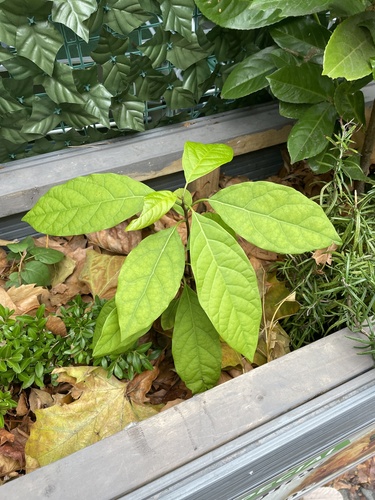
How to care for Avocado
Watering
Avocado (Persea americana) has fine, shallow roots that are easily damaged by both drought and soggy soil, so aim for soil that is evenly moist during active growth and allowed to dry slightly between waterings. Use a pot with drainage holes and a well-draining mix, such as a peat-free potting soil blended with perlite or bark. Water deeply until it runs out the bottom, then empty the saucer. In winter, when growth slows, water less often and let the top few centimetres dry out first. Young trees in the first year need the most consistent moisture.
Does it need water today?
Push a finger 3-5 cm into the soil. If it feels dry at that depth, water thoroughly. If it still feels damp, wait a day or two. You can also lift the pot: a freshly watered pot feels heavy, while a dry one feels light. Yellowing or drooping leaves with dry soil mean thirst; drooping with soggy soil means too much water.
Avocado roots need oxygen as much as water. If the pot always feels wet, the soil is too dense or the pot is too big for the plant. Repot into a container only 2-5 cm wider than the root ball, and never let it stand in water.
Overwatering
Avocado is native to humid subtropical regions where its roots are well aerated in loose, free-draining soil. Its fine feeder roots suffocate and are invaded by Phytophthora root rot in waterlogged conditions, which is the most common cause of death for potted avocados.
Symptoms: Yellowing leaves that drop, wilting even when the soil is wet, a sour or musty smell from the soil, dark mushy roots, and black or brown patches at the base of the trunk.
Solutions: Stop watering immediately and let the soil dry out. Remove the plant from its pot, trim away any mushy black roots with clean scissors, and repot into fresh, well-draining mix in a pot with drainage holes. Water only when the top layer is dry.
Underwatering
Avocado leaves are thin and lose water quickly through their large surface area, especially in warm rooms or bright sun. Because its shallow roots cannot reach deep moisture, even a short dry spell can cause visible stress.
Symptoms: Drooping leaves with crisp brown edges, leaves curling inward, soil pulling away from the pot sides, and leaf drop from the lower branches.
Solutions: Water thoroughly until it drains from the bottom. If the soil has become hydrophobic and dry, soak the pot in a tray of water for 30 minutes. Increase watering frequency during the warm months and mist the leaves occasionally to ease stress.
Sunlight
Avocado trees grow naturally under the open canopy of their native forests, so they need strong light to grow well and produce a sturdy trunk. Indoors, bright indirect light from a south or west window is best. Young plants can scorch if moved suddenly into hot direct afternoon sun, so acclimatise them over one to two weeks. Rotate the pot every few weeks so the plant grows evenly.
- Ideal: Bright, indirect light · 6-8 hours of bright light per day, with some direct morning sun ideal for young trees
- Tolerates: Full sun, Partial sun
- Best spot in a room: At the window
- Artificial light: A full-spectrum LED grow light placed 30-45 cm above the canopy for 10-12 hours a day works well when natural light is weak, especially in winter at higher latitudes.
Too little light
Avocado depends on strong light to produce the energy needed for leaf growth and trunk thickening. Under low light it stretches toward any available brightness and grows thin, weak stems with few leaves.
Symptoms: Leggy growth with long gaps between leaves, pale small new leaves, leaves turning dark green then dropping, and a slow or stalled growth rate.
Solutions: Move the plant closer to a bright south or west window or add a grow light for 10-12 hours a day. Gradually increase light exposure to avoid leaf scorch, and prune back very leggy stems in spring to encourage bushier growth.
Too much sun
While avocado enjoys bright light, its thin leaves are vulnerable to intense direct sun through glass, especially in hot summer afternoons. Sudden exposure can bleach and burn the leaf tissue.
Symptoms: Pale, bleached or yellow patches on the leaves, crispy brown edges or spots facing the window, and leaves that curl or dry out quickly.
Solutions: Move the plant a metre or so back from the window or filter direct afternoon sun with a sheer curtain. Outdoors, place it in dappled shade during the hottest part of the day, especially in the first weeks after moving it outside.
Temperature
Avocado is a subtropical tree that grows best where days stay warm and nights stay mild. Its roots are shallow and sensitive to waterlogged soil, and its leaves and fruit are damaged by frost and by prolonged heat above about 35°C. Mature trees in the ground can tolerate brief cold to around -2°C, but young plants and container-grown avocados need protection well before that.
- Ideal: 15–28 °C
- Tolerates: -2–40 °C
- Hardiness zones: 9-11
Fertilizing
Avocado is sensitive to excess salts and does poorly in soil with high phosphorus. Feed lightly and regularly during the growing season rather than heavily all at once. Zinc deficiency, which causes small, yellowing leaves, is one of the most common problems, so choose a fertilizer that includes zinc and check the soil pH, ideally between 6 and 7.
- Slow-release fertilizer: Apply a balanced slow-release fertilizer once a year in early spring, just as new growth begins. Mature trees in the ground may need only one application, while container avocados may need a second light dose in midsummer.
- Balanced slow-release granular fertilizer with a modest nitrogen level, such as an NPK of about 8-3-9 or 10-10-10, Fertilizer with added zinc, iron, and manganese, since avocado often shows micronutrient deficiencies, Low-chloride fertilizer, because avocado is sensitive to chloride and salt buildup, Well-rotted compost or aged manure as a gentle organic supplement
Soil
Avocado (Persea americana) needs soil that drains quickly and still holds some moisture. Its roots are shallow and need oxygen, so heavy clay or dense, compacted mixes are a common cause of decline. A slightly acidic to neutral pH between 6.0 and 7.0 suits it best.
- Well-draining potting mix with added perlite: About 2 parts peat-free potting mix, 1 part perlite or pumice, and 1 part coarse bark chips or coir, which keeps water moving past the roots
- Cactus or succulent mix blended with potting soil: Equal parts commercial potting mix and cactus mix, with a handful of coarse sand or fine grit added to improve drainage
- Sandy loam for in-ground planting: Native or amended soil mixed with compost and coarse sand so water does not pool around the root zone, ideal for frost-free gardens
- pH 6–7
Repotting
Avocado (Persea americana) has fine, shallow, easily damaged roots and dislikes being left in waterlogged soil. Repot gently, keep the root ball mostly intact, and choose a well-draining mix.
- How often: Every 1-2 years while young; every 2-3 years once established, or when roots circle the pot
- New pot: Move up only 2-5 cm (about 1-2 inches) in diameter at a time, into a pot with drainage holes. Avocado roots are sensitive and sitting in a large volume of wet soil invites root rot.
- Repotting season: Spring
How to repot
- Tip the pot on its side and gently ease the avocado out, supporting the trunk at the base
- Loosen the outer roots with your fingers. If they are tightly wound, make a few shallow vertical cuts through the edge of the root ball
- Trim away any roots that are black, mushy, or smell sour, and cut back any roots that have grown into a solid mass
- Set the plant in the new pot so the top of the root ball sits about 2-3 cm below the rim, leaving room for watering
- Fill around the root ball with fresh mix, firming gently with your hands to remove large air pockets but without packing it hard
- Water thoroughly until it drains from the holes, then let the pot drain completely before returning it to its spot
Pruning
Prune lightly and regularly rather than heavily in one session. Avocado wood is brittle and wounds heal slowly, so avoid removing more than about one quarter of the canopy in a year. Remove any cut wood that is discolored or diseased back to healthy tissue.
Pruning season: Spring, Summer
How to prune
- Start by removing any dead, broken, or diseased branches, cutting back to healthy wood just above a lateral bud or branch junction.
- Thin out crowded branches and any that grow inward or cross each other, so light can reach the center of the canopy.
- For a young tree, pinch or cut the tip of the main leader in spring to encourage side branches and a wider, sturdier shape.
- To keep a mature tree at a manageable height, shorten the tallest shoots by no more than a third, cutting to a side branch that points outward.
- Remove any suckers growing from the base or trunk, since they draw energy away from the crown.
- Finish by painting larger cuts with a wound sealant if you wish, and water the tree well afterward, since it will need extra moisture to recover.
Propagation
Seed germination in water (toothpick method) · Spring
- Choose a fresh, plump seed from a ripe Persea americana fruit and rinse off all flesh, since residue can rot.
- Insert three toothpicks into the widest part of the seed, spaced evenly around it, so the seed can rest on a glass with its base in water.
- Fill a glass jar with water so only the bottom third of the seed touches it, and keep the jar at 20 to 25 °C in bright indirect light.
- Change the water every few days and top it up as needed.
- When roots are 3 to 5 cm long and a stem has begun to emerge, pot the seed in a 25 cm container with well-draining potting mix, leaving the top half of the seed above soil.
Air layering on a mature branch · Spring, Summer
- Select a healthy, pencil-thick branch of an established avocado tree that is growing vigorously.
- Make a ring cut about 2 cm wide through the bark down to the wood, and scrape away the green cambium layer inside the ring.
- Dust the wound with rooting hormone powder and wrap a handful of damp sphagnum moss around it.
- Cover the moss with clear plastic and seal both ends with tape so moisture stays in.
- When white roots are visible through the plastic, usually within 6 to 10 weeks, cut the branch below the roots and pot it up.
Grafting onto a seedling rootstock · Spring
- Grow a rootstock from a seed for about one year until it is pencil-thick at the base.
- In early spring, cut a 10 to 15 cm scion stick from a named, fruit-bearing Persea americana variety and keep it moist.
- Make a matching angled cut on the rootstock and on the scion so their cambium layers meet, then bind them firmly with grafting tape.
- Cover the graft with a clear plastic bag for two to three weeks to hold humidity, and keep it out of direct sun.
- Once new leaves grow from the scion, remove the bag gradually and stake the graft to protect it from wind.
Keep young avocado plants out of frost, since Persea americana is damaged below about 0 °C, and keep the soil moist but never waterlogged while roots form.
About Avocado
Also known as: Alligator pear, Butter fruit, Aguacate, Avocat
- Plant type: tree, evergreen
- Lifespan: perennial
- Distribution: Native to southern Mexico and Central America, with the Mesoamerican and Guatemalan-Caribbean centers of diversity.
- Mature height: 10-20 m in the wild, 3-6 m in cultivation
- Bloom time: Spring
Pets · People
Pets: Toxic · People: Mildly toxic. Persin, a fungicidal toxin, is present in leaves, bark, seed and fruit flesh; ASPCA lists it as toxic to dogs, cats, horses, birds, goats and rabbits, causing vomiting, diarrhea and in large amounts heart damage in some animals. The seed is a choking hazard and can cause stomach upset for children; the flesh is generally harmless to people.
Common problems
- Root rot: Phytophthora cinnamomi thrives in waterlogged soil, causing wilting and dieback even when the canopy looks healthy.
- Zinc deficiency: Yellowing leaves with narrow green veins, often on alkaline soils, leading to small, weak new growth.
- Sunburn: Exposed trunks and fruit can scald in intense sun, especially after pruning or in young plantings.
- Avocado lace bug: Sap-feeding pests cause stippled, bronzed leaves and sticky honeydew on the undersides.
- Cold damage: Young shoots and fruit are killed by frost, with blackened tissue and leaf drop.
Uses
Fruit is eaten fresh, mashed into guacamole, blended into smoothies and used as a fat substitute in baking. Oil pressed from the flesh is used in cooking and cosmetics, and leaves and seed have traditional medicinal uses, though the leaves are not safe to ingest.
Is it edible?
The fruit flesh is edible raw or cooked; the seed and skin are not eaten, and leaves are toxic to animals and not used as food.
History & legends
The avocado was domesticated in Mesoamerica at least seven thousand years ago and was highly valued by the Aztecs, who believed it had aphrodisiac qualities. Spanish explorers carried it to other tropical regions in the sixteenth century, and it spread worldwide afterward.
Did you know?
A single avocado tree can produce several hundred thousand flowers, but only a small fraction set fruit, and the flowers open in a timed two-stage cycle that encourages cross-pollination.
Frequently asked questions
How often should I water Avocado?
every 7 days. Avocado (Persea americana) has fine, shallow roots that are easily damaged by both drought and soggy soil, so aim for soil that is evenly moist during active growth and allowed to dry slightly between waterings. Use a pot with drainage holes and a well-draining mix, such as a peat-free potting soil blended with perlite or bark. Water deeply until it runs out the bottom, then empty the saucer. In winter, when growth slows, water less often and let the top few centimetres dry out first. Young trees in the first year need the most consistent moisture. Push a finger 3-5 cm into the soil. If it feels dry at that depth, water thoroughly. If it still feels damp, wait a day or two. You can also lift the pot: a freshly watered pot feels heavy, while a dry one feels light. Yellowing or drooping leaves with dry soil mean thirst; drooping with soggy soil means too much water.
How much light does Avocado need?
Bright, indirect light (6-8 hours of bright light per day, with some direct morning sun ideal for young trees). Avocado trees grow naturally under the open canopy of their native forests, so they need strong light to grow well and produce a sturdy trunk. Indoors, bright indirect light from a south or west window is best. Young plants can scorch if moved suddenly into hot direct afternoon sun, so acclimatise them over one to two weeks. Rotate the pot every few weeks so the plant grows evenly.
What temperature does Avocado like?
15–28 °C. Avocado is a subtropical tree that grows best where days stay warm and nights stay mild. Its roots are shallow and sensitive to waterlogged soil, and its leaves and fruit are damaged by frost and by prolonged heat above about 35°C. Mature trees in the ground can tolerate brief cold to around -2°C, but young plants and container-grown avocados need protection well before that.
Is Avocado toxic to cats and dogs?
It is toxic to cats and dogs: keep it out of their reach. Persin, a fungicidal toxin, is present in leaves, bark, seed and fruit flesh; ASPCA lists it as toxic to dogs, cats, horses, birds, goats and rabbits, causing vomiting, diarrhea and in large amounts heart damage in some animals. The seed is a choking hazard and can cause stomach upset for children; the flesh is generally harmless to people.
What are the most common problems of Avocado?
Root rot: Phytophthora cinnamomi thrives in waterlogged soil, causing wilting and dieback even when the canopy looks healthy. Zinc deficiency: Yellowing leaves with narrow green veins, often on alkaline soils, leading to small, weak new growth. Sunburn: Exposed trunks and fruit can scald in intense sun, especially after pruning or in young plantings. Avocado lace bug: Sap-feeding pests cause stippled, bronzed leaves and sticky honeydew on the undersides. Cold damage: Young shoots and fruit are killed by frost, with blackened tissue and leaf drop.
When should I repot Avocado?
Every 1-2 years while young; every 2-3 years once established, or when roots circle the pot. Avocado (Persea americana) has fine, shallow, easily damaged roots and dislikes being left in waterlogged soil. Repot gently, keep the root ball mostly intact, and choose a well-draining mix.
How do I propagate Avocado?
Seed germination in water (toothpick method), Air layering on a mature branch, Grafting onto a seedling rootstock. Choose a fresh, plump seed from a ripe Persea americana fruit and rinse off all flesh, since residue can rot. Insert three toothpicks into the widest part of the seed, spaced evenly around it, so the seed can rest on a glass with its base in water. Fill a glass jar with water so only the bottom third of the seed touches it, and keep the jar at 20 to 25 °C in bright indirect light. Change the water every few days and top it up as needed. When roots are 3 to 5 cm long and a stem has begun to emerge, pot the seed in a 25 cm container with well-draining potting mix, leaving the top half of the seed above soil.
How this guide was written
Verdiss writes each guide with AI from botanical references and checks the species against iNaturalist and Plants of the World Online (Kew). Readers can rate every guide in the app.
Sources
Verdiss's information is for general guidance. Never eat or use a plant as medicine based on an app: ask a professional.