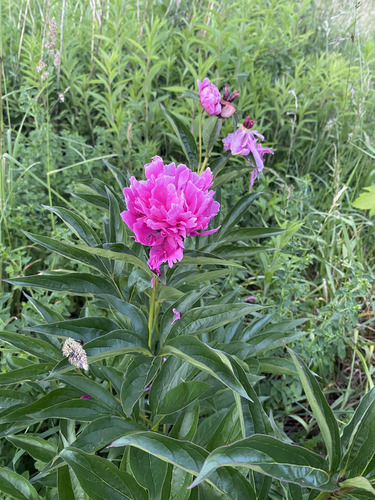
How to care for Chinese peony
Watering
Chinese peony (Paeonia lactiflora) is a herbaceous perennial from cold northern Asia that grows best in cool, moist soil. Indoors, it is usually grown as a potted specimen in a cool room or unheated porch, where the soil should stay evenly damp during active growth and be allowed to dry slightly between waterings. Its fleshy roots store water, so it tolerates short dry spells better than constant wetness. Outdoors, established clumps rarely need watering except during long droughts in spring and summer. Water deeply at the base, keeping foliage and flower buds as dry as possible to reduce botrytis (grey mould).
Does it need water today?
Push a finger 3-4 cm into the soil. If it feels dry, water. For pots, lift the container: a light pot means it is dry, a heavy one means it is still moist. Wilting leaves in the morning that recover by evening often mean the soil is dry, while constant droop with soggy soil signals too much water.
Water in the morning so the foliage can dry during the day. Never let the pot sit in a saucer of water, because soggy roots quickly lead to rot.
Overwatering
Chinese peony roots are thick and fleshy, and they rot quickly in waterlogged soil. Heavy clay or pots without drainage make this worse, and the plant cannot tolerate wet feet for long periods.
Symptoms: Yellowing lower leaves, drooping stems despite wet soil, black or mushy roots, a sour smell from the soil, and fungus gnats hovering over the pot.
Solutions: Stop watering and let the top 5 cm dry out. Check that the pot has drainage holes and empty any saucer. If roots are soft, repot into fresh, gritty mix with perlite or grit, trimming away black, mushy roots with clean scissors.
Underwatering
Chinese peony stores water in its roots, but its foliage and flower buds need a steady supply during growth in spring. Prolonged drought stresses the plant and can cause bud drop or poor blooms the following year.
Symptoms: Limp, wilted leaves that look dull grey-green, crispy leaf edges, flower buds that dry and fall off before opening, and soil pulling away from the pot edges.
Solutions: Water thoroughly until it runs out of the drainage holes. For very dry pots, soak by bottom watering for 30 minutes. Outdoors, give established clumps a deep soak once a week during drought, and apply a 5 cm layer of mulch to keep the soil moist longer.
Sunlight
Chinese peony performs best with cool morning sun and protection from harsh afternoon heat. In cold regions it can handle full sun, as long as the soil stays moist. Too much heat and strong afternoon sun shorten the flowering period and can scorch the leaves. Insufficient light produces weak, floppy stems that may not bloom at all. Plants need enough light to build energy for next year's flowers, so avoid deep shade.
- Ideal: Partial sun · 4-6 hours of direct morning sun, with light afternoon shade in hot climates
- Tolerates: Full sun, Bright, indirect light, Partial sun
- Best spot in a room: At the window
- Artificial light: Indoors, Chinese peony needs a very bright spot, ideally a south- or east-facing window. A full-spectrum LED grow light positioned 15-30 cm above the foliage for 12-14 hours a day helps during winter. Keep it in a cool room, around 5-15°C, because warm, dim rooms cause weak growth.
Too little light
Chinese peony needs strong seasonal light to produce thick stems and large buds. Dim, shaded conditions cause the plant to stretch toward any light source and reduce the number of flowers it can form.
Symptoms: Tall, thin, floppy stems that bend or lean, pale leaves with long gaps between nodes, few or no flower buds, and leaves that stay small.
Solutions: Move the pot to the brightest window or a sunny spot outdoors with morning sun. Rotate the container weekly for even growth, and add a grow light if the room is dim. Support tall stems with a small stake or peony ring.
Too much sun
Chinese peony prefers cool conditions and gentle light. Intense afternoon sun and heat stress the foliage, causing it to dry out and making flowers fade quickly.
Symptoms: Scorched, bleached or brown leaf edges, leaves that curl or look papery, wilting in the afternoon, and flowers that fade or open unevenly.
Solutions: Move the plant to a spot with morning sun and afternoon shade, or use a sheer curtain or shade cloth during hot weather. Water well during heat waves, and mulch the soil to keep roots cool.
Temperature
Chinese peony (Paeonia lactiflora) is a hardy herbaceous perennial that needs a real winter chill to bloom well. It thrives in cool summers and tolerates deep freezes, but heat and warm winters reduce flowering. Plant it where it gets a cold winter and mild, not scorching, summers.
- Ideal: -30–25 °C
- Tolerates: -40–35 °C
- Hardiness zones: 3-8
Fertilizing
Chinese peony feeds heavily in spring as it builds buds and flowers, then needs little after bloom. Phosphorus and potassium support strong roots and blooms, while too much nitrogen gives lush leaves and weak stems that flop. Feed the soil, not the leaves, and keep fertilizer away from the crown.
- Slow-release fertilizer: Apply once a year in early spring, just as new red shoots appear, and work it in lightly around the plant. Not needed in soils already rich in organic matter.
- Balanced slow-release granular fertilizer (such as 10-10-10 or 5-10-10), Well-rotted compost or aged manure, Bone meal, for phosphorus that supports strong roots and flowers
Soil
Chinese peony needs deep, fertile, well-drained soil that stays evenly moist in spring but never sits waterlogged in winter. Heavy clay and soggy ground cause crown and root rot, so improve drainage before planting.
- Loamy garden soil amended with compost: About 40% good topsoil, 40% well-rotted compost or leaf mould, and 20% coarse sand or perlite
- Container mix for peonies: Two parts loam-based potting mix, one part compost, one part coarse grit, with a handful of slow-release bone meal
- pH 6.5–7.5
Repotting
Chinese peony (Paeonia lactiflora) is a long-lived herbaceous perennial with thick storage roots. Disturb it as little as possible; division is the main reason to lift it, and it is best done in early autumn when the plant is dormant.
- How often: Every 10-15 years, or only when clumps become overcrowded and bloom poorly
- New pot: Choose a container at least 40-50 cm wide and deep, with drainage holes; peonies have deep, fleshy roots and resent being moved often
- Repotting season: Autumn, Spring
How to repot
- Cut the top growth down to about 10 cm above soil level to make the plant easier to handle
- Dig a wide circle, about 30 cm out from the stems, and lift the whole clump with a fork, working gently under the root mass
- Shake or rinse off loose soil so you can see the crown, the cluster of pink or red buds at soil level
- If dividing, cut the clump into sections with 3 to 5 eyes (buds) each, using a sharp spade; each division needs thick roots
- Plant so the eyes sit no more than 2.5 cm below the soil surface; planting too deep is the most common reason peonies fail to bloom
- Backfill with soil, firm it gently, and water thoroughly to settle the roots
- In a container, fill the base with fresh mix, set the root ball so the crown sits just below the rim, and water until it drains
Pruning
Cut Chinese peonies down in autumn after the first hard frost has blackened the foliage, but never prune them hard in spring or summer while they are growing. Leave the woody stems of the plant in place until they are dormant so the plant can move energy back into its roots.
Pruning season: Autumn, Winter, Spring, Summer
How to prune
- In summer, after the flowers fade, snip off each spent bloom just above the first leaf node. Do not cut into the foliage.
- Remove any yellow or spotted leaves right away and bag them rather than composting them, since botrytis spores survive on fallen debris.
- In late autumn, after the first hard frost turns the foliage brown or black, cut all stems down to about 2.5 to 5 cm above ground level.
- Rake up and discard all fallen leaves and stem debris from around the plant.
- In early spring, look for red shoots emerging. Remove only dead or broken stems at this time and avoid cutting into the new growth.
- Do not prune Chinese peonies heavily in their first year after planting. Let the plant establish a strong root system first.
- Stake tall or heavy-flowered cultivars with a grow-through hoop in spring, since staking is more useful than pruning for keeping stems upright.
Propagation
Division of established clumps · Autumn
- In early autumn, about 4 to 6 weeks before the ground freezes, dig up a mature clump of Paeonia lactiflora that is at least 5 to 6 years old.
- Loosen the soil in a wide circle around the crown with a garden fork and lift the root mass carefully.
- Shake or hose off the soil so you can see the eyes, which are the pinkish-red buds at the top of the roots.
- Cut the clump into sections with a sharp, clean knife or pruners, making sure each division has 3 to 5 eyes and a healthy set of thick, fleshy roots.
- Discard any soft, rotten, or woody roots.
- Replant each division so the eyes sit no more than 2.5 to 5 cm (1 to 2 inches) below the soil surface. Planting deeper is the most common reason peonies fail to bloom.
- Water deeply once after planting and mulch lightly over winter.
Root cuttings · Autumn, Winter
- In autumn, dig up a healthy, mature plant and select thick, pencil-width roots.
- Cut the roots into pieces about 8 to 10 cm (3 to 4 inches) long, noting which end was closest to the crown.
- Plant the cuttings horizontally or upright in a pot of moist, well-drained potting mix, with the top end level with the surface.
- Keep the pot in a cold frame or unheated shelter at about 0 to 5°C through winter so the cuttings stay dormant but do not freeze.
- Move the pot to a bright spot in spring and keep the mix lightly moist until shoots appear. Expect slow results and flowers only after several years.
Seed sowing · Autumn
- Collect seed pods in late summer once they split open and the black seeds are visible.
- Sow seeds in autumn in a pot or seed tray of well-drained potting mix, covering them with about 1 cm of soil.
- Leave the tray outdoors so the seeds receive the cold winter period they need to germinate.
- Keep the mix barely moist and watch for seedlings in spring.
- Expect seedlings to take 2 to 5 years to flower, and seed-grown plants may differ from the parent plant.
Plant divisions with the eyes no deeper than 5 cm. If your Chinese peony is not blooming, it is most often planted too deep, so check the depth before you divide.
About Chinese peony
Also known as: Chinese peony, common garden peony, herbaceous peony, white peony
- Plant type: herbaceous perennial
- Lifespan: perennial
- Distribution: Native to eastern Asia, including northern China, Mongolia, Siberia and the Russian Far East.
- Mature height: 60-90 cm
- Bloom time: Late spring to early summer
Pets · People
Pets: Toxic · People: Toxic. All parts, especially roots and seeds, contain paeonol and paeoniflorin and other compounds that can cause vomiting, diarrhoea and drowsiness if eaten; ASPCA lists peonies as toxic to dogs, cats and horses. Handling the plant can irritate sensitive skin.
Common problems
- Botrytis blight: Grey fuzzy mould on buds and stems in wet, cool weather; remove affected parts and improve air flow.
- Ants on buds: Ants feed on the sugary nectar on buds but do not harm the flower; they can be left alone or brushed off.
- Failure to bloom: Usually caused by planting too deep, too much shade, or too young a clump; set crowns with eyes no more than 2-3 cm below soil.
- Peony leaf blotch: Brown or purple spots on leaves caused by Paeonia fungi; clear debris in autumn and water at the soil level.
- Flopping stems: Heavy blooms can bend stems; stake early in spring with a grow-through hoop.
Uses
Widely grown as an ornamental perennial in borders and as a cut flower; the roots of Paeonia lactiflora are used in traditional Chinese medicine, where the dried root is called chi shao or bai shao and is prescribed for blood and liver disorders. Breeding for double and Japanese-form flowers has produced thousands of cultivars.
Is it edible?
Not edible; roots, seeds and other plant parts are toxic if eaten. Young shoots and petals should not be consumed.
History & legends
Peonies have been cultivated in China for more than 1,500 years and were valued for their beauty and medicinal roots; they spread to Japan and Europe during the 18th and 19th centuries. In Chinese tradition the peony symbolised wealth, honour and feminine beauty, and it became the national flower of China in the late 20th century.
Did you know?
Chinese peonies were so prized in imperial gardens that the flower became known as the 'king of flowers' and was celebrated in Tang dynasty poetry, and some named cultivars are more than a thousand years old.
Frequently asked questions
How often should I water Chinese peony?
every 7 days. Chinese peony (Paeonia lactiflora) is a herbaceous perennial from cold northern Asia that grows best in cool, moist soil. Indoors, it is usually grown as a potted specimen in a cool room or unheated porch, where the soil should stay evenly damp during active growth and be allowed to dry slightly between waterings. Its fleshy roots store water, so it tolerates short dry spells better than constant wetness. Outdoors, established clumps rarely need watering except during long droughts in spring and summer. Water deeply at the base, keeping foliage and flower buds as dry as possible to reduce botrytis (grey mould). Push a finger 3-4 cm into the soil. If it feels dry, water. For pots, lift the container: a light pot means it is dry, a heavy one means it is still moist. Wilting leaves in the morning that recover by evening often mean the soil is dry, while constant droop with soggy soil signals too much water.
How much light does Chinese peony need?
Partial sun (4-6 hours of direct morning sun, with light afternoon shade in hot climates). Chinese peony performs best with cool morning sun and protection from harsh afternoon heat. In cold regions it can handle full sun, as long as the soil stays moist. Too much heat and strong afternoon sun shorten the flowering period and can scorch the leaves. Insufficient light produces weak, floppy stems that may not bloom at all. Plants need enough light to build energy for next year's flowers, so avoid deep shade.
What temperature does Chinese peony like?
-30–25 °C. Chinese peony (Paeonia lactiflora) is a hardy herbaceous perennial that needs a real winter chill to bloom well. It thrives in cool summers and tolerates deep freezes, but heat and warm winters reduce flowering. Plant it where it gets a cold winter and mild, not scorching, summers.
Is Chinese peony toxic to cats and dogs?
It is toxic to cats and dogs: keep it out of their reach. All parts, especially roots and seeds, contain paeonol and paeoniflorin and other compounds that can cause vomiting, diarrhoea and drowsiness if eaten; ASPCA lists peonies as toxic to dogs, cats and horses. Handling the plant can irritate sensitive skin.
What are the most common problems of Chinese peony?
Botrytis blight: Grey fuzzy mould on buds and stems in wet, cool weather; remove affected parts and improve air flow. Ants on buds: Ants feed on the sugary nectar on buds but do not harm the flower; they can be left alone or brushed off. Failure to bloom: Usually caused by planting too deep, too much shade, or too young a clump; set crowns with eyes no more than 2-3 cm below soil. Peony leaf blotch: Brown or purple spots on leaves caused by Paeonia fungi; clear debris in autumn and water at the soil level. Flopping stems: Heavy blooms can bend stems; stake early in spring with a grow-through hoop.
When should I repot Chinese peony?
Every 10-15 years, or only when clumps become overcrowded and bloom poorly. Chinese peony (Paeonia lactiflora) is a long-lived herbaceous perennial with thick storage roots. Disturb it as little as possible; division is the main reason to lift it, and it is best done in early autumn when the plant is dormant.
How do I propagate Chinese peony?
Division of established clumps, Root cuttings, Seed sowing. In early autumn, about 4 to 6 weeks before the ground freezes, dig up a mature clump of Paeonia lactiflora that is at least 5 to 6 years old. Loosen the soil in a wide circle around the crown with a garden fork and lift the root mass carefully. Shake or hose off the soil so you can see the eyes, which are the pinkish-red buds at the top of the roots. Cut the clump into sections with a sharp, clean knife or pruners, making sure each division has 3 to 5 eyes and a healthy set of thick, fleshy roots. Discard any soft, rotten, or woody roots. Replant each division so the eyes sit no more than 2.5 to 5 cm (1 to 2 inches) below the soil surface. Planting deeper is the most common reason peonies fail to bloom. Water deeply once after planting and mulch lightly over winter.
How this guide was written
Verdiss writes each guide with AI from botanical references and checks the species against iNaturalist and Plants of the World Online (Kew). Readers can rate every guide in the app.
Sources
Verdiss's information is for general guidance. Never eat or use a plant as medicine based on an app: ask a professional.