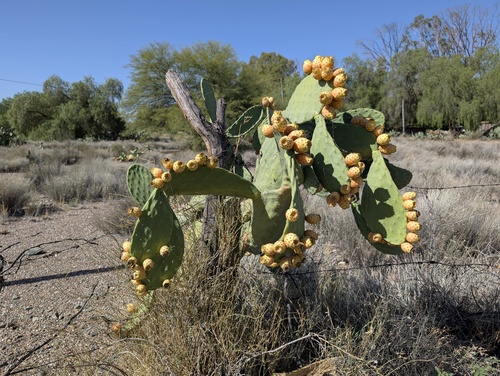
How to care for Indian fig opuntia
Watering
Indian fig opuntia is a desert cactus built to store water in its thick pads, so it needs deep, infrequent watering and a bone-dry period between drinks. Water thoroughly until it runs out of the drainage hole, then leave it alone until the soil is completely dry down to the bottom of the pot. In winter, when growth stops, water only rarely or not at all, since cold wet soil is the main way this plant dies indoors. Always use a fast-draining cactus mix with added grit or pumice and a pot with a drainage hole.
Does it need water today?
Push a wooden skewer or your finger about 5 cm deep into the soil, ideally near the edge of the pot. If it comes out dry and clean, the plant still has its stored water and can wait. Also lift the pot: a very light pot means the soil has dried out fully. Pads that look wrinkled, puckered, or slightly soft at the base are a sign of thirst, but only after the soil is confirmed dry.
When in doubt, wait another week. Opuntia ficus-indica tolerates drought far better than it tolerates soggy roots, and most indoor plants are lost to overwatering rather than neglect.
Overwatering
Indian fig opuntia comes from arid regions of Mexico and is adapted to rain only a few times a year, so its roots suffocate and rot quickly in constantly wet soil. Its water-storing pads cannot compensate for roots that are no longer working. Cold, damp winter conditions make this problem worse.
Symptoms: Pads turn soft, mushy, translucent, or yellowish, often starting at the base. A dark, foul smell from the soil and black, slimy roots are signs of rot. Pads may also drop off at the joints.
Solutions: Stop watering immediately and let the soil dry out. If rot is advanced, remove the plant, cut away all soft or black tissue with a clean knife, and let the cut areas callus for several days in dry air. Repot into fresh, gritty cactus mix in a clean pot with a drainage hole, and do not water again for at least one to two weeks.
Underwatering
Opuntia ficus-indica is well suited to drought because it stores water in its pads, so it takes a long time to show thirst. Prolonged neglect, especially in hot summer rooms or outdoor pots in full sun, does eventually drain those reserves.
Symptoms: Pads become wrinkled, shriveled, or puckered and may feel soft or spongy. The pads may lose their firm, plump shape and take on a dull, grayish-green look. Growth stalls and the plant may drop older pads.
Solutions: Water thoroughly until it drains from the bottom, then wait for the soil to dry out fully before the next watering. Increase the interval slightly in winter only if the soil stays wet for long periods. Pads that have shriveled slightly often recover plumpness within a few weeks of proper watering.
Sunlight
Indian fig opuntia is a sun-loving desert plant from open, dry landscapes, so it needs strong, direct light to keep its pads green, firm, and compact. Give it the brightest location you have, ideally a south-facing spot. Indoors, it rarely gets enough light unless it sits right in a sunny window or under a grow light, and gradual acclimatization is important when moving it outdoors.
- Ideal: Full sun · 6-8 hours of direct sun per day
- Tolerates: Full sun, Partial sun
- Best spot in a room: At the window
- Artificial light: Use a full-spectrum LED grow light placed 15 to 30 cm above the plant for 10 to 12 hours a day during the darker months. Plants that stretch, lean toward the light, or develop pale, elongated pads need more intensity.
Too little light
Indian fig opuntia depends on strong sunlight to make energy and keep its pads sturdy. In low light, it stretches toward any available source, producing weak, pale growth that cannot support itself well.
Symptoms: Pads grow long, thin, and pale green, and the plant leans or tips toward the window. New pads are small and spaced far apart, and older pads may thin or yellow.
Solutions: Move the plant to the sunniest window available, ideally facing south, and rotate the pot a quarter turn every week so growth stays even. Add a grow light if natural light is limited. Only increase sun exposure gradually to avoid sunburn.
Too much sun
Although this cactus is adapted to intense sun, a plant kept indoors behind glass or moved suddenly into harsh midday sun can be scorched. Pads that have not been acclimatized to strong light develop damage quickly.
Symptoms: Pads develop bleached, brown, or papery scorched patches, often on the side facing the sun. Sunken, dry spots may appear and spread over time.
Solutions: Move the plant to a spot with bright light but some shade during the hottest part of the afternoon, such as behind a sheer curtain or under a tree canopy. When moving a plant outdoors for the first time, expose it to sun for an hour or two daily, increasing over about two weeks. Damaged pads will not recover, so cut them off cleanly if they are severely scarred.
Temperature
Indian fig opuntia thrives in warm, sunny conditions and handles heat well, but it is only hardy to about -12°C when kept very dry. Cold, wet winters are its main threat, not frost alone. Bring container plants indoors before temperatures drop below 5°C.
- Ideal: 18–32 °C
- Tolerates: -12–45 °C
- Hardiness zones: 8-11
Fertilizing
Indian fig opuntia is adapted to poor, sandy soils, so it needs only modest feeding. Too much nitrogen produces soft, oversized pads that are prone to rot and pests. Fertilize mainly during the active growing season from spring to early autumn, and never feed a dormant or cold-stressed plant.
- Slow-release fertilizer: Apply once a year in early spring, just as new growth begins, or not needed if the plant is in rich native soil.
- Balanced slow-release granular fertilizer, such as a 10-10-10 or 14-14-14 formula, Low-nitrogen cactus or succulent fertilizer, such as a 2-7-7 formula, Diluted liquid houseplant fertilizer at half strength for container plants
Soil
Indian fig opuntia needs soil that drains quickly, because its pads store water and its roots rot in wet, dense ground. Soil should dry out fully between waterings and should never stay soggy or compact.
- Gritty cactus mix: About 60 percent mineral grit such as pumice, perlite or small lava rock, 30 percent coarse sand or potting soil, and 10 percent compost or peat-free organic matter
- Sandy loam blend: Mix equal parts garden loam and coarse sand, with a handful of perlite added for extra drainage
- Outdoor raised bed mix: Three parts native sandy soil, one part coarse grit, and one part compost, mounded to 30 cm or more above the surrounding ground
- pH 6–8
Repotting
Indian fig opuntia has shallow, fibrous roots and very large, heavy pads that can topple top-heavy containers. Repot only in warm weather, when the plant is actively growing, and never repot into a pot that holds water.
- How often: Every 3-4 years, or when roots fill the pot and water runs straight through
- New pot: Choose a pot only 2-5 cm wider than the root ball, with at least one large drainage hole. Terracotta is ideal because it wicks moisture away from the roots.
- Repotting season: Spring, Summer
How to repot
- Gently tip the pot on its side and slide the plant out, supporting the pads with a folded towel or tongs
- Brush away old soil from the roots with a dry brush and trim any black, mushy or dead roots with clean, sharp scissors
- Let the cut roots air-dry for 2-3 days in a shaded, dry spot so the wounds can callus over
- Place a layer of gritty mix in the bottom of the new pot, set the plant so it sits at the same depth as before, and fill around the roots with mix
- Firmly press the soil down so the plant stands upright without support, leaving 2 cm of space below the rim
- Do not water for another 5-7 days so the roots can settle and heal
Pruning
Prune only in warm, dry weather when the plant is actively growing, and always cut through the joint at the base of a pad. Remove only what you need, because large cuts on a mature plant can stress it for a season.
Pruning season: Spring, Summer
How to prune
- Put on thick gloves and eye protection, and carry tongs or folded newspaper to handle pads.
- Remove dead, shriveled, or rotting pads first by cutting them off at the joint with clean, sharp shears.
- Cut any damaged pad back to healthy green tissue, or remove the whole pad if the rot reaches its base.
- Thin crowded pads so air can move through the plant, cutting away weak or crossing pads at their joints.
- Limit height by cutting back tall pads to a healthy joint, leaving at least one healthy pad on each branch.
- Disinfect your tools with rubbing alcohol between cuts, especially when removing diseased pads.
- Let all cut surfaces callus in a dry, shaded place for a week or more before returning the plant to full sun or watering it.
- Dispose of diseased pads in the trash, not in compost, and clean up fallen glochids from the ground.
Propagation
Pad (cladode) cuttings · Spring, Summer
- Choose a healthy, firm pad from the outer part of a mature plant, ideally one a year or two old.
- Cut it off at the joint using a clean, sharp knife or pruning shears, so the pad separates cleanly at its base.
- Let the cut end dry and callus in a shaded, dry, airy spot for 7 to 14 days until a hard, dry scar forms.
- Fill a pot with fast-draining cactus or succulent mix and set the pad upright, buried about 2 to 3 cm deep, or lay it flat on the surface if it is top-heavy.
- Water lightly only after 7 to 10 days, then again when the mix is fully dry. Keep it in bright indirect light at 18 to 30 °C.
- Roots usually form within 3 to 6 weeks. Once the pad holds firmly, begin normal succulent care.
Seed · Spring
- Collect ripe seeds from mature fruits, which are the fleshy, colorful figs, and rinse off the pulp.
- Dry the seeds on paper towel for several days.
- Sow them on the surface of a gritty, well-drained seed mix, pressing them lightly without covering.
- Mist to keep the surface barely moist and keep the tray warm, around 22 to 28 °C, in bright light.
- Germination can take several weeks. Seedlings grow slowly and need careful watering, so expect a long wait before they look like adult plants.
Pads root far more reliably than seed, and a single healthy pad can become a new plant in one season. Always let the cut end callus before planting, because a fresh wound placed in wet soil will rot instead of rooting.
About Indian fig opuntia
Also known as: Indian fig, Barbary fig, Nopal, Prickly pear
- Plant type: cactus, succulent, shrub
- Lifespan: perennial
- Distribution: Native to Mexico and likely Central America, now cultivated across the Mediterranean, Africa, Asia and the Americas.
- Mature height: 1-5 m
- Bloom time: Late spring to early summer
Pets · People
Pets: Safe · People: Mildly toxic. Not considered seriously toxic, but the spines and fine glochids can injure skin, mouth and eyes, and ingesting the pads or spines may cause mild gastrointestinal upset. Keep out of reach of curious pets and children.
Common problems
- Root and stem rot: Waterlogged soil causes pads to turn soft, dark and mushy; avoid overwatering and use gritty soil.
- Mealybugs: White cottony clusters appear in leaf joints and on pads; dab with alcohol or treat with insecticidal soap.
- Scale insects: Brown or grey bumps stick to the pads and weaken the plant; scrape them off and treat with horticultural oil.
- Shriveled pads: Pads wrinkle when water is short for long periods; water deeply and check drainage.
- Cochineal insects: Small white scale insects coat the pads in woolly masses, causing yellowing; remove by hand or spray with water.
Uses
Widely cultivated for its fruit, young pads known as nopales, and forage for livestock; also used as a living fence and ornamental, and the cochineal insect that feeds on it has produced the red dye carmine for centuries.
Is it edible?
Young pads (nopales) are edible after the spines and glochids are removed, usually cooked; ripe fruits are eaten fresh or made into juice and jam, and the seeds are discarded.
History & legends
Cultivated by Mesoamerican peoples for millennia, the plant is a national symbol of Mexico and appears on its coat of arms, where an eagle perches on a nopal eating a snake. Spanish colonists spread it across the world in the sixteenth century.
Did you know?
Each pad of the Indian fig opuntia can root and grow into a new plant if it falls on moist soil, which is why it spreads so easily.
Frequently asked questions
How often should I water Indian fig opuntia?
every 21 days. Indian fig opuntia is a desert cactus built to store water in its thick pads, so it needs deep, infrequent watering and a bone-dry period between drinks. Water thoroughly until it runs out of the drainage hole, then leave it alone until the soil is completely dry down to the bottom of the pot. In winter, when growth stops, water only rarely or not at all, since cold wet soil is the main way this plant dies indoors. Always use a fast-draining cactus mix with added grit or pumice and a pot with a drainage hole. Push a wooden skewer or your finger about 5 cm deep into the soil, ideally near the edge of the pot. If it comes out dry and clean, the plant still has its stored water and can wait. Also lift the pot: a very light pot means the soil has dried out fully. Pads that look wrinkled, puckered, or slightly soft at the base are a sign of thirst, but only after the soil is confirmed dry.
How much light does Indian fig opuntia need?
Full sun (6-8 hours of direct sun per day). Indian fig opuntia is a sun-loving desert plant from open, dry landscapes, so it needs strong, direct light to keep its pads green, firm, and compact. Give it the brightest location you have, ideally a south-facing spot. Indoors, it rarely gets enough light unless it sits right in a sunny window or under a grow light, and gradual acclimatization is important when moving it outdoors.
What temperature does Indian fig opuntia like?
18–32 °C. Indian fig opuntia thrives in warm, sunny conditions and handles heat well, but it is only hardy to about -12°C when kept very dry. Cold, wet winters are its main threat, not frost alone. Bring container plants indoors before temperatures drop below 5°C.
Is Indian fig opuntia toxic to cats and dogs?
It is safe for cats and dogs. Not considered seriously toxic, but the spines and fine glochids can injure skin, mouth and eyes, and ingesting the pads or spines may cause mild gastrointestinal upset. Keep out of reach of curious pets and children.
What are the most common problems of Indian fig opuntia?
Root and stem rot: Waterlogged soil causes pads to turn soft, dark and mushy; avoid overwatering and use gritty soil. Mealybugs: White cottony clusters appear in leaf joints and on pads; dab with alcohol or treat with insecticidal soap. Scale insects: Brown or grey bumps stick to the pads and weaken the plant; scrape them off and treat with horticultural oil. Shriveled pads: Pads wrinkle when water is short for long periods; water deeply and check drainage. Cochineal insects: Small white scale insects coat the pads in woolly masses, causing yellowing; remove by hand or spray with water.
When should I repot Indian fig opuntia?
Every 3-4 years, or when roots fill the pot and water runs straight through. Indian fig opuntia has shallow, fibrous roots and very large, heavy pads that can topple top-heavy containers. Repot only in warm weather, when the plant is actively growing, and never repot into a pot that holds water.
How do I propagate Indian fig opuntia?
Pad (cladode) cuttings, Seed. Choose a healthy, firm pad from the outer part of a mature plant, ideally one a year or two old. Cut it off at the joint using a clean, sharp knife or pruning shears, so the pad separates cleanly at its base. Let the cut end dry and callus in a shaded, dry, airy spot for 7 to 14 days until a hard, dry scar forms. Fill a pot with fast-draining cactus or succulent mix and set the pad upright, buried about 2 to 3 cm deep, or lay it flat on the surface if it is top-heavy. Water lightly only after 7 to 10 days, then again when the mix is fully dry. Keep it in bright indirect light at 18 to 30 °C. Roots usually form within 3 to 6 weeks. Once the pad holds firmly, begin normal succulent care.
How this guide was written
Verdiss writes each guide with AI from botanical references and checks the species against iNaturalist and Plants of the World Online (Kew). Readers can rate every guide in the app.
Sources
Verdiss's information is for general guidance. Never eat or use a plant as medicine based on an app: ask a professional.