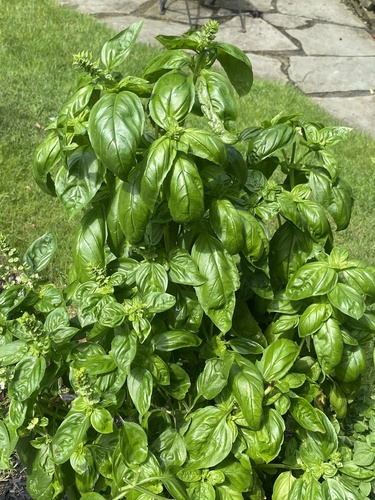
How to care for Sweet basil
Watering
Sweet basil (Ocimum basilicum) likes evenly moist soil that never dries out completely, yet it hates standing water. Water when the top 2 cm of soil feels dry, pouring slowly at the base until liquid drains from the pot. Empty the saucer after 15 minutes so the roots can breathe. Basil wilts dramatically when thirsty, but it recovers quickly once watered, so a limp plant in the afternoon is a signal to check the soil, not always a sign of drought.
Does it need water today?
Push a finger 2 cm into the soil. If it feels dry and crumbly, water now. If it feels cool and damp, wait a day and check again. You can also lift the pot: a light pot means it is thirsty, a heavy pot means it has enough water.
Water in the morning so the leaves dry before evening. Wet leaves at night invite fungal diseases such as downy mildew, which is a serious threat to basil.
Overwatering
Sweet basil has fine, shallow roots that suffocate in waterlogged soil, and the stems are soft and succulent. Constantly wet compost quickly leads to root rot and fungal attacks, which basil cannot easily recover from.
Symptoms: Yellowing lower leaves, black or mushy stem bases, a sour smell from the soil, fungus gnats hovering around the pot, and sudden wilting even though the soil is wet.
Solutions: Stop watering and let the top 3 cm of soil dry out. Make sure the pot has drainage holes and empty the saucer after every watering. If the stem base is black, cut away the damaged parts and repot in fresh, well-draining potting mix. Pinch off the worst leaves and improve airflow around the plant.
Underwatering
Basil has thin, tender leaves that lose water quickly through transpiration, especially in summer heat. Small containers dry out fast, so basil can go from healthy to crispy within a single hot afternoon.
Symptoms: Drooping leaves that feel soft and limp, leaf edges turning brown and crispy, flowers forming early, and dry soil that pulls away from the pot edges.
Solutions: Water thoroughly until it drains, then check again in an hour. If the soil has shrunk away from the sides, soak the whole pot in a tray of water for 20 minutes. Move the plant out of harsh midday sun during heat waves, and mulch outdoor beds to hold moisture.
Sunlight
Sweet basil (Ocimum basilicum) is a warm-season herb that grows best with strong, direct sunlight. Plenty of light produces dense, aromatic growth with rich flavor. Without enough light, stems stretch thin and pale, and the leaves lose much of their scent and taste.
- Ideal: Full sun · 6-8 hours of direct sun per day
- Tolerates: Full sun, Partial sun, Bright, indirect light
- Best spot in a room: At the window
- Artificial light: If natural light is weak, use a full-spectrum LED grow light 15 to 30 cm above the plant for 12 to 14 hours a day. Basil grown indoors through winter depends on this supplemental light.
Too little light
Sweet basil needs high light intensity to produce the sugars that give its leaves their flavor and sturdy growth. In low light the plant stretches toward any available glow, producing weak, leggy stems.
Symptoms: Tall, thin stems with long gaps between leaves, small pale leaves, a weak or missing basil scent, and slow growth through the winter months.
Solutions: Move the plant to the sunniest south- or west-facing window available. Rotate the pot a quarter turn each week so growth stays even. Add an LED grow light if daylight is short, and pinch the tips regularly to encourage bushier growth.
Too much sun
Although basil enjoys strong sun, intense midday rays combined with heat and dry air can scorch its tender leaves. Containers on hot patios or sun-reflecting walls heat up quickly and dry the roots.
Symptoms: Bleached or white patches on the leaves, crisp brown edges, curled leaves, and soil that dries out much faster than usual.
Solutions: Provide light afternoon shade during heat waves, especially above 30°C. Water more often in hot weather and move containers away from reflective surfaces. Basil recovers well once the most damaged leaves are removed.
Temperature
Sweet basil (Ocimum basilicum) is a warm-season annual that thrives in steady warmth. It grows best between 18 and 30°C and stops growing when nights drop below about 10°C. Keep it away from cold drafts, and bring it indoors or protect it before the first frost.
- Ideal: 18–30 °C
- Tolerates: 10–35 °C
- Hardiness zones: 10-11
Fertilizing
Sweet basil is a leafy herb, so it needs a steady supply of nitrogen for lush growth, plus enough phosphorus and potassium to keep roots and stems strong. Fertilize lightly and often rather than heavily. Regular harvesting encourages growth more than extra feeding does.
- Slow-release fertilizer: Once at planting time in spring, mixed into the potting soil or garden bed. Not needed again for a single growing season.
- Balanced liquid fertilizer such as 10-10-10 or 20-20-20 diluted to half strength, Compost or well-rotted manure worked into the soil before planting, Fish emulsion diluted to half strength for a gentle nitrogen boost, Slow-release balanced granular fertilizer for containers
Soil
Sweet basil needs soil that drains quickly yet holds enough moisture for its soft, fast-growing leaves. Soggy soil is its main enemy, as it leads to root rot and fungal disease.
- Light potting mix with added perlite: About 2 parts peat-free potting compost, 1 part perlite or coarse sand, and optionally a handful of compost for nutrients.
- Garden bed loam enriched with compost: Well-drained loamy topsoil mixed with 25-30% well-rotted compost, raised slightly so water does not pool around the roots.
- Container mix for herbs: Commercial herb or vegetable potting mix, lightly amended with perlite to improve aeration.
- pH 6–7.5
Repotting
Use a pot with drainage holes, a light well-draining potting mix, and a container that suits sweet basil's shallow but bushy root system.
- How often: Every 1-2 years, or whenever roots fill the pot. Sweet basil is an annual, so repotting is mainly for plants kept alive indoors or moved into a larger container.
- New pot: Move up only one size, about 2-5 cm wider in diameter. A pot that is too large holds wet soil around the roots and invites root rot.
- Repotting season: Spring, Summer
How to repot
- Gently tip the pot on its side and ease the root ball out, supporting the stem near the soil line.
- Loosen the outer roots with your fingers. Trim any black, mushy roots with clean scissors.
- Set the plant in the new pot so the top of the root ball sits about 1 cm below the rim.
- Fill around the roots with fresh mix and press gently to remove large air pockets.
- Water thoroughly until it drains from the holes, then place the basil in bright indirect light for a few days.
- Pinch back the top leaves above a leaf node to encourage bushy growth after the move.
Pruning
Pinch or cut sweet basil regularly once it has six to eight sets of leaves, and remove flower buds as soon as they appear. Always cut just above a pair of leaves so two new stems can grow from that point.
Pruning season: Spring, Summer
How to prune
- Use clean, sharp scissors or your fingernails to remove the top 2 to 3 cm of a stem just above a leaf pair.
- Repeat on several stems so the plant branches out evenly rather than growing tall and thin.
- Check the plant every week during the growing season and pinch off any flower spikes forming at the tips.
- If a plant has already flowered heavily, cut the stems back to just above a leaf node lower on the stem to encourage fresh leafy growth.
- Remove any yellow, damaged, or diseased leaves at the base to improve airflow and reduce the risk of fungal problems.
Propagation
Stem cutting in water · Spring, Summer
- Choose a healthy, non-flowering stem of sweet basil that is about 10 cm long, and cut just below a leaf node with clean scissors.
- Strip the lower leaves so that at least two nodes sit free of foliage.
- Place the cutting in a clear glass of room-temperature water, keeping leaves above the waterline.
- Set the glass in bright, indirect light and change the water every two to three days.
- Once roots are 3 to 5 cm long, which usually takes one to two weeks, pot the cutting in moist, well-draining potting mix.
Seed sowing indoors · Spring
- Sow Ocimum basilicum seeds on the surface of moist seed-starting mix, since they need light to germinate, and press them lightly without covering.
- Keep the tray at 21 to 25 °C; seeds usually sprout within 5 to 10 days.
- Mist the surface daily so it never dries out.
- When seedlings have two true leaves, thin them to the strongest one per cell or pot.
- Harden seedlings off for about a week before planting outdoors after the last frost.
Direct sowing in the garden · Spring, Summer
- Wait until soil temperatures reach about 16 °C and all danger of frost has passed.
- Scatter seeds on loosened soil in a sunny spot and cover them with no more than 0.5 cm of soil.
- Water gently to keep the soil evenly moist until seedlings appear.
- Thin seedlings to about 25 to 30 cm apart once they are a few centimetres tall.
Take cuttings from the top of the plant, where growth is fresh and active; cuttings from these tips root more reliably than woody lower stems. Keep a few cuttings going in water on a windowsill so you always have a backup plant.
About Sweet basil
Also known as: Sweet basil, Common basil, Garden basil, Saint-Joseph's-wort
- Plant type: herb, annual
- Lifespan: annual
- Distribution: Native to tropical Asia and the Indian subcontinent, now naturalized and cultivated throughout the tropics and warm temperate regions.
- Mature height: 30-60 cm
- Bloom time: Summer to early autumn
Pets · People
Pets: Safe · People: Safe. Sweet basil is considered non-toxic to cats, dogs and children by the ASPCA; it is a common culinary herb. Large amounts of any plant material may still cause mild stomach upset.
Common problems
- Downy mildew: Yellowing leaves with grey-purple fuzz underneath, spreading quickly in humid, crowded conditions. Improve airflow and water at the soil level.
- Fusarium wilt: Plants wilt and yellow from the base despite moist soil, caused by soilborne fungus. Remove affected plants and use fresh potting mix.
- Aphids: Clusters of small insects on new growth that distort leaves. Rinse with water or use insecticidal soap.
- Root rot: Caused by soggy soil and poor drainage, leading to wilting and blackened roots. Let soil dry more between waterings.
- Bolting: Flowering in hot weather redirects energy from leaves and makes them bitter. Pinch off flower spikes early.
Uses
Sweet basil is a central ingredient in Mediterranean and Southeast Asian cooking, used fresh in pesto, salads, tomato dishes and stir-fries. It is also grown as an ornamental plant and used in traditional Ayurvedic and folk medicine, and its essential oil is used in perfumery and flavouring.
Is it edible?
The fresh leaves and flowering tops are edible and most flavourful before flowering; young stems and seeds are also eaten in some cuisines.
History & legends
Basil has been revered for millennia, with ancient Greeks associating it with hatred and wealth in different traditions, and Hindus considering it sacred to Vishnu and Krishna. In Italy and Europe it became linked with love and hospitality, and in parts of the Mediterranean folklore held that it grew best when shouted at or planted with care.
Did you know?
The Latin name Ocimum comes from a Greek word for fragrant, and in parts of India basil is considered sacred and is grown near homes and temples.
Frequently asked questions
How often should I water Sweet basil?
every 3 days. Sweet basil (Ocimum basilicum) likes evenly moist soil that never dries out completely, yet it hates standing water. Water when the top 2 cm of soil feels dry, pouring slowly at the base until liquid drains from the pot. Empty the saucer after 15 minutes so the roots can breathe. Basil wilts dramatically when thirsty, but it recovers quickly once watered, so a limp plant in the afternoon is a signal to check the soil, not always a sign of drought. Push a finger 2 cm into the soil. If it feels dry and crumbly, water now. If it feels cool and damp, wait a day and check again. You can also lift the pot: a light pot means it is thirsty, a heavy pot means it has enough water.
How much light does Sweet basil need?
Full sun (6-8 hours of direct sun per day). Sweet basil (Ocimum basilicum) is a warm-season herb that grows best with strong, direct sunlight. Plenty of light produces dense, aromatic growth with rich flavor. Without enough light, stems stretch thin and pale, and the leaves lose much of their scent and taste.
What temperature does Sweet basil like?
18–30 °C. Sweet basil (Ocimum basilicum) is a warm-season annual that thrives in steady warmth. It grows best between 18 and 30°C and stops growing when nights drop below about 10°C. Keep it away from cold drafts, and bring it indoors or protect it before the first frost.
Is Sweet basil toxic to cats and dogs?
It is safe for cats and dogs. Sweet basil is considered non-toxic to cats, dogs and children by the ASPCA; it is a common culinary herb. Large amounts of any plant material may still cause mild stomach upset.
What are the most common problems of Sweet basil?
Downy mildew: Yellowing leaves with grey-purple fuzz underneath, spreading quickly in humid, crowded conditions. Improve airflow and water at the soil level. Fusarium wilt: Plants wilt and yellow from the base despite moist soil, caused by soilborne fungus. Remove affected plants and use fresh potting mix. Aphids: Clusters of small insects on new growth that distort leaves. Rinse with water or use insecticidal soap. Root rot: Caused by soggy soil and poor drainage, leading to wilting and blackened roots. Let soil dry more between waterings. Bolting: Flowering in hot weather redirects energy from leaves and makes them bitter. Pinch off flower spikes early.
When should I repot Sweet basil?
Every 1-2 years, or whenever roots fill the pot. Sweet basil is an annual, so repotting is mainly for plants kept alive indoors or moved into a larger container.. Use a pot with drainage holes, a light well-draining potting mix, and a container that suits sweet basil's shallow but bushy root system.
How do I propagate Sweet basil?
Stem cutting in water, Seed sowing indoors, Direct sowing in the garden. Choose a healthy, non-flowering stem of sweet basil that is about 10 cm long, and cut just below a leaf node with clean scissors. Strip the lower leaves so that at least two nodes sit free of foliage. Place the cutting in a clear glass of room-temperature water, keeping leaves above the waterline. Set the glass in bright, indirect light and change the water every two to three days. Once roots are 3 to 5 cm long, which usually takes one to two weeks, pot the cutting in moist, well-draining potting mix.
How this guide was written
Verdiss writes each guide with AI from botanical references and checks the species against iNaturalist and Plants of the World Online (Kew). Readers can rate every guide in the app.
Sources
Verdiss's information is for general guidance. Never eat or use a plant as medicine based on an app: ask a professional.