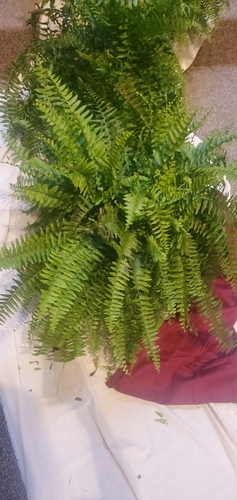
How to care for southern sword fern
Watering
Southern sword fern (Nephrolepis exaltata) likes evenly moist soil that never dries out completely, yet it hates sitting in water. Its fine, shallow roots dry out quickly in warm rooms, so check it often in summer and heating season. Use a peat-free, well-draining fern or houseplant mix, and water until a little drains from the pot bottom, then empty the saucer after 15 minutes. Soft or filtered water is best, since the fronds react to salts and chlorine by browning at the tips.
Does it need water today?
Push a finger 2 to 3 cm into the soil. If it feels dry and crumbly, water now. If it still feels cool and damp, wait a day. Lifting the pot also helps: a dry sword fern feels noticeably light. Fronds that look limp but recover within a few hours are a sign the fern is thirsty.
Keep the root ball evenly moist rather than letting it dry out and then drowning it. A pebble tray or a regular misting in dry winter air helps the fronds, but misting does not replace watering the soil.
Overwatering
Southern sword fern has thin, fibrous roots that suffocate in waterlogged compost, and the rhizomes rot quickly when they stay wet. Because it keeps growing through winter in warm homes, the soil dries more slowly than people expect, so extra watering is a common mistake.
Symptoms: Yellowing lower fronds, a soggy or sour smell from the soil, black or mushy rhizomes near the soil line, and new fronds that stay small or fail to unroll.
Solutions: Stop watering and let the top 5 cm dry out. Remove the plant from its pot, cut away any black or mushy roots with clean scissors, and repot into fresh, well-draining mix in a pot with drainage holes. Water only when the top layer is dry again.
Underwatering
Sword fern wilts quickly because its fronds lose water faster than its shallow roots can replace it. Once the compost pulls away from the pot edges, water runs off the surface and the root ball stays dry.
Symptoms: Crispy brown frond tips, fronds drooping or curling inward, dry and crumbly soil that shrinks from the pot wall, and leaves that look limp in the afternoon.
Solutions: Give the plant a thorough soak using bottom watering until the soil is evenly damp. Trim badly browned fronds at the base, then keep the soil lightly moist for the next two weeks. New growth should unroll within a few weeks.
Sunlight
In nature, southern sword fern grows under the canopy of forests, where it receives dappled light. Indoors it grows best in bright, indirect light; direct sun, especially through glass in summer, scorches the fronds to a bleached or brown color. It tolerates lower light, but growth becomes sparse and the fronds droop.
- Ideal: Bright, indirect light · 6-8 hours of bright, filtered light a day, with no direct midday sun
- Tolerates: Partial sun, Shade
- Best spot in a room: Near the window
- Artificial light: A full-spectrum LED grow light placed 30 to 45 cm above the fronds for 10 to 12 hours a day will keep the fern healthy in a dim room or during winter. Rotate the pot every week so the fronds grow evenly.
Too little light
Sword fern grows toward light, and in weak light the fronds stretch, thin, and lose their arching shape. Its growth slows down, so it has less energy to produce fresh fronds and recover from problems.
Symptoms: Long, pale, floppy fronds, large gaps between leaflets, slow growth, and new fronds that stay small and narrow.
Solutions: Move the fern closer to a bright east or north window, or add a grow light. Cut back leggy fronds at the base in spring, and feed lightly once new growth appears.
Too much sun
The fine, feathery leaflets of Nephrolepis exaltata are thin and easily damaged, so strong sun dries them out fast. Long exposure to direct light also dries the compost quickly, which adds stress.
Symptoms: Bleached yellow or white patches on the fronds, crispy brown edges, and fronds that look dull, dry, or faded.
Solutions: Move the fern a metre or more back from a south or west window, or add a sheer curtain. Water more often in strong light, and trim badly scorched fronds at the base.
Temperature
Southern sword fern thrives in warm, humid conditions between about 16 and 24 °C. Keep it away from cold drafts, heaters, and hot, dry air, and it will stay full and lush.
- Ideal: 16–24 °C
- Tolerates: 7–35 °C
- Hardiness zones: 10-12
Fertilizing
Southern sword fern is a moderate feeder that grows quickly in spring and summer. Feed it during active growth and stop in winter, when it rests. Always water before feeding so the roots are not burned.
- Slow-release fertilizer: Apply a slow-release fertilizer once a year in early spring, when new fronds begin to unfurl.
- Balanced liquid houseplant fertilizer (such as 10-10-10 or 20-20-20) diluted to half strength, Slow-release granular fertilizer for houseplants or outdoor ferns, Fish emulsion or seaweed-based feed for a gentle, organic option
Soil
Southern sword ferns grow naturally in loose, leafy, humus-rich soils on forest edges and in open woodland. They need soil that stays evenly moist but drains freely, so roots get both water and air. Heavy garden clay or dense, peaty compost that stays wet will cause rhizome rot quickly. Aim for a mix that feels damp like a wrung-out sponge, not muddy.
- Peat-free all-purpose potting mix with added perlite: Roughly 2 parts peat-free potting compost to 1 part perlite, with a small handful of coir or bark fines
- Fern-specific or humus-rich mix: A blend of composted bark, coco coir, and perlite, sometimes with a little leaf mould
- pH 5.5–6.5
Repotting
Nephrolepis exaltata has a spreading network of thick, fleshy rhizomes and runners called stolons. Those runners pop out of the soil surface and become new plants, so the plant grows outward quickly and fills its container. Repot to refresh the soil and give the rhizomes room, not to chase large jumps in size. Divide the clump at the same time if you want more plants.
- How often: Every 2-3 years, or when roots fill the pot and emerge from drainage holes
- New pot: Move up only one size, about 2-5 cm wider in diameter. Sword ferns like being slightly snug and can sulk in a pot that is much too large because wet soil stays cold and soggy.
- Repotting season: Spring, Summer
How to repot
- Gently loosen the plant from the old pot by tapping the sides, or by running a knife around the inside edge. Support the base of the clump while you pull.
- Shake or tease away old, compacted soil from the roots. Brown, mushy roots should be trimmed off with clean scissors.
- If you are dividing, cut through the rhizome with a sharp knife so each section has several healthy fronds and roots. Make sure each piece has a growing tip.
- Place a layer of fresh mix in the bottom of the new pot so the crown sits about 2 cm below the rim. Spread the roots out gently.
- Fill around the roots with mix, firming lightly with your fingers. Keep the rhizome crown at soil level, not buried, since burying it can cause rot.
- Water thoroughly until it runs out the bottom, then let excess drain away completely.
- Set the pot in indirect light and keep it out of strong afternoon sun for a couple of weeks.
Pruning
Southern sword fern does not need heavy pruning. Remove only fronds that are brown, damaged, or clearly past their best, cutting them close to the base of the plant. Never cut the central crown, because the new fronds grow from it.
Pruning season: Spring, Summer
How to prune
- Look over the whole plant and identify fronds that are fully brown, crispy, or heavily yellowed.
- Follow each frond down to the soil line and cut it off cleanly at its base with clean shears.
- Trim runners that stray too far if you want a neater shape, cutting them where they leave the main plant.
- Remove any dead or matted debris from the soil surface to keep the crown airy.
- Water lightly after pruning and keep the plant in its usual bright, humid spot. Avoid feeding for a few weeks while it recovers.
Propagation
Division of rhizomes and runners · Spring
- In early spring, when new fronds start to uncurl, lift the mature fern from its pot or the ground.
- Shake off loose compost and look for the thick, creeping rhizomes and the thin brown runners (stolons) that bear small tubers.
- Cut through the rhizome with a clean knife so each section has at least two or three healthy fronds and some roots attached.
- Pot each division in fresh, peat-based potting mix, keeping the crown just at soil level.
- Water well, then keep in bright, indirect light at 18 to 24 °C until new growth appears.
Runner plantlets (stolon pegging) · Spring, Summer
- Look for runners that trail over the edge of the pot. Each runner can carry small plantlets with tiny fronds and roots.
- Fill a small pot with moist potting mix and place it beside the parent plant.
- Pin a plantlet onto the surface of the mix with a bent wire hairpin so its base touches the soil.
- Keep the mix damp but not soggy. Roots usually form within a few weeks.
- When the new plant has a firm root system, cut the runner from the parent and move the young fern to its own pot.
Spore sowing · Spring, Summer
- Collect spores from the brown dots (sori) on the undersides of mature, healthy fronds. Place a frond on white paper overnight to catch the dust-like spores.
- Fill a shallow tray with sterile, fine peat-based mix and water it thoroughly.
- Scatter the spores thinly over the surface. Do not cover them with soil.
- Cover the tray with clear plastic or glass to hold humidity, and keep it at about 20 to 22 °C in bright, indirect light.
- Mist often. Tiny green scales (prothalli) appear in several weeks; then tiny ferns form. Remove the cover gradually once the seedlings have true fronds.
Division is the most reliable way to multiply southern sword fern at home. Spore sowing takes many months and is best left to experienced growers.
About southern sword fern
Also known as: Sword fern, Tuberous sword fern, Boston fern
- Plant type: fern, houseplant
- Lifespan: perennial
- Distribution: Native to tropical and subtropical regions of the Americas, Africa, Asia and Pacific islands.
- Mature height: 30-90 cm indoors; up to about 1 m in the wild
Pets · People
Pets: Safe · People: Safe. Considered non-toxic to cats, dogs and children by the ASPCA; no significant toxic compounds are reported.
Common problems
- Brown frond tips: Caused by dry air, underwatering or fluoride and salts in tap water; increase humidity and use filtered or rainwater.
- Scale insects: Brown bumps on stems and frond undersides; wipe off with alcohol on a cotton swab and treat with horticultural oil.
- Yellowing fronds: Often from overwatering, poor drainage or old age; check roots for rot and let the mix dry a little more between waterings.
- Spider mites: Fine webbing and stippled fronds in hot, dry conditions; rinse plant regularly and raise humidity.
- Pale, leggy growth: Caused by too little light; move to a brighter spot away from direct sun.
Uses
Widely grown as an ornamental houseplant and in hanging baskets, and used in interior landscaping for its air-filtering reputation. In some tropical regions it is also grown for cut greenery in floral arrangements.
Is it edible?
Not edible; not recommended for consumption.
History & legends
Nephrolepis exaltata has been cultivated for centuries in tropical gardens, and the Boston fern cultivar, a sport discovered in Massachusetts in the late 19th century, popularised it as a Victorian parlour plant. Its name refers to the sword-shaped fronds, and it has long appeared in folk traditions as a symbol of protection in the home.
Did you know?
Its small tubers on the runners can store water and survive a dry spell, and a single plant can send out runners that root into new plants several metres away.
Frequently asked questions
How often should I water southern sword fern?
every 5 days. Southern sword fern (Nephrolepis exaltata) likes evenly moist soil that never dries out completely, yet it hates sitting in water. Its fine, shallow roots dry out quickly in warm rooms, so check it often in summer and heating season. Use a peat-free, well-draining fern or houseplant mix, and water until a little drains from the pot bottom, then empty the saucer after 15 minutes. Soft or filtered water is best, since the fronds react to salts and chlorine by browning at the tips. Push a finger 2 to 3 cm into the soil. If it feels dry and crumbly, water now. If it still feels cool and damp, wait a day. Lifting the pot also helps: a dry sword fern feels noticeably light. Fronds that look limp but recover within a few hours are a sign the fern is thirsty.
How much light does southern sword fern need?
Bright, indirect light (6-8 hours of bright, filtered light a day, with no direct midday sun). In nature, southern sword fern grows under the canopy of forests, where it receives dappled light. Indoors it grows best in bright, indirect light; direct sun, especially through glass in summer, scorches the fronds to a bleached or brown color. It tolerates lower light, but growth becomes sparse and the fronds droop.
What temperature does southern sword fern like?
16–24 °C. Southern sword fern thrives in warm, humid conditions between about 16 and 24 °C. Keep it away from cold drafts, heaters, and hot, dry air, and it will stay full and lush.
Is southern sword fern toxic to cats and dogs?
It is safe for cats and dogs. Considered non-toxic to cats, dogs and children by the ASPCA; no significant toxic compounds are reported.
What are the most common problems of southern sword fern?
Brown frond tips: Caused by dry air, underwatering or fluoride and salts in tap water; increase humidity and use filtered or rainwater. Scale insects: Brown bumps on stems and frond undersides; wipe off with alcohol on a cotton swab and treat with horticultural oil. Yellowing fronds: Often from overwatering, poor drainage or old age; check roots for rot and let the mix dry a little more between waterings. Spider mites: Fine webbing and stippled fronds in hot, dry conditions; rinse plant regularly and raise humidity. Pale, leggy growth: Caused by too little light; move to a brighter spot away from direct sun.
When should I repot southern sword fern?
Every 2-3 years, or when roots fill the pot and emerge from drainage holes. Nephrolepis exaltata has a spreading network of thick, fleshy rhizomes and runners called stolons. Those runners pop out of the soil surface and become new plants, so the plant grows outward quickly and fills its container. Repot to refresh the soil and give the rhizomes room, not to chase large jumps in size. Divide the clump at the same time if you want more plants.
How do I propagate southern sword fern?
Division of rhizomes and runners, Runner plantlets (stolon pegging), Spore sowing. In early spring, when new fronds start to uncurl, lift the mature fern from its pot or the ground. Shake off loose compost and look for the thick, creeping rhizomes and the thin brown runners (stolons) that bear small tubers. Cut through the rhizome with a clean knife so each section has at least two or three healthy fronds and some roots attached. Pot each division in fresh, peat-based potting mix, keeping the crown just at soil level. Water well, then keep in bright, indirect light at 18 to 24 °C until new growth appears.
How this guide was written
Verdiss writes each guide with AI from botanical references and checks the species against iNaturalist and Plants of the World Online (Kew). Readers can rate every guide in the app.
Sources
Verdiss's information is for general guidance. Never eat or use a plant as medicine based on an app: ask a professional.