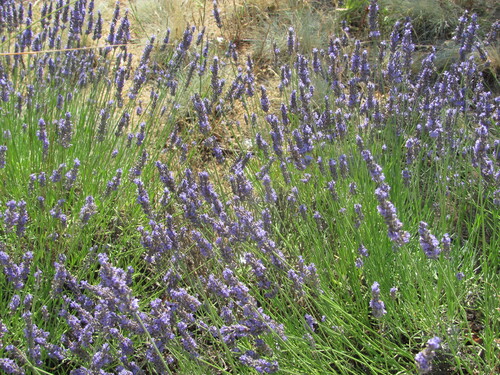
How to care for Common Lavender
Watering
Common Lavender (Lavandula angustifolia) is a Mediterranean-type shrub that evolved on dry, rocky, well-drained slopes. It wants deep watering only when the soil has dried out, and it hates wet roots more than drought. Indoors, water less often than you would for most houseplants. Outdoors, once established, it usually needs little or no extra water except during long dry spells in its first two years.
Does it need water today?
Push a finger about 3 cm (1 inch) into the soil. If it feels dry, water thoroughly. If it feels even slightly damp, wait. Lift the pot too: a dry pot feels noticeably light. Terracotta pots dry faster than plastic, so check them more often.
Water until it runs out of the drainage hole, then empty the saucer after 10 minutes. Lavender sitting in water is the most common way it dies.
Overwatering
Common Lavender comes from dry Mediterranean hillsides where roots must breathe between rains. Soggy, airless soil quickly causes root rot, and this shrub is much more sensitive to wet feet than to dryness.
Symptoms: Yellowing lower leaves, grey-green foliage turning dull or limp, stems going soft or black at the base, a sour smell from the soil, and fungus gnats.
Solutions: Stop watering and let the soil dry out fully. Remove the plant from its pot, cut away any black or mushy roots, and repot into fresh gritty, fast-draining mix in a pot with drainage holes. Outdoors, plant on a slope or raised bed if your soil is heavy clay.
Underwatering
Lavender is adapted to drought, so it tolerates dry soil far better than most garden plants. However, young plants and container-grown plants in full sun can dry out faster than their roots can recover, especially in summer heat.
Symptoms: Grey or silvery leaves that look dusty and dry, crisp leaf tips, flower spikes that stop opening or fade early, and soil pulling away from the pot edges.
Solutions: Water deeply until it drains, then let it dry again. For a very dry pot, soak it in a tray of water for 20 minutes. Trim spent flower stalks to save energy, and mulch outdoor plants with gravel or grit to reduce evaporation.
Sunlight
Common Lavender needs strong, direct sunlight to stay compact, grey-green, and full of flowers. Without enough sun, stems stretch, leaves thin, and flowering is poor. In most of the Northern Hemisphere it is best grown outdoors or on the sunniest windowsill you have. It can handle light afternoon shade in hot climates but not deep shade.
- Ideal: Full sun · 6-8 hours of direct sun per day
- Tolerates: Full sun, Partial sun
- Best spot in a room: At the window
- Artificial light: A full-spectrum LED grow light set about 15 to 30 cm above the plant for 12 to 14 hours a day helps indoor lavender stay compact and bloom. Use a timer and raise the light as the plant grows.
Too little light
Lavender originates from sunny, open Mediterranean scrub, so it depends on intense light to build woody growth and flower buds. Weak light makes it leggy and weak, and it becomes more prone to fungal problems in damp, shaded conditions.
Symptoms: Long, floppy stems with wide gaps between leaves, pale green foliage instead of silvery grey, few or no flower spikes, and leaning toward the light source.
Solutions: Move the plant to the sunniest south- or west-facing spot available, or outdoors to a sunny spot. Rotate the pot weekly for even growth. Prune lightly in spring to encourage bushier growth, and add a grow light if sunlight is limited indoors.
Too much sun
Common Lavender handles intense sun well, but in very hot climates or reflective spots such as paved areas and south-facing walls, the combination of heat and drying air can scorch foliage and stress the roots.
Symptoms: Crispy brown leaf edges or patches, bleached or faded grey leaves, flowers wilting in the afternoon even when the soil is moist, and dry, cracked soil around the root ball.
Solutions: Provide light afternoon shade during heatwaves, such as a shade cloth or taller plants nearby. Water in the early morning and check the soil more often in summer. Indoors, move the plant a little back from a hot south-facing window during the hottest weeks.
Temperature
Common Lavender (Lavandula angustifolia) is a Mediterranean-mountain shrub that thrives in warm, dry summers and cool winters. It handles cold well once established outdoors, but it hates wet, humid heat and soggy roots in cold weather. Keep it in full sun with excellent drainage and good air movement.
- Ideal: 10–25 °C
- Tolerates: -20–35 °C
- Hardiness zones: 5-9
Fertilizing
Lavandula angustifolia grows best in poor, sandy or stony soil. Too much nitrogen produces lush, floppy growth with weak scent and fewer flowers, and it makes winter losses more likely. Feed lightly, and focus on sunshine, drainage and pH instead of fertilizer.
- Slow-release fertilizer: Once a year in early spring, or not needed in average garden soil. Lavender prefers lean ground, so heavy feeding is unnecessary.
- Low-nitrogen slow-release granular fertilizer for flowering shrubs or Mediterranean herbs, Bone meal or rock phosphate for gentle, long-term phosphorus, Diluted seaweed or fish emulsion for a light, occasional boost in spring, Garden lime if your soil is strongly acidic, since lavender prefers neutral to alkaline soil
Soil
Common Lavender (Lavandula angustifolia) needs lean, sharp-draining soil that stays slightly alkaline. Rich, moist, or heavy soil leads to root rot and weak, floppy growth.
- Gritty cactus-style mix: Two parts potting mix or coarse sand, one part perlite or pumice, and a small handful of horticultural grit. Ideal for container-grown Common Lavender.
- Mineral garden loam: Mix native garden soil with coarse sand or fine gravel in roughly equal parts, and add a little crushed limestone if the soil is acidic. Suits Common Lavender planted in open ground.
- Lean potting mix: Standard peat-free potting compost blended with 40 percent grit or perlite. Use only if you cannot find the other mixes, and check drainage carefully.
- pH 6.5–8
Repotting
Common Lavender (Lavandula angustifolia) hates wet feet. Use a pot with drainage holes and a fast-draining mix, and repot as gently as possible.
- How often: every 2-3 years, or when roots fill the pot
- New pot: Move up only one pot size (2-5 cm wider in diameter) to avoid soggy soil around the roots of Common Lavender
- Repotting season: Spring, Autumn
How to repot
- Gently tip the pot on its side and ease the plant out, supporting the base of the stem with one hand
- Loosen the outer roots with your fingers. Trim any black, mushy, or circling roots with clean shears
- Set a 3-4 cm layer of gritty mix in the new pot, then position the plant so the crown sits level with the old soil line
- Fill around the root ball with mix, tapping the pot gently to settle it. Firm lightly but do not compact the soil
- Leave about 2 cm of space below the rim so water does not run off the top
- Water thoroughly until it drains out the bottom, then let the excess drain away completely
Pruning
Lavandula angustifolia flowers on the current season's growth, so prune lightly after flowering to shape it. Never cut into old, leafless brown wood, because it rarely sprouts again.
Pruning season: Spring, Summer, Autumn
How to prune
- In mid to late summer, after the main flowers fade, locate the top of the foliage mound and the spent flower stalks.
- Cut back the flowering stems by about one third, cutting just above a set of green leaves and keeping the overall shape rounded.
- Remove any dead, grey, or woody stems at the base, cutting back to healthy green shoots or to the ground.
- In early spring, lightly trim away winter damage, cutting just into green growth and never past the old wood.
- Step back regularly to check that the plant has an even, domed shape, and stop once it looks balanced.
Propagation
Softwood cuttings · Spring, Summer
- In late spring or early summer, cut 8 to 10 cm non-flowering shoot tips from a healthy Lavandula angustifolia plant, using clean, sharp secateurs.
- Strip the leaves from the lower half of each cutting and dip the cut end in rooting hormone powder.
- Push the cuttings into a pot of gritty, free-draining mix, such as equal parts potting compost and horticultural grit.
- Water lightly, cover loosely with a clear plastic bag held off the leaves with sticks, and place in bright, indirect light at about 18 to 22°C.
- Check roots after 4 to 6 weeks by gently tugging; when resistance is felt, pot the cuttings on individually.
Semi-ripe cuttings · Summer, Autumn
- In late summer, choose current-season shoots that have started to firm up at the base but still bend slightly.
- Cut 10 cm lengths just below a leaf node and remove the lowest leaves.
- Insert the cuttings into a gritty mix up to half their length, firming the compost around the stems.
- Keep them in a cold frame or sheltered spot out of hard frost, and keep the mix barely moist.
- Leave them through winter, then pot on in spring once new growth appears.
Layering · Spring, Autumn
- Choose a low, flexible stem on a mature Lavandula angustifolia plant.
- Scrape a small patch of bark off the underside of the stem where it touches the soil.
- Pin the wounded section into a shallow trench with a bent wire or stone, leaving the tip above ground.
- Keep the soil moist and check for roots after about 12 months.
- Sever the rooted stem from the parent plant and transplant it.
Lavender struggles to root from old woody wood, so always take cuttings from soft, non-flowering growth. Avoid overwatering in the rooting pot, since soggy compost is the most common cause of cutting failure.
About Common Lavender
Also known as: English lavender, True lavender, Common lavender, Narrow-leaved lavender
- Plant type: subshrub, aromatic herb, evergreen shrub
- Lifespan: perennial
- Distribution: Native to the western Mediterranean mountains, from Spain and southern France to the Balkans and northern Italy.
- Mature height: 30-60 cm
- Bloom time: Late spring to midsummer
Pets · People
Pets: Safe · People: Safe. Lavandula angustifolia is considered non-toxic to cats, dogs and children by ASPCA. Large amounts of the essential oil may still cause stomach upset if swallowed.
Common problems
- Root rot: Waterlogged or heavy soil causes roots to rot and the plant to collapse; fix with gritty soil and less frequent watering.
- Woody legginess: Plants left unpruned become straggly with bare woody stems at the base; regular light trimming prevents this.
- Lavender stem blight: Fungal infection in humid conditions causes browning and dieback; improve airflow and avoid wetting foliage.
- Spittlebugs: Frothy white spit masses appear on stems in spring; they are rarely harmful and can be rinsed off with water.
- Poor flowering in shade: Insufficient sun leads to few flower spikes and weak stems; move to a sunnier site.
Uses
Lavender is widely grown as an ornamental edging and border plant. Its flowers and oil are used in perfumery, soaps, cosmetics, aromatherapy and culinary dishes, and dried flowers are used in sachets and linen bags to repel moths.
Is it edible?
Flowers are edible in small amounts and used to flavour sugar, syrups, teas and baked goods; leaves are edible but strongly flavoured.
History & legends
Lavender has been used since ancient times for bathing, perfume and embalming, and Romans scented their baths with it. In medieval Europe it was valued as a strewing herb to freshen rooms and was believed to ward off infection and evil spirits.
Did you know?
Lavender was used by the Romans to scent their baths, and the name is thought to derive from Latin lavare, to wash.
Frequently asked questions
How often should I water Common Lavender?
every 14 days. Common Lavender (Lavandula angustifolia) is a Mediterranean-type shrub that evolved on dry, rocky, well-drained slopes. It wants deep watering only when the soil has dried out, and it hates wet roots more than drought. Indoors, water less often than you would for most houseplants. Outdoors, once established, it usually needs little or no extra water except during long dry spells in its first two years. Push a finger about 3 cm (1 inch) into the soil. If it feels dry, water thoroughly. If it feels even slightly damp, wait. Lift the pot too: a dry pot feels noticeably light. Terracotta pots dry faster than plastic, so check them more often.
How much light does Common Lavender need?
Full sun (6-8 hours of direct sun per day). Common Lavender needs strong, direct sunlight to stay compact, grey-green, and full of flowers. Without enough sun, stems stretch, leaves thin, and flowering is poor. In most of the Northern Hemisphere it is best grown outdoors or on the sunniest windowsill you have. It can handle light afternoon shade in hot climates but not deep shade.
What temperature does Common Lavender like?
10–25 °C. Common Lavender (Lavandula angustifolia) is a Mediterranean-mountain shrub that thrives in warm, dry summers and cool winters. It handles cold well once established outdoors, but it hates wet, humid heat and soggy roots in cold weather. Keep it in full sun with excellent drainage and good air movement.
Is Common Lavender toxic to cats and dogs?
It is safe for cats and dogs. Lavandula angustifolia is considered non-toxic to cats, dogs and children by ASPCA. Large amounts of the essential oil may still cause stomach upset if swallowed.
What are the most common problems of Common Lavender?
Root rot: Waterlogged or heavy soil causes roots to rot and the plant to collapse; fix with gritty soil and less frequent watering. Woody legginess: Plants left unpruned become straggly with bare woody stems at the base; regular light trimming prevents this. Lavender stem blight: Fungal infection in humid conditions causes browning and dieback; improve airflow and avoid wetting foliage. Spittlebugs: Frothy white spit masses appear on stems in spring; they are rarely harmful and can be rinsed off with water. Poor flowering in shade: Insufficient sun leads to few flower spikes and weak stems; move to a sunnier site.
When should I repot Common Lavender?
every 2-3 years, or when roots fill the pot. Common Lavender (Lavandula angustifolia) hates wet feet. Use a pot with drainage holes and a fast-draining mix, and repot as gently as possible.
How do I propagate Common Lavender?
Softwood cuttings, Semi-ripe cuttings, Layering. In late spring or early summer, cut 8 to 10 cm non-flowering shoot tips from a healthy Lavandula angustifolia plant, using clean, sharp secateurs. Strip the leaves from the lower half of each cutting and dip the cut end in rooting hormone powder. Push the cuttings into a pot of gritty, free-draining mix, such as equal parts potting compost and horticultural grit. Water lightly, cover loosely with a clear plastic bag held off the leaves with sticks, and place in bright, indirect light at about 18 to 22°C. Check roots after 4 to 6 weeks by gently tugging; when resistance is felt, pot the cuttings on individually.
How this guide was written
Verdiss writes each guide with AI from botanical references and checks the species against iNaturalist and Plants of the World Online (Kew). Readers can rate every guide in the app.
Sources
Verdiss's information is for general guidance. Never eat or use a plant as medicine based on an app: ask a professional.