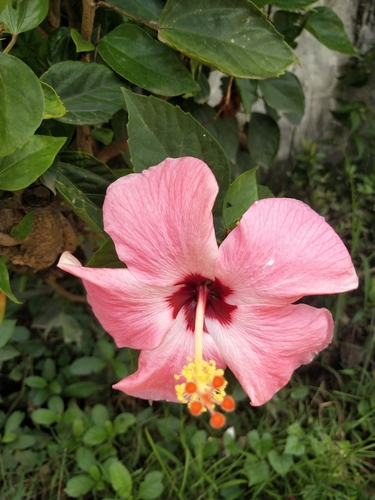
How to care for Hibiscus rosa-sinensis
Watering
Hibiscus rosa-sinensis, the tropical hibiscus, likes evenly moist soil that never dries out completely and never sits soggy. Water deeply until it drains from the pot holes, then empty the saucer so roots are not left standing in water. Water more often in spring and summer when it is in active growth and flowering, and less in winter when growth slows. Soft, room-temperature water is best, since hibiscus can react to hard water with yellowing leaves. Water in the morning so foliage dries before evening.
Does it need water today?
Push a finger about 2-3 cm (1 inch) into the soil. If it feels dry, water now. If it feels damp, wait a day and check again. Lift the pot too: a light pot means the soil is dry, a heavy pot means it is still wet. In winter, leaves that droop slightly in the morning and then recover are a sign the soil is drying out.
Hibiscus is a thirsty plant during heat and flowering, and it drops buds when its roots swing between wet and dry. Aim for steady, moderate moisture instead of big soakings followed by long dry spells. A layer of mulch on outdoor plants helps keep the root zone even.
Overwatering
Tropical hibiscus has fleshy roots that rot quickly in waterlogged soil, and cold, wet conditions make this worse. Because its roots need air as well as moisture, constantly soggy soil causes the plant to fail even though it loves water.
Symptoms: Yellowing lower leaves, sudden leaf drop, wilting even though the soil is wet, a sour or musty smell from the soil, and buds falling off before opening.
Solutions: Stop watering and let the top 5 cm (2 inches) dry out. Check that the pot has drainage holes and empty the saucer after every watering. If roots are brown, mushy, or smell bad, repot into fresh, well-draining potting mix and trim the damaged roots with clean scissors.
Underwatering
Hibiscus leaves are large and thin, so they lose water fast in heat and wind. When the soil dries out, the plant protects itself by dropping leaves and flower buds rather than keeping everything alive.
Symptoms: Limp, drooping leaves, crispy brown leaf edges, dry soil pulling away from the pot sides, and flower buds dropping before they open.
Solutions: Water thoroughly using the bottom-watering method so the root ball rehydrates evenly. Then keep the soil moist but not soggy over the following days. Move the plant out of hot, dry drafts, and mist the leaves lightly in very dry indoor air.
Sunlight
Tropical hibiscus is a sun-loving shrub that produces the most flowers in full sun. Give it as much bright light as you can, ideally at least 6 hours of direct sun. In partial shade it grows more leggy, with fewer and smaller blooms. Gradually move it into full sun in spring after winter indoors to prevent leaf scorch.
- Ideal: Full sun · 6-8 hours of direct sun per day
- Tolerates: Full sun, Partial sun, Bright, indirect light
- Best spot in a room: At the window
- Artificial light: Indoors, a south- or west-facing window is best. If natural light is weak, use a full-spectrum LED grow light for 12-14 hours a day, placed 30-45 cm (12-18 inches) above the plant. Rotate the pot every week so all sides grow evenly toward the light.
Too little light
Hibiscus needs strong light to make the energy for its large, showy flowers. In low light it puts its effort into stem and leaf growth, and it will not bloom well.
Symptoms: Long, weak stems stretching toward the window, pale small leaves, few or no flowers, and leaves that drop gradually from the lower part of the plant.
Solutions: Move the plant to the brightest window you have, or outdoors to a sunny spot once nights stay above 10°C. Add a grow light if needed, and prune back leggy stems in early spring to encourage bushy growth.
Too much sun
Although hibiscus loves sun, plants moved suddenly from shade into intense midday sun, or grown in very hot glass, can overheat. Their thin leaves lose moisture faster than the roots can replace it.
Symptoms: Bleached or yellowing patches on the leaves, brown scorched edges, and wilting in the afternoon even when the soil is moist.
Solutions: Acclimatize the plant over 1-2 weeks, starting with a few hours of morning sun. Provide light afternoon shade during heatwaves, and water a little more often in hot weather. Move it back a short distance from the glass if scorching persists.
Temperature
Hibiscus rosa-sinensis, the tropical or Chinese hibiscus, grows best warm and humid. Keep it above 15°C for steady growth and blooming. Frost kills it quickly, so bring it indoors or protect it before temperatures drop toward freezing. In USDA zones 10 to 11 it can stay outdoors year-round; elsewhere treat it as a container plant.
- Ideal: 18–32 °C
- Tolerates: 10–38 °C
- Hardiness zones: 9-11
Fertilizing
Hibiscus rosa-sinensis is a heavy feeder during its growing and flowering season. Feed lightly in early spring, increase feeding in summer when it blooms, and stop in late fall. Potted plants need more frequent feeding than plants in the ground because nutrients wash out with each watering.
- Slow-release fertilizer: Apply a balanced slow-release granular fertilizer once in early spring, following the package rate. Repeat only if the plant is grown in a container, where it may be needed again in midsummer.
- Balanced liquid fertilizer such as 10-10-10 or 20-20-20 for regular feeding, High-potassium bloom fertilizer such as 5-10-10 or tomato feed during the flowering season, Slow-release granular fertilizer with micronutrients, Fertilizer with added magnesium, such as Epsom salt solution, if leaves yellow between veins
Soil
Hibiscus rosa-sinensis grows best in slightly acidic, fertile, well-drained soil that stays evenly moist but never waterlogged. Good drainage protects the roots from rot, while organic matter keeps nutrients and moisture available for its heavy flowering.
- Loamy potting mix with added perlite: Roughly 60% good-quality potting mix, 30% perlite or pumice, and 10% compost or coco coir for moisture retention.
- Garden soil amendment for in-ground planting: Native garden loam mixed with equal parts compost and coarse sand or grit to open the soil and improve drainage around the roots.
- Container mix for hibiscus: Commercial peat-free potting mix with a slow-release fertilizer and perlite, suitable for flowering shrubs.
- pH 6–6.8
Repotting
Repot in warm weather when the plant is actively growing, with a pot that has drainage holes. Hibiscus rosa-sinensis is a tropical shrub that dislikes cold, wet roots, so good drainage and timing matter more than the exact pot material.
- How often: Every 1-2 years for young plants; every 2-3 years once mature
- New pot: Move up only one pot size (about 2-5 cm wider in diameter) each time, since hibiscus roots grow quickly and oversized pots hold wet soil that can rot them.
- Repotting season: Spring, Summer
How to repot
- Gently tip the pot on its side and slide the root ball out, tapping the sides if needed.
- Loosen the outer roots with your fingers and trim any brown, mushy, or dead roots with clean shears.
- Place a layer of fresh mix in the new pot so the top of the root ball sits about 2 cm below the rim.
- Set the plant in the center, fill around the sides with mix, and firm it gently to remove large air pockets.
- Water thoroughly until it drains from the holes, then keep the plant out of direct harsh sun for about one week.
- Resume normal watering only when the top few centimetres of soil feel dry.
Pruning
Hibiscus rosa-sinensis, commonly called Chinese hibiscus or tropical hibiscus, flowers on new growth, so hard pruning in spring rejuvenates the plant and leads to a fuller display of blooms. Plants can be cut back substantially and will regrow quickly in warm weather. Avoid heavy pruning in autumn or winter, when the plant is slowing down and fresh cuts heal slowly.
Pruning season: Spring, Summer
How to prune
- Start by removing any dead, damaged, or diseased wood, cutting back to healthy, green tissue.
- Cut out weak, thin, or crossing branches at their base or just above a healthy outward-facing bud.
- For bushier growth, pinch or cut back the tips of young shoots to just above a leaf node, which encourages side branching.
- For a major rejuvenation, cut older woody stems back by up to one third to half their height, leaving a balanced framework of three to five strong main branches.
- Make every cut at a slight angle, about 5 mm above a bud or node, so water runs off and the cut heals cleanly.
- Remove any suckers or shoots growing from the base if you want a single-trunk shape, or keep them for a fuller shrub.
- After pruning, feed lightly and water well to support the flush of new growth. Keep the plant in bright light and avoid temperatures below 10 °C while it recovers.
Propagation
Stem cuttings · Spring, Summer
- Choose a healthy, semi-hardwood stem about 10 to 15 cm long with three or four nodes, taken from the current season's growth of a Hibiscus rosa-sinensis plant.
- Cut just below a node using clean, sharp pruners, then remove the lower leaves so that only the top two or three remain.
- Optionally dip the cut end in rooting hormone powder and tap off any excess.
- Push the cutting about 5 cm deep into a pot of moist, well-draining mix such as equal parts potting soil and perlite or coarse sand.
- Place the pot in bright, indirect light at 22 to 30 °C, and keep the mix damp but never soggy.
- Roots usually form within three to six weeks. Give a gentle tug to test; resistance means roots have formed, and the young plant can then be moved to a larger pot.
Air layering · Spring, Summer
- Pick a healthy, pencil-thick stem on the mature plant and make a clean upward slit about 2 cm long just below a leaf node, or remove a thin ring of bark about 2 cm wide.
- Dust the wound with rooting hormone and pack a handful of moist sphagnum moss around it.
- Wrap the moss with clear plastic film and seal both ends with tape or twine so moisture stays trapped.
- Check every couple of weeks and add water if the moss dries out.
- When white roots are visible through the plastic, usually after four to eight weeks, cut the stem just below the rooted section and pot it up.
Seed · Spring
- Collect mature seed pods after they dry and split on the parent plant. Seeds are often sterile or do not come true to the parent, so expect variation.
- Soak the seeds in warm water for 12 to 24 hours before sowing.
- Sow them about 1 cm deep in a seed tray filled with light, moist seed-starting mix.
- Keep the tray warm at around 24 to 28 °C and in bright light, and keep the surface moist.
- Seedlings may appear in one to three weeks. Pot them up once they have several true leaves.
Cuttings from this species root most reliably when taken from firm, new growth in late spring or early summer, when the plant is growing vigorously. Keeping humidity high around the cutting, for example by covering the pot with a clear bag propped up on sticks, greatly improves success rates for Chinese hibiscus.
About Hibiscus rosa-sinensis
Also known as: Chinese hibiscus, Chinese rose, Rose of China, Shoeblack plant
- Plant type: shrub, tropical flowering plant
- Lifespan: perennial
- Distribution: Native to East Asia, most likely southern China, and possibly adjacent regions of Southeast Asia.
- Mature height: 1-5 m in the ground; typically 1-2 m in containers
- Bloom time: Mostly spring through autumn in warm climates; can bloom year-round in the tropics
Pets · People
Pets: Safe · People: Safe. Listed as non-toxic to cats, dogs, and horses by the ASPCA. Flowers and leaves are not considered poisonous, though eating large amounts may cause mild stomach upset.
Common problems
- Bud drop: Buds fall off before opening, usually due to low humidity, uneven watering, or sudden temperature changes.
- Spider mites: Fine webbing and stippled leaves appear in hot, dry indoor conditions; rinse leaves and increase humidity.
- Whiteflies: Small white insects cluster under leaves and produce sticky honeydew; use insecticidal soap.
- Yellowing leaves: Often caused by overwatering, poor drainage, or iron chlorosis in alkaline soil.
- Frost damage: Leaves and stems blacken after cold exposure; protect plants below 10 °C (50 °F).
Uses
Widely grown as an ornamental shrub and hedge in tropical and subtropical gardens and as a container plant elsewhere. In parts of Asia and the Pacific, flowers are used in traditional medicine and as a shoe-polish plant, since crushed petals were used to blacken shoes. Hybrids are important in the cut-flower and landscape trade.
Is it edible?
Flowers and young leaves are edible and used in teas, salads, and garnishes in several cultures. Petals are often used to make a tart, red infusion. Other parts are not recommended for consumption.
History & legends
Hibiscus rosa-sinensis has been cultivated in China for centuries, where it was valued for its beauty and used in folk medicine. It spread along trade routes to India, the Pacific, and the Americas, becoming a symbol of hospitality and beauty in many tropical cultures. In Hawaii it is closely associated with local identity and is commonly worn in hair.
Did you know?
A single Chinese hibiscus flower opens in the morning and typically wilts by evening, but a healthy plant produces new buds almost every day in the right conditions.
Frequently asked questions
How often should I water Hibiscus rosa-sinensis?
every 3 days. Hibiscus rosa-sinensis, the tropical hibiscus, likes evenly moist soil that never dries out completely and never sits soggy. Water deeply until it drains from the pot holes, then empty the saucer so roots are not left standing in water. Water more often in spring and summer when it is in active growth and flowering, and less in winter when growth slows. Soft, room-temperature water is best, since hibiscus can react to hard water with yellowing leaves. Water in the morning so foliage dries before evening. Push a finger about 2-3 cm (1 inch) into the soil. If it feels dry, water now. If it feels damp, wait a day and check again. Lift the pot too: a light pot means the soil is dry, a heavy pot means it is still wet. In winter, leaves that droop slightly in the morning and then recover are a sign the soil is drying out.
How much light does Hibiscus rosa-sinensis need?
Full sun (6-8 hours of direct sun per day). Tropical hibiscus is a sun-loving shrub that produces the most flowers in full sun. Give it as much bright light as you can, ideally at least 6 hours of direct sun. In partial shade it grows more leggy, with fewer and smaller blooms. Gradually move it into full sun in spring after winter indoors to prevent leaf scorch.
What temperature does Hibiscus rosa-sinensis like?
18–32 °C. Hibiscus rosa-sinensis, the tropical or Chinese hibiscus, grows best warm and humid. Keep it above 15°C for steady growth and blooming. Frost kills it quickly, so bring it indoors or protect it before temperatures drop toward freezing. In USDA zones 10 to 11 it can stay outdoors year-round; elsewhere treat it as a container plant.
Is Hibiscus rosa-sinensis toxic to cats and dogs?
It is safe for cats and dogs. Listed as non-toxic to cats, dogs, and horses by the ASPCA. Flowers and leaves are not considered poisonous, though eating large amounts may cause mild stomach upset.
What are the most common problems of Hibiscus rosa-sinensis?
Bud drop: Buds fall off before opening, usually due to low humidity, uneven watering, or sudden temperature changes. Spider mites: Fine webbing and stippled leaves appear in hot, dry indoor conditions; rinse leaves and increase humidity. Whiteflies: Small white insects cluster under leaves and produce sticky honeydew; use insecticidal soap. Yellowing leaves: Often caused by overwatering, poor drainage, or iron chlorosis in alkaline soil. Frost damage: Leaves and stems blacken after cold exposure; protect plants below 10 °C (50 °F).
When should I repot Hibiscus rosa-sinensis?
Every 1-2 years for young plants; every 2-3 years once mature. Repot in warm weather when the plant is actively growing, with a pot that has drainage holes. Hibiscus rosa-sinensis is a tropical shrub that dislikes cold, wet roots, so good drainage and timing matter more than the exact pot material.
How do I propagate Hibiscus rosa-sinensis?
Stem cuttings, Air layering, Seed. Choose a healthy, semi-hardwood stem about 10 to 15 cm long with three or four nodes, taken from the current season's growth of a Hibiscus rosa-sinensis plant. Cut just below a node using clean, sharp pruners, then remove the lower leaves so that only the top two or three remain. Optionally dip the cut end in rooting hormone powder and tap off any excess. Push the cutting about 5 cm deep into a pot of moist, well-draining mix such as equal parts potting soil and perlite or coarse sand. Place the pot in bright, indirect light at 22 to 30 °C, and keep the mix damp but never soggy. Roots usually form within three to six weeks. Give a gentle tug to test; resistance means roots have formed, and the young plant can then be moved to a larger pot.
How this guide was written
Verdiss writes each guide with AI from botanical references and checks the species against iNaturalist and Plants of the World Online (Kew). Readers can rate every guide in the app.
Sources
Verdiss's information is for general guidance. Never eat or use a plant as medicine based on an app: ask a professional.