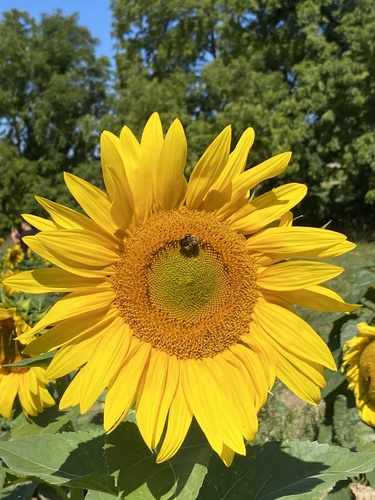
How to care for Common Sunflower
Watering
Common Sunflower (Helianthus annuus) grows fast from seed and builds a deep taproot and a large leafy stem that moves a lot of water. Keep the soil evenly moist while the plant is young and during flower-bud formation, but never soggy. Water at the base of the plant in the morning so leaves dry quickly and fungal spots are less likely. Indoors, sunflowers rarely stay healthy for long, so expect a short container life and plan for a sunny spot with a deep pot of at least 30 cm.
Does it need water today?
Push a finger 5 cm into the soil. If it feels dry, water. Lift the pot: a dry pot feels noticeably light compared with one just watered. Wilting leaves in the afternoon that recover by evening usually mean the plant is thirsty, while wilting that persists in damp soil means too much water.
Water deeply and less often rather than little and often. A slow soak that reaches the bottom of the root zone encourages the taproot to grow down, which makes the plant more drought tolerant and sturdier against wind.
Overwatering
Sunflowers have thick stems and taproots that need oxygen to grow well. Standing water in the root zone quickly causes rot, and the plant's fast growth makes it especially prone to stem and root disease in soggy soil.
Symptoms: Yellowing lower leaves, a drooping plant despite wet soil, soft or darkened stem near the soil line, a sour smell from the pot, and fungus gnats hovering around the soil.
Solutions: Stop watering and let the top 5 cm dry. Make sure the pot has drainage holes and that outdoor beds drain well, adding coarse sand or compost if needed. Cut away any rotten stem and repot into fresh, lighter soil if root damage is severe.
Underwatering
Sunflowers lose a lot of water through their broad leaves, especially on hot, windy days during flowering. Once the soil dries deeply, the plant cannot lift water to the large flower head, so growth and bloom suffer quickly.
Symptoms: Leaves wilting and turning crisp at the edges, drooping flower heads that tilt toward the ground, slowed growth, small or shriveled flowers, and dry, pulled-away soil from the pot edge.
Solutions: Water deeply until moisture reaches the bottom of the pot or the root zone. Mulch outdoor beds with straw or bark to slow evaporation, and water again in the morning on hot days. Recovery is usually quick if the stem is not dried out and brittle.
Sunlight
Common Sunflower (Helianthus annuus) is a true sun-lover. Its large flower heads track the sun during growth and face east in the morning, which helps it attract pollinators. Without enough direct light, the stem stretches thin and weak, flowers stay small, and seed yield drops sharply. Full sun outdoors gives the strongest, shortest, most upright plants.
- Ideal: Full sun · 6-8 hours of direct sun per day
- Tolerates: Full sun, Partial sun
- Best spot in a room: At the window
- Artificial light: Indoors, a south-facing window is the best option, but growth is still often weak. For a stronger plant, use a full-spectrum LED grow light placed 30 to 45 cm above the top leaves for 12 to 14 hours a day, and raise the light as the plant grows.
Too little light
Sunflowers need strong direct light to build sturdy stems and large leaves. In low light, the plant stretches toward any available brightness and cannot produce enough energy to form full flower heads.
Symptoms: Tall, thin, pale stems that bend easily, small leaves spaced far apart, a tilted or drooping plant, and few or no flower buds.
Solutions: Move the plant to the sunniest position available, ideally outdoors in full sun. Indoors, add a grow light for 12 to 14 hours daily and rotate the pot weekly so growth stays even.
Too much sun
Although sunflowers love full sun, very intense heat combined with dry soil can scorch the large leaves and flower heads. Young plants in containers are especially vulnerable when they are moved suddenly into strong light.
Symptoms: Crisp brown patches on leaves facing the sun, wilting during midday even with moist soil, faded or bleached petals, and dried flower heads.
Solutions: Acclimate new plants gradually over a week, moving them from shade to sun. In heat above 32 °C, provide light afternoon shade or a shade cloth and keep the soil consistently moist.
Temperature
Common sunflower (Helianthus annuus) is a warm-season annual that germinates best when soil is at least 10°C and grows fastest in warm summer days of 20 to 30°C. Young seedlings are damaged by frost, while mature plants tolerate light cold but are stressed by prolonged heat above 35°C.
- Ideal: 18–30 °C
- Tolerates: -2–38 °C
- Hardiness zones: 3-11
Fertilizing
Common sunflower is a heavy feeder during its rapid growth phase, especially for nitrogen early on and for phosphorus and potassium when it sets flower heads. Fertilize in response to growth stage rather than on a fixed calendar, and stop feeding once buds are well formed.
- Slow-release fertilizer: Work a slow-release fertilizer into the soil once at planting time in spring; no further application is needed for a single season.
- Balanced granular fertilizer such as 10-10-10 applied at planting, Compost or well-rotted manure worked into the bed before sowing, Liquid tomato or vegetable fertilizer with moderate nitrogen, Low-nitrogen, higher-phosphorus fertilizer once flower buds appear
Soil
Common sunflower (Helianthus annuus) grows best in fertile, well-drained soil that stays evenly moist but never waterlogged. Its deep taproot needs loose soil to reach down, so compacted or heavy clay soils should be improved before sowing.
- Loamy garden soil: Roughly 40 percent topsoil, 40 percent compost, and 20 percent coarse sand or perlite for drainage. This suits sunflowers planted directly in the ground.
- Container potting mix: A peat-free or peat-based potting mix blended with about 20 percent perlite or coarse sand. Use a large pot with holes so excess water drains freely.
- Fertile garden bed mix: Garden soil enriched with well-rotted manure or compost worked in to a depth of about 30 cm (12 inches) before planting.
- pH 6–7.5
Repotting
Common sunflower (Helianthus annuus) develops a long taproot and grows fast, so it resents root disturbance once established. Use deep containers with good drainage, and handle roots gently at every move.
- How often: Not usually needed; common sunflower is grown as an annual from seed and is best sown directly where it will grow. Only repot a young seedling once if it must be moved, typically every few weeks as it outgrows a small starter pot, not every few years.
- New pot: Start seeds in 7-10 cm (3-4 inch) pots; move a seedling into a 25-30 cm (10-12 inch) pot or larger only if it is being grown in a container for the season.
- Repotting season: Spring
How to repot
- Gently slide the seedling out of its old pot, supporting the base of the stem with two fingers.
- Loosen the outer roots with your fingers, but keep the central taproot intact where possible.
- Set the plant in the new pot at the same depth it grew before, so the stem base sits level with the soil.
- Fill around the root ball with potting mix and press lightly to remove large air pockets.
- Insert a stake beside the stem if needed and tie it loosely with soft string.
- Water thoroughly until water drains from the holes, then place the pot in full sun.
Pruning
Helianthus annuus is an annual, so pruning is about shaping and improving the flowers rather than maintaining woody structure. Use clean, sharp secateurs and remove only the parts you need.
Pruning season: Spring, Summer
How to prune
- When the plant is about 30 to 45 cm tall, pinch out the growing tip just above a pair of leaves to encourage side branching.
- Remove any side shoots below the lowest flower head on single-headed varieties to channel energy to the main bloom.
- Pull off yellowing or diseased lower leaves as they appear, cutting cleanly at the stem junction.
- Deadhead spent flowers in summer only if you do not want seed; leave the heads on for birds and seed saving.
- Stake tall plants early in the season, before they lean, and tie the stem loosely to the stake.
- Cut back dead stalks in autumn after the seeds are harvested, or leave them standing for winter wildlife.
Propagation
Direct seeding in the garden · Spring, Summer
- Wait until the soil has warmed to at least 10°C and frost has passed, usually late spring in the Northern Hemisphere.
- Choose a sunny spot with deep, well-drained soil, since the taproot of Helianthus annuus needs room to grow.
- Sow seeds about 2.5 cm deep, placing 2 to 3 seeds every 30 to 45 cm.
- Water gently so the soil stays moist but not waterlogged until seedlings appear in 7 to 10 days.
- When seedlings reach about 10 cm tall, thin them to the strongest single plant every 30 to 45 cm, or keep the best one for each spot.
Starting indoors · Spring
- Start seeds in biodegradable pots about 3 to 4 weeks before your last expected frost date.
- Sow one seed per pot about 2.5 cm deep in seed-starting mix kept at 20 to 24°C.
- Place pots in a bright window or under grow lights for 12 to 14 hours a day.
- Harden off seedlings over 7 to 10 days by moving them outdoors for a few hours each day, extending the time gradually.
- Transplant carefully, keeping the root ball intact, because sunflowers resent root disturbance.
Saving seed from mature heads · Autumn
- Wait until the back of the flower head turns brown and the petals have dried and fallen.
- Cover the head with a paper bag or fine mesh before birds reach it, and tie it to keep it in place.
- Cut the head off once the seeds are hard and the back is dry, then hang it in a dry, airy room for two to three weeks.
- Rub the seeds out by hand, discard any that are empty or shriveled, and store the rest in a cool, dry paper envelope.
- Label the seed with the year and sow it the following spring; seed viability declines after about two years.
Sunflowers grow best from seed sown where they will finish; their taproot makes transplanting risky, so if you start indoors, use deep pots and transplant at the 2 to 4 leaf stage.
About Common Sunflower
Also known as: Common sunflower, Annual sunflower, Wild sunflower
- Plant type: herb, annual flower
- Lifespan: annual
- Distribution: Native to North America, from southern Canada through the United States and into northern Mexico.
- Mature height: 0.5-3 m depending on variety
- Bloom time: Mid-summer to early autumn
Pets · People
Pets: Safe · People: Safe. Sunflower seeds and plant parts are not considered toxic to cats, dogs or children by the ASPCA; the seed husks can be a choking or digestive irritant if swallowed in quantity.
Common problems
- Downy mildew: Pale patches on upper leaves with grey-white fuzz underneath, especially in wet, cool conditions; remove affected leaves and improve airflow.
- Rust: Orange or brown pustules on leaves; choose resistant varieties and avoid overhead watering.
- Sunflower moth larvae: Caterpillars tunnel into seed heads and feed on developing seeds; inspect heads and remove larvae by hand.
- Aphids: Clusters on stems and undersides of leaves that weaken growth; a strong spray of water or insecticidal soap usually controls them.
- Lodging: Tall varieties can snap or bend in wind or heavy heads; stake young plants and provide shelter.
Uses
Sunflowers are grown as ornamentals in gardens and cut-flower displays, and their seeds are eaten raw or roasted and pressed for cooking oil. The plant is also used as fodder and in silage, and its oil and meal feed a large food industry worldwide. Sunflower-derived materials are used in some cosmetics and industrial oils.
Is it edible?
Seeds are edible raw, roasted or salted, and are the main source of sunflower oil; young flower buds can be cooked like artichokes and the stems can be eaten when young. Florets and leaves are used in some traditional dishes.
History & legends
Native Americans domesticated sunflowers in what is now the eastern United States several thousand years ago, using the seeds for food, oil and dye. Spanish explorers brought the plant to Europe in the 1500s, where it became a garden flower and later an oilseed crop. In later centuries it became a symbol of the sun and of Vincent van Gogh's famous paintings.
Did you know?
A single sunflower head can hold over 1,000 individual florets, and each one can develop into a seed, so the flower head is effectively a seed-producing field in miniature.
Frequently asked questions
How often should I water Common Sunflower?
every 3 days. Common Sunflower (Helianthus annuus) grows fast from seed and builds a deep taproot and a large leafy stem that moves a lot of water. Keep the soil evenly moist while the plant is young and during flower-bud formation, but never soggy. Water at the base of the plant in the morning so leaves dry quickly and fungal spots are less likely. Indoors, sunflowers rarely stay healthy for long, so expect a short container life and plan for a sunny spot with a deep pot of at least 30 cm. Push a finger 5 cm into the soil. If it feels dry, water. Lift the pot: a dry pot feels noticeably light compared with one just watered. Wilting leaves in the afternoon that recover by evening usually mean the plant is thirsty, while wilting that persists in damp soil means too much water.
How much light does Common Sunflower need?
Full sun (6-8 hours of direct sun per day). Common Sunflower (Helianthus annuus) is a true sun-lover. Its large flower heads track the sun during growth and face east in the morning, which helps it attract pollinators. Without enough direct light, the stem stretches thin and weak, flowers stay small, and seed yield drops sharply. Full sun outdoors gives the strongest, shortest, most upright plants.
What temperature does Common Sunflower like?
18–30 °C. Common sunflower (Helianthus annuus) is a warm-season annual that germinates best when soil is at least 10°C and grows fastest in warm summer days of 20 to 30°C. Young seedlings are damaged by frost, while mature plants tolerate light cold but are stressed by prolonged heat above 35°C.
Is Common Sunflower toxic to cats and dogs?
It is safe for cats and dogs. Sunflower seeds and plant parts are not considered toxic to cats, dogs or children by the ASPCA; the seed husks can be a choking or digestive irritant if swallowed in quantity.
What are the most common problems of Common Sunflower?
Downy mildew: Pale patches on upper leaves with grey-white fuzz underneath, especially in wet, cool conditions; remove affected leaves and improve airflow. Rust: Orange or brown pustules on leaves; choose resistant varieties and avoid overhead watering. Sunflower moth larvae: Caterpillars tunnel into seed heads and feed on developing seeds; inspect heads and remove larvae by hand. Aphids: Clusters on stems and undersides of leaves that weaken growth; a strong spray of water or insecticidal soap usually controls them. Lodging: Tall varieties can snap or bend in wind or heavy heads; stake young plants and provide shelter.
When should I repot Common Sunflower?
Not usually needed; common sunflower is grown as an annual from seed and is best sown directly where it will grow. Only repot a young seedling once if it must be moved, typically every few weeks as it outgrows a small starter pot, not every few years.. Common sunflower (Helianthus annuus) develops a long taproot and grows fast, so it resents root disturbance once established. Use deep containers with good drainage, and handle roots gently at every move.
How do I propagate Common Sunflower?
Direct seeding in the garden, Starting indoors, Saving seed from mature heads. Wait until the soil has warmed to at least 10°C and frost has passed, usually late spring in the Northern Hemisphere. Choose a sunny spot with deep, well-drained soil, since the taproot of Helianthus annuus needs room to grow. Sow seeds about 2.5 cm deep, placing 2 to 3 seeds every 30 to 45 cm. Water gently so the soil stays moist but not waterlogged until seedlings appear in 7 to 10 days. When seedlings reach about 10 cm tall, thin them to the strongest single plant every 30 to 45 cm, or keep the best one for each spot.
How this guide was written
Verdiss writes each guide with AI from botanical references and checks the species against iNaturalist and Plants of the World Online (Kew). Readers can rate every guide in the app.
Sources
Verdiss's information is for general guidance. Never eat or use a plant as medicine based on an app: ask a professional.