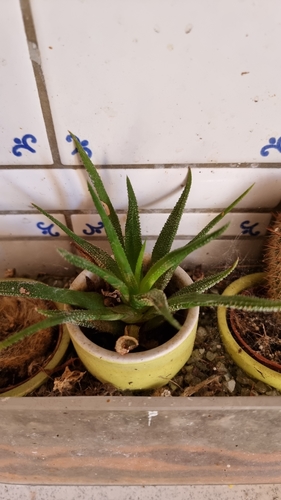
How to care for Zebra Haworthia
Watering
Zebra Haworthia (Haworthiopsis attenuata) is a small succulent from the dry Eastern Cape of South Africa, where it stores water in its thick leaves and goes long periods without rain. Water deeply, then let the soil dry out almost completely before watering again. Use a gritty cactus or succulent mix and a pot with a drainage hole. Water less in winter, when growth slows, and more during the spring and summer growing season.
Does it need water today?
Push a finger about 3 cm (1 inch) into the soil. If it feels dry and crumbly, water. If it still feels cool or damp, wait. You can also lift the pot: a dry pot feels noticeably lighter than one that was just watered. The leaves should look firm and plump; slightly wrinkled leaves that feel soft at the base mean the plant is thirsty.
Zebra Haworthia tolerates drought far better than too much water. When in doubt, wait another few days. Water the soil, not the rosette, so water does not sit in the leaf center where it can cause rot.
Overwatering
Zebra Haworthia has thick, water-storing leaves and fleshy roots that are adapted to dry soil. In constantly wet soil the roots lack oxygen and begin to rot, which is the most common way this species is lost in homes.
Symptoms: Soft, translucent, or mushy leaves, especially near the base; leaves that fall off easily; a sour or rotten smell from the soil; dark, collapsed roots; and new growth that looks pale or stalled.
Solutions: Stop watering immediately and let the soil dry out fully. If the plant is mushy, remove it from the pot, cut away any black or soft roots and damaged leaves with a clean knife, and let the cut areas dry for a few days. Repot into fresh, dry gritty mix in a pot with a drainage hole, then wait about a week before watering lightly.
Underwatering
Because this species stores water in its leaves, it can survive dry spells, but a long drought weakens it. Roots that have no moisture for too long shrivel and the plant cannot replace the water it uses.
Symptoms: Leaves that look wrinkled, shrunken, or deflated; leaves that turn dull, pale, or slightly yellowish; the rosette that looks smaller or tighter than usual; and soil that pulls away from the pot edges.
Solutions: Water thoroughly until water runs out of the drainage hole. If the soil is very dry and hard, set the pot in a basin of water for 20 minutes so it can soak up moisture evenly. Then move the plant back to its usual spot. Plumpness usually returns within a few days; leaves that are already dead will not recover.
Sunlight
Zebra Haworthia grows naturally in partial shade under shrubs and rocks in South Africa, so it prefers bright, filtered light rather than harsh direct sun. Strong midday sun can scorch its leaves, turning them reddish-brown or bleached. Too little light makes it stretch loosely and lose its distinctive white bands. Bright indirect light keeps the rosette compact and the white stripes clear.
- Ideal: Bright, indirect light · 4-6 hours of bright, filtered or indirect light each day
- Tolerates: Bright, indirect light, Partial sun
- Best spot in a room: Near the window
- Artificial light: A full-spectrum LED grow light set 15 to 30 cm (6 to 12 inches) above the plant for 10 to 12 hours a day works well if natural light is limited. Use a timer for consistency.
Too little light
Zebra Haworthia relies on bright light to keep its leaves short, firm, and patterned. In dim rooms it adapts poorly, because its growth is slow and it reaches for light it cannot find.
Symptoms: Elongated, loose, or leaning leaves; a rosette that opens up instead of staying tight; faded white bands; and slow or no new growth during the growing season.
Solutions: Move the plant closer to a bright east or west window, or to a south window with a sheer curtain. Rotate the pot a quarter turn every week so growth stays even. Add a grow light if the room stays dim, and avoid sudden big changes in light, which can shock the plant.
Too much sun
Although this species tolerates some sun, its leaves are relatively thin on the surface and are not built for intense, direct midday rays through glass. Sudden exposure to strong sun, especially after time indoors, can damage the leaf tissue.
Symptoms: Brown, reddish, or bleached patches on the leaves, usually on the side facing the sun; crispy or papery leaf tips; and a dry, shrunken look even when the soil is moist.
Solutions: Move the plant out of direct sun, or filter the light with a sheer curtain. If you are moving it outdoors, harden it off over 1 to 2 weeks, starting with an hour of morning sun a day. Damaged leaves will not recover, but the plant will produce healthy new growth once the light is more suitable.
Temperature
Zebra Haworthia (Haworthiopsis attenuata) is a small succulent from the Eastern Cape of South Africa that grows best in mild, dry conditions. Keep it between 15 and 27 °C during its active growing season, and avoid letting it sit in temperatures below 5 °C for long periods. It tolerates light frost only briefly, and it is happiest when nights are cooler than days.
- Ideal: 15–27 °C
- Tolerates: 5–35 °C
- Hardiness zones: 10-11
Fertilizing
Zebra Haworthia grows slowly and evolved in lean, gritty soils in the Eastern Cape, so it needs very little feeding. Fertilize only during active growth in spring and summer, and always use a diluted solution. Water the plant first so the roots are not dry when feed is applied.
- Slow-release fertilizer: Once a year in early spring, using a light application of slow-release granules, or not needed if you repot annually into fresh mix.
- Balanced cactus and succulent fertilizer diluted to half strength, Balanced liquid houseplant fertilizer (such as 10-10-10) diluted to half strength, Slow-release granular succulent fertilizer
Soil
Zebra Haworthia needs a light, sharply draining mix that never stays wet around its roots. Heavy garden soil or moisture-retaining potting mix will cause rot, so always add plenty of grit or pumice.
- Cactus and succulent mix: Roughly two parts commercial cactus mix to one part perlite or pumice, which keeps roots aerated and dries between waterings
- DIY gritty succulent blend: Equal parts potting soil, coarse sand or horticultural grit, and pumice, giving quick drainage while still holding a little moisture for the roots
- Lean mineral mix: Mostly pumice or lava rock with a small share of organic compost, suited to plants in very humid climates where extra drainage is essential
- pH 6–7
Repotting
Zebra Haworthia (Haworthiopsis attenuata) has a shallow, fibrous root system and rots quickly in wet, cramped conditions, so repot into a pot that is only slightly larger and always fast-draining.
- How often: Every 2-3 years, or when roots fill the pot
- New pot: Move up only one size, about 2-3 cm wider than the current pot, with a drainage hole in the base
- Repotting season: Spring, Summer
How to repot
- Gently tip the plant out of its pot, supporting the rosette between two fingers at the base
- Shake off loose soil and tease away the old, dry, or mushy roots with clean fingers
- Let the bare roots air-dry in a shady spot for 1-2 days so cut or damaged areas can callus
- Place a thin layer of fresh mix in the new pot, set the plant so the base sits just below the rim, then fill around the roots and firm lightly
- Leave the soil dry for 3-4 days before the first watering to help any root damage heal
Pruning
Zebra Haworthia rarely needs real pruning. Its leaves are thick and slow to decline, so you mainly remove old or damaged leaves at the base and trim away any stems or flower spikes you do not want. Always cut cleanly and avoid tearing the leaves.
Pruning season: Spring, Summer
How to prune
- Clean your knife or scissors with rubbing alcohol and let them dry.
- Grasp the affected leaf near its base and pull it gently sideways; if it resists, cut it cleanly at the soil line with the blade.
- Remove leaves that are fully yellow, brown, or mushy, taking the whole leaf rather than leaving stubs.
- If the plant has sent up a flower spike you want to remove, cut it at the base once the flowers have faded.
- Dust any cut surfaces with a little dry cinnamon or sulfur powder if you like, then keep the plant dry for a few days and avoid watering directly into the rosette.
Propagation
Offsets (pup division) · Spring, Summer
- Wait until the mother plant has produced several small offsets (pups) at its base, each with a few of its own roots or at least a firm base.
- Slide the plant out of its pot and gently shake off loose soil so you can see where each pup joins the mother.
- Pull or cut the pup away with a clean, sharp knife, keeping as many roots as possible attached.
- Let the cut end and any exposed roots dry in a shady spot for 1 to 2 days until a callus forms.
- Plant the pup in a small pot of cactus or succulent mix, water lightly after a week, and then water only when the soil is fully dry.
Leaf cuttings · Spring, Summer
- Choose a healthy, plump outer leaf and twist it gently from the base so it comes away cleanly with a little of the base attached.
- Let the leaf dry in shade for several days until the wound is sealed.
- Lay the leaf on top of dry succulent mix or set its base just barely into the mix.
- Keep the soil barely moist and place the pot in bright, indirect light at about 18 to 24 °C.
- Expect tiny roots or a new rosette in several weeks to a few months; do not overwater while it establishes.
Seed · Spring
- Collect ripe seed capsules after they dry on the plant, or buy fresh seed from a reputable supplier.
- Sow seed thinly on the surface of a fine, well-draining cactus mix in a shallow tray.
- Cover lightly with a fine layer of grit or sand and mist the surface until just damp.
- Cover the tray with clear plastic to hold humidity and keep it in bright, indirect light at about 20 to 25 °C.
- Remove the cover once seedlings appear and keep them lightly moist until they are large enough to handle.
Let every cut surface dry and callus before planting, and water sparingly. Most Zebra Haworthia losses during propagation come from rot caused by wet soil, not from lack of water.
About Zebra Haworthia
Also known as: Zebra plant, Zebra haworthia, Zebra wart
- Plant type: succulent, herb
- Lifespan: perennial
- Distribution: Native to the Eastern Cape Province of South Africa.
- Mature height: 5-15 cm
- Bloom time: Late spring to summer
Pets · People
Pets: Safe · People: Safe. Not listed as toxic by the ASPCA; handling is harmless, though the leaf tips are sharp enough to prick skin and eating it may upset a pet's stomach.
Common problems
- Root rot: Caused by overwatering or dense soil, leading to soft, mushy leaves at the base.
- Leaf scorch: Brown or bleached patches from sudden exposure to strong direct sun.
- Etiolation: Stretched, pale growth and loss of stripes from insufficient light.
- Mealybugs: White cottony pests hiding between leaves and at the base of the rosette.
- Soft, translucent leaves: Usually a sign of cold damage or prolonged wet conditions in winter.
Uses
Mainly ornamental, grown as a houseplant, in dish gardens, and in succulent collections. In its native range it is occasionally collected for private cultivation and horticultural trade.
Is it edible?
not edible
History & legends
Described in the nineteenth century and long placed in the genus Haworthia before being moved to Haworthiopsis. In cultivation since the Victorian era, it became a popular collector's plant in Europe and North America, and remains a staple of houseplant collections today. It has no well-known myths or legends attached to it.
Did you know?
The white bumps on its leaves are tubercles that reflect light and help the plant keep cool in hot, sunny habitats.
Frequently asked questions
How often should I water Zebra Haworthia?
every 14 days. Zebra Haworthia (Haworthiopsis attenuata) is a small succulent from the dry Eastern Cape of South Africa, where it stores water in its thick leaves and goes long periods without rain. Water deeply, then let the soil dry out almost completely before watering again. Use a gritty cactus or succulent mix and a pot with a drainage hole. Water less in winter, when growth slows, and more during the spring and summer growing season. Push a finger about 3 cm (1 inch) into the soil. If it feels dry and crumbly, water. If it still feels cool or damp, wait. You can also lift the pot: a dry pot feels noticeably lighter than one that was just watered. The leaves should look firm and plump; slightly wrinkled leaves that feel soft at the base mean the plant is thirsty.
How much light does Zebra Haworthia need?
Bright, indirect light (4-6 hours of bright, filtered or indirect light each day). Zebra Haworthia grows naturally in partial shade under shrubs and rocks in South Africa, so it prefers bright, filtered light rather than harsh direct sun. Strong midday sun can scorch its leaves, turning them reddish-brown or bleached. Too little light makes it stretch loosely and lose its distinctive white bands. Bright indirect light keeps the rosette compact and the white stripes clear.
What temperature does Zebra Haworthia like?
15–27 °C. Zebra Haworthia (Haworthiopsis attenuata) is a small succulent from the Eastern Cape of South Africa that grows best in mild, dry conditions. Keep it between 15 and 27 °C during its active growing season, and avoid letting it sit in temperatures below 5 °C for long periods. It tolerates light frost only briefly, and it is happiest when nights are cooler than days.
Is Zebra Haworthia toxic to cats and dogs?
It is safe for cats and dogs. Not listed as toxic by the ASPCA; handling is harmless, though the leaf tips are sharp enough to prick skin and eating it may upset a pet's stomach.
What are the most common problems of Zebra Haworthia?
Root rot: Caused by overwatering or dense soil, leading to soft, mushy leaves at the base. Leaf scorch: Brown or bleached patches from sudden exposure to strong direct sun. Etiolation: Stretched, pale growth and loss of stripes from insufficient light. Mealybugs: White cottony pests hiding between leaves and at the base of the rosette. Soft, translucent leaves: Usually a sign of cold damage or prolonged wet conditions in winter.
When should I repot Zebra Haworthia?
Every 2-3 years, or when roots fill the pot. Zebra Haworthia (Haworthiopsis attenuata) has a shallow, fibrous root system and rots quickly in wet, cramped conditions, so repot into a pot that is only slightly larger and always fast-draining.
How do I propagate Zebra Haworthia?
Offsets (pup division), Leaf cuttings, Seed. Wait until the mother plant has produced several small offsets (pups) at its base, each with a few of its own roots or at least a firm base. Slide the plant out of its pot and gently shake off loose soil so you can see where each pup joins the mother. Pull or cut the pup away with a clean, sharp knife, keeping as many roots as possible attached. Let the cut end and any exposed roots dry in a shady spot for 1 to 2 days until a callus forms. Plant the pup in a small pot of cactus or succulent mix, water lightly after a week, and then water only when the soil is fully dry.
How this guide was written
Verdiss writes each guide with AI from botanical references and checks the species against iNaturalist and Plants of the World Online (Kew). Readers can rate every guide in the app.
Sources
Verdiss's information is for general guidance. Never eat or use a plant as medicine based on an app: ask a professional.