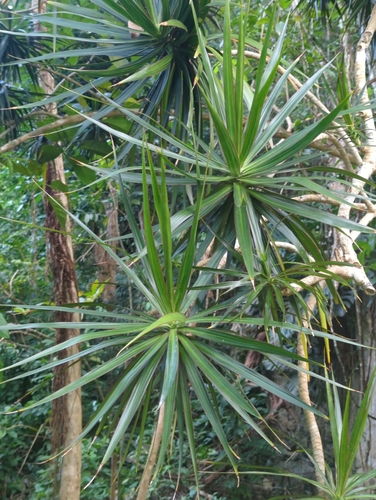
How to care for Dracaena marginata
Watering
Dracaena marginata, commonly called Madagascar dragon tree, is a drought-tolerant plant that stores water in its thick roots and trunk. Water thoroughly when the top few centimetres of soil are dry, then let the pot drain fully. Never let it sit in standing water, because soggy roots are the most common cause of decline. Use room-temperature water, and if your tap water is very hard or heavily treated, rainwater or filtered water is kinder to its leaf tips. Watering needs drop in winter, when growth slows and the soil takes much longer to dry.
Does it need water today?
Push a finger about 3 cm into the soil. If it feels dry and crumbly, water now. If it feels cool or damp, wait a few days. You can also lift the pot: a dry pot feels noticeably lighter than one that was just watered. A moisture meter works well too, aiming for dry readings before you water.
Water less rather than more. A Madagascar dragon tree tolerates a dry spell far better than a wet pot, so when in doubt, wait another day or two.
Overwatering
Madagascar dragon tree is native to the dry, well-drained landscapes of Madagascar, so its roots are adapted to brief wet periods followed by drying out. Constantly wet compost deprives the roots of oxygen and invites root rot, which is the most serious threat to this species indoors.
Symptoms: Soft, mushy or blackened stem base, yellowing lower leaves that drop easily, a sour or musty smell from the soil, and fungus gnats hovering around the pot.
Solutions: Stop watering immediately and check the roots. Cut away any brown, mushy roots with clean scissors, repot into fresh, fast-draining mix in a pot with drainage holes, and wait until the soil is dry before watering again. Remove any heavily rotted stems as well, since a damaged base may not recover.
Underwatering
Because the plant stores water in its trunk and roots, it handles dry spells well, but prolonged drought still stresses it. Dry compost also makes the leaves lose moisture faster than the roots can replace it.
Symptoms: Crispy, brown leaf tips and edges, leaves that curl inward or look limp, and older leaves dropping while the soil is bone dry and pulling away from the pot sides.
Solutions: Give the plant a thorough soak using bottom watering until the root ball is evenly moist. Trim dead leaf edges with clean scissors. Then return to a regular watering routine, checking the soil before each watering so the cycle stays steady.
Sunlight
Dracaena marginata grows best in bright, indirect light, similar to the light found a few metres back from a sunny window. It can take gentle morning sun, but strong direct afternoon sun can scorch its leathery leaves, leaving pale or brown patches. In lower light it survives, but growth becomes slow and leggy, and the leaves lose their colourful edge, which is the red or pink margin that gives the species its name.
- Ideal: Bright, indirect light · 6-8 hours of bright, filtered daylight, with no harsh midday sun through glass
- Tolerates: Bright, indirect light, Partial sun, Shade
- Best spot in a room: Near the window
- Artificial light: In dim homes, a full-spectrum LED grow light placed 30 to 45 cm above the plant for 10 to 12 hours a day will keep the leaves compact and coloured. Use a timer so the light runs on a steady schedule through the winter months.
Too little light
Madagascar dragon tree relies on good light to build the sugars that fuel its slow, steady growth. In deep shade it produces fewer new leaves and loses the coloured edges that make it attractive.
Symptoms: Stretched, leggy growth with long gaps between leaves, dull green foliage without the red margin, and older leaves yellowing and falling.
Solutions: Move the plant closer to a bright east or north-facing window, or a few metres from a south or west window with a sheer curtain. Rotate the pot a quarter turn every couple of weeks so growth stays even, and add a grow light if the room stays dim.
Too much sun
Although it tolerates some sun, this species is sensitive to intense direct light, especially through glass where the sun is magnified and heat builds quickly. Its leaves are thin and leathery enough that sustained sun dries and bleaches them.
Symptoms: Pale yellow or bleached patches on the leaves, brown scorched spots, and crispy edges on the side facing the window.
Solutions: Pull the plant back from the window or move it to a spot with filtered light. Place a sheer curtain between the plant and a south or west window. Damaged leaves will not recover, so trim them off at the base, and new growth will come in healthier.
Temperature
Dracaena marginata, the Madagascar dragon tree, grows best between 18 and 24 °C and tolerates ordinary indoor room temperatures well. Keep it away from cold drafts, heating vents and hot window glass, and avoid sudden swings in temperature.
- Ideal: 18–24 °C
- Tolerates: 10–35 °C
- Hardiness zones: 10-12
Fertilizing
Dracaena marginata is a slow-growing indoor plant that needs little feeding. Fertilize only during its active growing season in spring and summer, and skip feeding in autumn and winter when growth slows.
- Slow-release fertilizer: Once a year in early spring, using a light application, or not needed if you repot into fresh potting mix.
- Balanced liquid houseplant fertilizer, such as a 3-1-2 or 10-10-10 formula, Slow-release granular fertilizer for indoor foliage plants, Liquid fertilizer for foliage plants with micronutrients
Soil
Dracaena marginata needs a loose, well-draining mix that holds some moisture without staying soggy, because its roots rot quickly in waterlogged soil. Choose a mix that dries out evenly between waterings.
- Peat-free all-purpose potting mix with perlite: About 60% peat-free potting compost, 30% perlite or pumice, and 10% coir or fine bark.
- Cactus or succulent mix: Commercial cactus mix amended with extra perlite so it dries evenly between waterings.
- Orchid bark blend: Fine orchid bark mixed with coarse perlite and a small amount of potting compost, suited to a container with excellent drainage.
- pH 6–7
Repotting
Dracaena marginata (dragon tree) has thick, fleshy roots that dislike wet, cramped soil, so repot only when roots fill the pot and the plant needs a fresh medium.
- How often: every 2-3 years
- New pot: Move up only one pot size, about 2-5 cm wider in diameter, with drainage holes.
- Repotting season: Spring, Summer
How to repot
- Slide the plant out by tilting the pot and gently squeezing its sides.
- Loosen the outer roots with your fingers and trim any roots that are black, mushy, or smell sour.
- Place a layer of fresh mix in the new pot so the root ball sits at the same depth as before.
- Set the plant centrally, fill around the roots with mix, and firm it gently with your hands.
- Water thoroughly until it drains freely, then let excess water drain away completely.
Pruning
Dracaena marginata is best pruned in spring or early summer, when it is actively growing and recovers quickly. Cut stems cleanly with sharp, sterilized tools, and wear gloves when handling the sap, which can irritate skin and is toxic if eaten.
Pruning season: Spring, Summer
How to prune
- Remove any dead, brown, or fully yellow leaves first by cutting them off at the base of the leaf stalk or stem.
- To reduce height, cut the main stem with clean shears about 2 to 3 cm above a leaf node where you want branching to begin.
- Expect the plant to send out new shoots from the top few nodes over the following weeks, often producing a multi-headed shape.
- For a leggy plant with bare lower trunk, cut the top section off and leave the bare trunk. It may regrow new leaves near the top if kept in bright light.
- Do not remove more than about one third of the plant's foliage in a single session, so it can keep producing energy.
- After pruning, water lightly and keep the plant in bright, indirect light for a few weeks while it recovers. Avoid fertilizing for about a month.
Propagation
Stem cuttings in water or soil · Spring, Summer
- Choose a healthy, firm stem of Dracaena marginata (Madagascar dragon tree) that is at least 10 cm long and has a few leaves.
- Cut just below a leaf node using clean, sharp pruning shears or a knife dipped in rubbing alcohol.
- Remove the lower leaves so that at least 5 cm of bare stem is exposed.
- Place the cutting in a glass of room-temperature water so the bare stem is submerged, keeping the leaves above the water line.
- Set the glass in bright, indirect light and change the water every 5 to 7 days.
- Once roots are 3 to 5 cm long, usually in 3 to 6 weeks, pot the cutting in well-draining potting mix and water lightly.
Air layering on a leggy plant · Spring, Summer
- Pick a woody section of stem on a mature Dracaena marginata that has lost its lower leaves.
- Make a 2 to 3 cm upward slit or remove a thin ring of bark about halfway along the section, then dust the cut with rooting hormone.
- Wrap the wound in damp sphagnum moss and cover it with clear plastic, sealing both ends with tape or twine.
- Keep the moss damp and check it every week or two, adding water if it dries out.
- After roots show through the moss, usually in 6 to 10 weeks, cut the stem below the new roots and pot it up.
Cane sections · Spring
- Cut a thick, mature cane into 5 to 8 cm sections, making sure each piece has a visible node or leaf scar.
- Lay the sections horizontally on moist potting mix, or stand them upright with the top end at soil level.
- Keep the mix warm, around 21 to 24°C, and lightly moist without being soggy.
- Expect shoots to appear within a few months. Keep the new plants out of direct sun until they are well rooted.
Dracaena marginata roots most reliably when the cutting includes a node, which is the slightly raised ring on the stem where leaves emerged. Cuttings without a node may sprout roots but rarely produce new growth.
About Dracaena marginata
Also known as: Madagascar dragon tree, Red-edged dracaena, Dragon tree
- Plant type: tree, shrub, houseplant
- Lifespan: perennial
- Distribution: Native to Madagascar, particularly the dry west and south of the island.
- Mature height: 1-4 m indoors, up to 6 m in the wild
- Bloom time: Rarely flowers indoors; occasionally in late spring or summer on mature plants
Pets · People
Pets: Toxic · People: Toxic. Contains saponins and related compounds that cause vomiting, diarrhea, drooling, and lethargy if chewed or eaten by cats, dogs, or children; the ASPCA lists it as toxic to cats and dogs. Keep out of reach and wash skin after handling cut stems if sensitive.
Common problems
- Brown leaf tips: Usually caused by dry air, irregular watering, or fluoride and salt build-up from tap water; use filtered or rainwater and keep soil evenly moist but not wet.
- Root rot: Caused by overwatering and poor drainage; the stems turn soft and the roots go dark and mushy, so let soil dry more between waterings.
- Yellowing lower leaves: Normal ageing as the plant grows, but yellowing across many leaves can signal overwatering or too little light.
- Spider mites: Fine webbing and speckled leaves in dry conditions; wipe leaves regularly and treat with insecticidal soap if needed.
- Leaning or top-heavy growth: Stems stretch toward light in dim conditions; rotate the plant and move it to brighter indirect light.
Uses
Grown worldwide as an ornamental houseplant and in landscaping in warm climates, prized for its slender, cane-like stems and tufted foliage. In Madagascar it has local uses in traditional medicine, though these are not well documented in mainstream sources.
Is it edible?
not edible
History & legends
Dracaena marginata was described by the French botanist Jean-Baptiste Lamarck in the late eighteenth century and was introduced to European horticulture in the nineteenth century. Its tolerance of neglect made it a popular Victorian and later houseplant, and it remains one of the most common indoor dracaenas today.
Did you know?
Its name refers to the reddish margins of its leaves, which resemble the edges of a dragon's scales; the plant is sometimes sold as a 'corn plant' relative but belongs to a different group of species.
Frequently asked questions
How often should I water Dracaena marginata?
every 14 days. Dracaena marginata, commonly called Madagascar dragon tree, is a drought-tolerant plant that stores water in its thick roots and trunk. Water thoroughly when the top few centimetres of soil are dry, then let the pot drain fully. Never let it sit in standing water, because soggy roots are the most common cause of decline. Use room-temperature water, and if your tap water is very hard or heavily treated, rainwater or filtered water is kinder to its leaf tips. Watering needs drop in winter, when growth slows and the soil takes much longer to dry. Push a finger about 3 cm into the soil. If it feels dry and crumbly, water now. If it feels cool or damp, wait a few days. You can also lift the pot: a dry pot feels noticeably lighter than one that was just watered. A moisture meter works well too, aiming for dry readings before you water.
How much light does Dracaena marginata need?
Bright, indirect light (6-8 hours of bright, filtered daylight, with no harsh midday sun through glass). Dracaena marginata grows best in bright, indirect light, similar to the light found a few metres back from a sunny window. It can take gentle morning sun, but strong direct afternoon sun can scorch its leathery leaves, leaving pale or brown patches. In lower light it survives, but growth becomes slow and leggy, and the leaves lose their colourful edge, which is the red or pink margin that gives the species its name.
What temperature does Dracaena marginata like?
18–24 °C. Dracaena marginata, the Madagascar dragon tree, grows best between 18 and 24 °C and tolerates ordinary indoor room temperatures well. Keep it away from cold drafts, heating vents and hot window glass, and avoid sudden swings in temperature.
Is Dracaena marginata toxic to cats and dogs?
It is toxic to cats and dogs: keep it out of their reach. Contains saponins and related compounds that cause vomiting, diarrhea, drooling, and lethargy if chewed or eaten by cats, dogs, or children; the ASPCA lists it as toxic to cats and dogs. Keep out of reach and wash skin after handling cut stems if sensitive.
What are the most common problems of Dracaena marginata?
Brown leaf tips: Usually caused by dry air, irregular watering, or fluoride and salt build-up from tap water; use filtered or rainwater and keep soil evenly moist but not wet. Root rot: Caused by overwatering and poor drainage; the stems turn soft and the roots go dark and mushy, so let soil dry more between waterings. Yellowing lower leaves: Normal ageing as the plant grows, but yellowing across many leaves can signal overwatering or too little light. Spider mites: Fine webbing and speckled leaves in dry conditions; wipe leaves regularly and treat with insecticidal soap if needed. Leaning or top-heavy growth: Stems stretch toward light in dim conditions; rotate the plant and move it to brighter indirect light.
When should I repot Dracaena marginata?
every 2-3 years. Dracaena marginata (dragon tree) has thick, fleshy roots that dislike wet, cramped soil, so repot only when roots fill the pot and the plant needs a fresh medium.
How do I propagate Dracaena marginata?
Stem cuttings in water or soil, Air layering on a leggy plant, Cane sections. Choose a healthy, firm stem of Dracaena marginata (Madagascar dragon tree) that is at least 10 cm long and has a few leaves. Cut just below a leaf node using clean, sharp pruning shears or a knife dipped in rubbing alcohol. Remove the lower leaves so that at least 5 cm of bare stem is exposed. Place the cutting in a glass of room-temperature water so the bare stem is submerged, keeping the leaves above the water line. Set the glass in bright, indirect light and change the water every 5 to 7 days. Once roots are 3 to 5 cm long, usually in 3 to 6 weeks, pot the cutting in well-draining potting mix and water lightly.
How this guide was written
Verdiss writes each guide with AI from botanical references and checks the species against iNaturalist and Plants of the World Online (Kew). Readers can rate every guide in the app.
Sources
Verdiss's information is for general guidance. Never eat or use a plant as medicine based on an app: ask a professional.