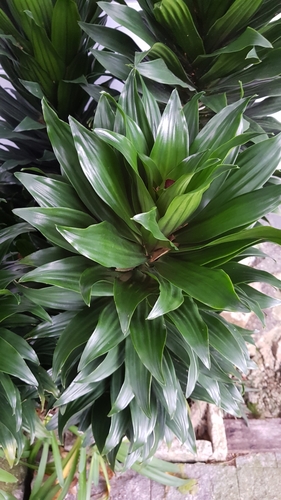
How to care for cornstalk dracaena
Watering
Cornstalk dracaena (Dracaena fragrans) prefers evenly moist soil that is allowed to dry out slightly between waterings. Its thick, fleshy roots store some water, so it tolerates a little dryness far better than constant soggy soil. Use a well-draining potting mix, pot with drainage holes, and empty any saucer after watering. Water less in winter, when growth slows and the soil stays wet longer. Dracaena fragrans is sensitive to fluoride and salts in tap water, so filtered or rainwater gives the best leaf tips; if you use tap water, let it sit overnight first.
Does it need water today?
Push your finger about 2-3 cm (1 inch) into the soil. If it feels dry, water thoroughly until water runs out of the drainage holes. If it still feels damp, wait a few days. You can also lift the pot: a thirsty pot feels noticeably lighter than one that was just watered.
Water slowly until the whole root ball is moistened, then let the excess drain away. Shallow, frequent sips leave the lower roots dry and salts building up in the soil.
Overwatering
Cornstalk dracaena roots rot quickly in waterlogged soil because the plant evolved in humid, well-drained forest understory and cannot take oxygen-poor, soggy roots for long. Its fleshy roots are damaged by rot before the leaves show any sign of trouble, so problems often appear late.
Symptoms: Yellowing lower leaves that drop, mushy or dark stem base, soil that smells sour or stays wet for more than a week, and a sudden collapse of the whole plant.
Solutions: Stop watering and check the roots. Remove the plant from the pot, cut away any black, mushy roots with clean scissors, and repot into fresh, dry-ish mix in a pot with drainage holes. Water only when the top few centimetres are dry, and let it recover in bright, indirect light.
Underwatering
Cornstalk dracaena stores water in its thick roots and stems, so it survives short dry spells well. However, long dryness makes its leaves lose moisture faster than the roots can supply it, especially in heated indoor air.
Symptoms: Crispy brown leaf edges or tips, leaves that curl inward or droop, soil that pulls away from the pot wall, and a very light pot.
Solutions: Water thoroughly until it drains from the holes. If the root ball is very dry and hydrophobic, soak the pot in a tray of water for 30 minutes. Trim badly damaged brown tips with clean scissors, following the leaf's natural shape. New leaves will recover once watering is regular.
Sunlight
Cornstalk dracaena (Dracaena fragrans) grows naturally under the canopy of tropical African forests, where light is bright but filtered through leaves. Direct midday sun scorches its broad, glossy leaves, leaving pale or brown patches. Too little light, on the other hand, makes the plant grow slowly and lose the bold colour of its variegated cultivars. A spot that gets bright light for most of the day, with a sheer curtain to soften the sun, is ideal.
- Ideal: Bright, indirect light · 4-6 hours of bright, filtered or indirect light daily
- Tolerates: Partial sun, Shade
- Best spot in a room: Near the window
- Artificial light: A full-spectrum LED grow light set 30-45 cm (12-18 inches) above the plant for 10-12 hours a day works well if the room is dim. Use a timer so the plant gets a consistent schedule, especially in winter.
Too little light
Cornstalk dracaena relies on steady light to build the thick stems and leaves that define it. In low light it cannot make enough energy to sustain new growth, so it stretches weakly and holds its leaves loosely.
Symptoms: Leggy growth with long gaps between leaves, leaves that become smaller and darker green, loss of leaf variegation, and older leaves yellowing and dropping.
Solutions: Move the plant closer to a bright east or north window, or to a bright window with a sheer curtain. Rotate the pot a quarter turn every couple of weeks so growth stays even. Add a grow light if the room stays dim in winter.
Too much sun
The broad, thin leaves of cornstalk dracaena lose water quickly in strong sun, and they cannot replace it fast enough. Direct sun, especially through south or west glass, burns the leaf tissue.
Symptoms: Pale, bleached patches on leaves facing the window, brown scorched spots or crispy edges, and leaves that look faded or washed out.
Solutions: Move the plant a metre or two back from the window, or place it behind a sheer curtain. Keep it away from heaters and radiators, which also dry the air and leaves. If scorching has already happened, the damaged leaf will not recover, but new growth will be healthy in better light.
Temperature
Cornstalk dracaena (Dracaena fragrans) is a tropical African understory plant that grows best in steady warmth between 18 and 27°C. It tolerates ordinary indoor room temperatures well but dislikes sudden swings, drafts, and prolonged cold. Keep it away from heating vents, air conditioners, and cold windows.
- Ideal: 18–27 °C
- Tolerates: 10–35 °C
- Hardiness zones: 10-12
Fertilizing
Cornstalk dracaena is a slow, moderate feeder. It needs regular but light feeding during its active spring and summer growth, and no feeding during its winter rest. Fluoride and salt buildup from tap water and fertilizer are a bigger concern for this species than nutrient shortage, so dilute fertilizer and flush the soil periodically.
- Slow-release fertilizer: Once a year in early spring, for indoor plants in pots, or use a slow-release granular fertilizer for plants in the ground in a frost-free climate. Skip it if the plant was repotted with fresh potting mix in the past few months.
- Balanced liquid houseplant fertilizer, such as a 10-10-10 or 20-20-20 formula, Slow-release granular houseplant fertilizer labeled for foliage plants, Liquid fertilizer with added micronutrients, such as iron and magnesium
Soil
Cornstalk dracaena grows best in slightly acidic, loose soil that holds some moisture while letting excess water drain freely. Heavy garden clay or dense, compacted mixes cause the fleshy roots to rot, so always choose a light, airy blend and a pot with drainage holes.
- Peat-based potting mix with perlite: About 60% peat or coir, 30% perlite, and 10% coarse bark or horticultural sand
- Commercial indoor plant mix amended for drainage: Standard indoor potting mix blended with an extra 20-25% perlite or pumice
- Custom aroid-style mix: Two parts peat or coir, one part perlite, and one part orchid bark, with a small handful of charcoal
- pH 6–7
Repotting
Cornstalk dracaena (Dracaena fragrans) has thick, fleshy roots that dislike sitting in soggy soil, so use a well-draining mix and a pot with a hole in the base. Repot in the warmer half of the year when the plant is actively growing.
- How often: every 2-3 years, or when roots fill the pot
- New pot: Move up only one pot size (about 2-5 cm wider in diameter) with drainage holes; cornstalk dracaena prefers snug roots and wet soil in a too-large pot can cause root rot.
- Repotting season: Spring, Summer
How to repot
- Gently tip the pot on its side and slide the root ball out, supporting the cornstalk-like stems so they do not snap
- Loosen the outer roots with your fingers and trim any roots that are black, mushy, or smell sour
- Place a 2-3 cm layer of fresh mix in the new pot and set the plant so the soil line matches its old level
- Fill around the root ball with fresh mix, firm it lightly, and leave about 2 cm of space below the rim
- Water thoroughly until it drains from the holes, then empty the saucer after 15 minutes
Pruning
Prune cornstalk dracaena in spring or early summer, when it is growing actively. Cut only above a node or along a cane with a clean, sharp tool. Never remove more than about one third of the plant in a single session, and avoid pruning in late autumn or winter, when slow growth makes wounds heal poorly.
Pruning season: Spring, Summer
How to prune
- Look over the plant and identify canes that are leggy, damaged, or bare at the base.
- Sterilize your shears with rubbing alcohol and let them dry.
- To reduce height, cut the cane 5 to 10 cm above a leaf crown or a visible node, angling the cut slightly.
- To remove a bare cane entirely, cut it at the soil line with a clean cut, leaving no stub.
- Remove individual yellow or brown leaves by cutting them close to the cane without tearing the bark.
- Dust the cut ends with ground cinnamon or a fungicide powder if you have it, and keep the plant in bright, indirect light while it recovers.
- Stop watering heavily for a few days after a major cut to reduce rot risk, then resume normal care once new growth appears.
Propagation
Stem tip cuttings in water · Spring, Summer
- Choose a healthy cane with at least one leafy crown, and cut 10 to 15 cm below the leaves using clean, sharp shears.
- Remove the lower leaves so that two or three nodes sit bare on the cutting.
- Place the cut end in a glass of room-temperature water, keeping the leaves above the rim.
- Set the glass in bright, indirect light at about 21 to 27°C and change the water every week.
- Once roots reach 3 to 5 cm, pot the cutting in a well-draining peat-and-perlite mix and keep the soil lightly moist.
Stem cuttings in moist medium · Spring, Summer
- Cut a 10 to 15 cm piece of cane with at least one node, and let the cut end dry for an hour.
- Dip the cut end in rooting hormone if you have it.
- Insert the cutting into a pot of moist peat and perlite, burying the node.
- Cover loosely with a clear plastic bag to hold humidity, and open it daily for a few minutes of airflow.
- Keep the medium barely damp and warm, around 24°C, and expect roots in four to eight weeks.
Air layering on thick canes · Spring, Summer
- Pick a mature cane that is at least 2 cm thick, and make a 2 to 3 cm upward cut into the stem below a leaf crown.
- Insert a small wedge of damp sphagnum moss into the cut to keep it open.
- Wrap the moss in clear plastic and tie both ends shut to hold moisture.
- Check the moss every couple of weeks and add water if it dries out.
- When roots show through the moss, cut the cane below the new roots, remove the wrapping, and pot the new plant.
Cornstalk dracaena roots most reliably from stem sections that include a node. Cuttings taken in spring or summer, when the plant is actively growing, root faster than those taken in winter.
About cornstalk dracaena
Also known as: Corn plant, Happy plant, Striped dracaena
- Plant type: tree, shrub
- Lifespan: perennial
- Distribution: Native to tropical West and Central Africa, from Guinea east to Uganda and south to Angola.
- Mature height: 2-6 m indoors and in the wild
- Bloom time: Rarely blooms indoors; flowers in warm, humid conditions outdoors
Pets · People
Pets: Toxic · People: Toxic. Contains saponins that cause vomiting, diarrhea, drooling and lethargy if chewed or swallowed in quantity; listed as toxic to cats, dogs and horses by the ASPCA. Keep out of reach of pets and children.
Common problems
- Brown leaf tips: Caused by dry air, underwatering, or fluoride and salts in tap water; use filtered or rainwater.
- Root rot: Results from waterlogged soil and poor drainage; let the soil dry between waterings.
- Leaf scorch: Direct sun burns the leaves, leaving pale or brown patches; move to bright indirect light.
- Spider mites: Fine webbing and stippled leaves appear in dry indoor air; wipe leaves and raise humidity.
- Yellowing lower leaves: Normal aging of old leaves, but excessive yellowing can signal overwatering.
Uses
Widely grown as an ornamental houseplant and landscape plant in warm climates. In its native range, the wood and leaf fibers have been used locally for simple construction and cordage.
Is it edible?
not edible
History & legends
Dracaena fragrans was described from West African collections in the eighteenth century and carried to Europe as an exotic curiosity. Its popularity as a houseplant grew through the twentieth century, with the striped cultivars becoming especially fashionable in offices and homes.
Did you know?
Its name fragrans refers to the sweet, fragrance of its flowers, which are noticeable in the wild but rarely bloom indoors.
Frequently asked questions
How often should I water cornstalk dracaena?
every 10 days. Cornstalk dracaena (Dracaena fragrans) prefers evenly moist soil that is allowed to dry out slightly between waterings. Its thick, fleshy roots store some water, so it tolerates a little dryness far better than constant soggy soil. Use a well-draining potting mix, pot with drainage holes, and empty any saucer after watering. Water less in winter, when growth slows and the soil stays wet longer. Dracaena fragrans is sensitive to fluoride and salts in tap water, so filtered or rainwater gives the best leaf tips; if you use tap water, let it sit overnight first. Push your finger about 2-3 cm (1 inch) into the soil. If it feels dry, water thoroughly until water runs out of the drainage holes. If it still feels damp, wait a few days. You can also lift the pot: a thirsty pot feels noticeably lighter than one that was just watered.
How much light does cornstalk dracaena need?
Bright, indirect light (4-6 hours of bright, filtered or indirect light daily). Cornstalk dracaena (Dracaena fragrans) grows naturally under the canopy of tropical African forests, where light is bright but filtered through leaves. Direct midday sun scorches its broad, glossy leaves, leaving pale or brown patches. Too little light, on the other hand, makes the plant grow slowly and lose the bold colour of its variegated cultivars. A spot that gets bright light for most of the day, with a sheer curtain to soften the sun, is ideal.
What temperature does cornstalk dracaena like?
18–27 °C. Cornstalk dracaena (Dracaena fragrans) is a tropical African understory plant that grows best in steady warmth between 18 and 27°C. It tolerates ordinary indoor room temperatures well but dislikes sudden swings, drafts, and prolonged cold. Keep it away from heating vents, air conditioners, and cold windows.
Is cornstalk dracaena toxic to cats and dogs?
It is toxic to cats and dogs: keep it out of their reach. Contains saponins that cause vomiting, diarrhea, drooling and lethargy if chewed or swallowed in quantity; listed as toxic to cats, dogs and horses by the ASPCA. Keep out of reach of pets and children.
What are the most common problems of cornstalk dracaena?
Brown leaf tips: Caused by dry air, underwatering, or fluoride and salts in tap water; use filtered or rainwater. Root rot: Results from waterlogged soil and poor drainage; let the soil dry between waterings. Leaf scorch: Direct sun burns the leaves, leaving pale or brown patches; move to bright indirect light. Spider mites: Fine webbing and stippled leaves appear in dry indoor air; wipe leaves and raise humidity. Yellowing lower leaves: Normal aging of old leaves, but excessive yellowing can signal overwatering.
When should I repot cornstalk dracaena?
every 2-3 years, or when roots fill the pot. Cornstalk dracaena (Dracaena fragrans) has thick, fleshy roots that dislike sitting in soggy soil, so use a well-draining mix and a pot with a hole in the base. Repot in the warmer half of the year when the plant is actively growing.
How do I propagate cornstalk dracaena?
Stem tip cuttings in water, Stem cuttings in moist medium, Air layering on thick canes. Choose a healthy cane with at least one leafy crown, and cut 10 to 15 cm below the leaves using clean, sharp shears. Remove the lower leaves so that two or three nodes sit bare on the cutting. Place the cut end in a glass of room-temperature water, keeping the leaves above the rim. Set the glass in bright, indirect light at about 21 to 27°C and change the water every week. Once roots reach 3 to 5 cm, pot the cutting in a well-draining peat-and-perlite mix and keep the soil lightly moist.
How this guide was written
Verdiss writes each guide with AI from botanical references and checks the species against iNaturalist and Plants of the World Online (Kew). Readers can rate every guide in the app.
Sources
Verdiss's information is for general guidance. Never eat or use a plant as medicine based on an app: ask a professional.