How to care for clove pink
Watering
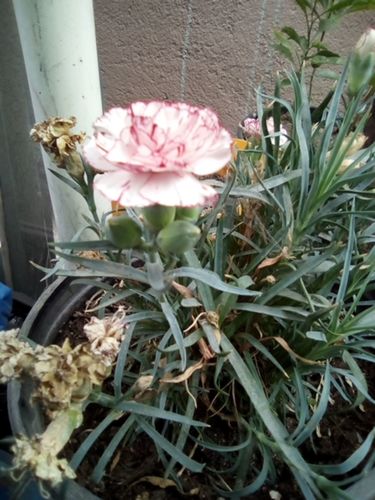
Clove pink (Dianthus caryophyllus) has grey-green, waxy leaves and grows from a woody base, so it stores water well and rots easily when its roots sit wet. Water deeply, then let the top few centimetres of soil dry out before watering again. Use a pot or bed with excellent drainage and a gritty mix, such as one part potting soil to one part perlite or horticultural sand. Water at the soil level and keep the grey foliage and the crown dry, because wet leaves and crowns invite fungal disease.
Does it need water today?
Push a finger 2-3 cm into the soil. If it feels dry and crumbly, water now. If it is cool or damp, wait a few days. Lift the pot: a light pot means the soil is dry, and a heavy pot means it still holds water. In the garden, dig a small hole near the roots; if the soil is moist below the surface, skip watering.
Clove pinks prefer slightly dry conditions to soggy ones. When in doubt, wait one more day. Water in the morning so the foliage dries before evening, and empty any saucer within 30 minutes so the roots never stand in water.
Overwatering
Clove pink is native to the Mediterranean region, where summers are dry and soils drain quickly. Its roots need air as well as moisture, so soggy soil quickly suffocates them and leads to root and crown rot, which is the most common reason this plant dies.
Symptoms: Leaves turn yellow and soft, the stems at the base blacken or feel mushy, the soil smells sour or musty, and fungus gnats appear. The plant may wilt even though the soil is wet.
Solutions: Stop watering and let the soil dry. Gently remove the plant from its pot, cut away any black or mushy roots and stems with clean scissors, and repot into fresh, gritty, dry mix in a pot with drainage holes. In the garden, lift the plant and replant on a raised mound in sharp, well-drained soil. Water less often until new grey growth appears.
Underwatering
Clove pink stores water in its fleshy, grey-green leaves and deep roots, so it tolerates short dry spells better than most flowers. However, prolonged drought stops flower buds from opening and weakens the plant, especially in hot, sunny spots or in containers that dry out quickly.
Symptoms: Leaves look dull, curl inward, and feel brittle. Buds drop before opening, flowering stops early, and the soil pulls away from the pot edges.
Solutions: Water thoroughly until water runs out of the drainage holes, and repeat after the soil has dried. For dry containers, soak the pot in a tray for 20 minutes to rewet the mix evenly. Move the plant to a cooler spot in strong heat and mulch the garden bed to keep moisture in the soil.
Sunlight
Clove pink needs strong sunlight to grow compact, grey-green foliage and produce its fragrant, spicy-scented flowers. In the Northern Hemisphere, a south-facing or south-west-facing position is best. Plants in too little light grow long, floppy stems and flower poorly. Good air movement also matters, because sun and breeze together keep the leaves dry and reduce fungal problems.
- Ideal: Full sun · 6-8 hours of direct sun a day
- Tolerates: Full sun, Partial sun
- Best spot in a room: At the window
- Artificial light: If sunlight is limited indoors, use a full-spectrum LED grow light placed 15-30 cm above the plant for 12-14 hours a day. Clove pinks are short-lived as houseplants, so it is best to grow them outdoors or in a greenhouse or cold frame whenever possible.
Too little light
Clove pink evolved in open, sunny Mediterranean hillsides, so it relies on bright light to build sturdy stems and set flower buds. In shade or dim rooms it stretches toward any light source and rarely blooms.
Symptoms: Stems become tall, thin, and leaning, the space between leaves grows long, the leaves turn pale green, and flowering is sparse or absent.
Solutions: Move the plant to the sunniest window or outdoor spot available, ideally one that gets direct sun for at least six hours. Rotate the pot every few days so it grows evenly. Add a full-spectrum grow light if needed, and prune back leggy stems in spring to encourage bushy growth.
Too much sun
Full sun suits clove pink, but intense heat reflected from pavement, glass, or walls can scorch the grey-green leaves, especially in a container that heats up quickly. Heat stress also reduces flowering and makes the plant more vulnerable to drying out.
Symptoms: Leaves develop pale, bleached patches or brown, crispy edges, the foliage looks faded or greyish-white, and flowers open briefly and fade quickly.
Solutions: Provide light shade during the hottest part of the afternoon in midsummer, especially when temperatures climb above 30°C. Water more often in heat and mulch the soil. Keep containers out of direct reflected heat, and move indoor plants a little farther from hot south-facing glass during summer.
Temperature
Clove pink (Dianthus caryophyllus) is a hardy perennial that prefers cool, airy conditions. It thrives in mild days around 15 to 21°C and cool nights, and it tends to sulk and stop blooming when summers run hot and humid. Good air movement matters as much as the thermometer reading.
- Ideal: 10–21 °C
- Tolerates: -15–32 °C
- Hardiness zones: 6-10
Fertilizing
Clove pink is a Mediterranean plant adapted to lean, gritty soil. Too much nitrogen gives lush, floppy leaves and few flowers, so feed lightly and focus on blooming.
- Slow-release fertilizer: Apply once a year in early spring, just as new growth starts. Clove pink needs only modest feeding, so this is usually enough on its own.
- Balanced slow-release granular fertilizer (such as 10-10-10), Low-nitrogen flowering plant fertilizer with a higher potassium figure, Well-rotted compost or leaf mould as a gentle top dressing, Bone meal or rock phosphate for long-term phosphorus supply
Soil
Clove pinks (Dianthus caryophyllus) grow best in neutral to slightly alkaline soil that drains quickly. They are native to the Mediterranean, where rain falls mostly in winter and summers are dry, so they need sharp drainage and sun. Heavy clay that stays wet around the roots is the most common cause of failure.
- Gritty alkaline garden mix: Two parts loamy garden soil, one part coarse sand or grit, and one part compost, with a handful of horticultural lime if your soil is acidic
- Container cactus-style mix: Commercial cactus or succulent potting mix, mixed with an equal part perlite or pumice to improve drainage
- Raised bed mix: Topsoil blended with compost and coarse sand, built up 15-20 cm above the native ground to keep crowns dry
- pH 6.8–7.8
Repotting
Clove pink (Dianthus caryophyllus) has a fibrous root system that is easily damaged and resents disturbance, so repot gently and keep the root ball largely intact. Good drainage matters more than pot size.
- How often: every 1-2 years, or when roots fill the pot or the plant becomes woody and top-heavy
- New pot: Move up only one size, about 2-3 cm wider in diameter, using a pot with drainage holes. Clove pinks dislike wet roots, so an oversized pot holds water and invites rot.
- Repotting season: Spring, Autumn
How to repot
- Tip the pot on its side and gently tap the edges until the root ball loosens, then slide the plant out
- Check the roots; trim away any black, mushy, or dead pieces with clean shears, and gently loosen circling roots with your fingers
- Place a layer of the gritty mix in the new pot so the crown will sit just below the rim
- Set the clove pink in the center, fill around the root ball with mix, and firm it lightly with your fingers without compacting it
- Leave the crown at soil level; burying the stems can cause them to rot at the base
- Water thoroughly until it drains from the holes, then let the surface dry before watering again
Pruning
Clove pink is a short-lived perennial with grey-green, grass-like foliage that forms low mats or clumps. It flowers on stems that arise from the base, and it benefits from regular deadheading and a hard tidy-up once a year. Use sharp, clean pruners and avoid cutting into bare woody stems, which seldom regrow well.
Pruning season: Spring, Summer, Autumn
How to prune
- Deadhead flowers regularly through summer by cutting each flowering stem back to a healthy pair of leaves or to the base of the plant once the petals have faded.
- After the first main flush of flowers in early summer, cut the entire plant back by about one third to encourage a second, lighter flush of blooms in late summer.
- In early spring, remove dead, brown, or woody stems at the base of the clump, cutting them as close to the soil as you can without damaging new shoots.
- Shear off any leggy or sprawling growth so the clump stays compact, taking care not to remove more than about one third of the foliage at once.
- In autumn, tidy the plant by removing any yellowing or diseased leaves and debris from around the base, which helps prevent rust and rot over winter.
- Never cut back into bare stems that have no green growth, as clove pink rarely regenerates from old wood.
Propagation
Stem cuttings from non-flowering shoots · Spring, Summer
- Choose healthy, non-flowering side shoots from a clove pink plant in late spring or early summer, when the stems are firm but not woody.
- Cut a 7 to 10 cm piece just below a leaf node, using a clean, sharp knife or pruners.
- Strip the lower leaves so that two or three pairs remain at the top.
- Optionally dip the cut end in rooting hormone powder and tap off the excess.
- Insert the cutting about 3 cm deep into a pot of moist, gritty mix such as equal parts perlite and peat-free compost.
- Cover loosely with a clear plastic bag or place in a propagator at about 18 to 20 °C, keeping the mix damp but not soggy.
- Keep in bright, indirect light and check for roots after 3 to 4 weeks by gently tugging the cutting; resistance means roots have formed.
- Pot the rooted cutting into its own container, then plant it outdoors once it has grown well and nights stay above 5 °C.
Division of mature clumps · Spring, Autumn
- Dig up an established clump in early spring, before strong flowering, or in early autumn while the soil is still warm.
- Shake off loose soil and look for natural sections with their own roots and shoots.
- Use two garden forks back to back or a sharp spade to split the clump into sections, each with several shoots and roots.
- Replant the divisions at the same depth they grew before, spacing them about 30 cm apart in well-drained soil.
- Water thoroughly and keep the soil lightly moist for the next few weeks while the roots settle.
Layering · Summer
- Choose a long, flexible low stem in early summer and gently bend it down toward the soil.
- Make a small upward slit or scrape a little bark from the underside of the stem where it touches the soil.
- Pin the wounded section into a shallow hole with a bent wire or a stone, leaving the tip of the stem above ground.
- Keep the soil around the pinned section moist throughout the summer.
- When roots have formed by the next spring or autumn, cut the stem free from the parent plant and transplant the new plant.
Seed sowing · Spring
- Sow seed indoors in late winter or early spring, about 8 to 10 weeks before the last spring frost.
- Fill a seed tray with fine, moist seed compost and sow seeds thinly on the surface, as they need light to germinate.
- Cover very lightly with compost or vermiculite, or leave them barely covered, and keep the tray at about 15 to 18 °C.
- Germination usually takes 10 to 20 days. Keep the compost moist and bright but out of direct harsh sun.
- Once seedlings have two or three true leaves, prick them out into individual pots and grow them on for several weeks.
- Harden off seedlings for about a week before planting outdoors after frosts have passed.
Clove pink cuttings root most reliably when taken from shoots that have not yet produced flower buds. Also, because the plant is short-lived, keep a few cuttings or seedlings in reserve each year so you always have replacements when older clumps fade.
About clove pink
Also known as: Carnation, Clove pink, Gillyflower, Divine flower
- Plant type: herb, perennial
- Lifespan: perennial, usually short-lived (3-4 years) in gardens
- Distribution: Native to the Mediterranean region of southern Europe, and likely the eastern Mediterranean.
- Mature height: 30-80 cm
- Bloom time: Late spring to early autumn
Pets · People
Pets: Safe · People: Safe. Carnation is listed by the ASPCA as non-toxic to cats, dogs and horses; the plant is not known to cause harm when eaten in small amounts, though it can still cause mild stomach upset in some animals.
Common problems
- Carnation rust: Orange-brown pustules on leaves caused by the fungus Uromyces dianthi; remove infected leaves and avoid overhead watering.
- Fusarium wilt: Soil-borne fungus causing yellowing and wilting on one side of the plant; there is no cure, so remove affected plants and avoid replanting in the same soil.
- Root and stem rot: Caused by waterlogged soil; prevent with fast-draining mix and by watering only when the soil is dry.
- Aphids: Sap-sucking pests on new shoots and buds; wash off with water or use insecticidal soap.
- Leggy, woody growth: Plants become sparse and woody after a few years; take cuttings or replant to renew them.
Uses
Carnations are widely grown as ornamental garden plants and are one of the most important cut flowers in the global floristry trade. Their fragrant blooms are used in bouquets, corsages and garlands, and the flowers have long been used to flavour drinks and in folk medicine.
Is it edible?
Petals are edible and have a clove-like flavour; use them fresh to decorate salads, desserts or drinks, and avoid plants treated with pesticides.
History & legends
Carnations have been cultivated since ancient Greece and Rome, where they were woven into garlands and wreaths. Medieval European gardeners grew them as 'gillyflowers' for their spice scent, and they were later developed into the large-flowered carnations sold today.
Did you know?
The name Dianthus means 'flower of the gods' in Greek, and the clove scent comes from eugenol, the same compound found in cloves.
Frequently asked questions
How often should I water clove pink?
every 7 days. Clove pink (Dianthus caryophyllus) has grey-green, waxy leaves and grows from a woody base, so it stores water well and rots easily when its roots sit wet. Water deeply, then let the top few centimetres of soil dry out before watering again. Use a pot or bed with excellent drainage and a gritty mix, such as one part potting soil to one part perlite or horticultural sand. Water at the soil level and keep the grey foliage and the crown dry, because wet leaves and crowns invite fungal disease. Push a finger 2-3 cm into the soil. If it feels dry and crumbly, water now. If it is cool or damp, wait a few days. Lift the pot: a light pot means the soil is dry, and a heavy pot means it still holds water. In the garden, dig a small hole near the roots; if the soil is moist below the surface, skip watering.
How much light does clove pink need?
Full sun (6-8 hours of direct sun a day). Clove pink needs strong sunlight to grow compact, grey-green foliage and produce its fragrant, spicy-scented flowers. In the Northern Hemisphere, a south-facing or south-west-facing position is best. Plants in too little light grow long, floppy stems and flower poorly. Good air movement also matters, because sun and breeze together keep the leaves dry and reduce fungal problems.
What temperature does clove pink like?
10–21 °C. Clove pink (Dianthus caryophyllus) is a hardy perennial that prefers cool, airy conditions. It thrives in mild days around 15 to 21°C and cool nights, and it tends to sulk and stop blooming when summers run hot and humid. Good air movement matters as much as the thermometer reading.
Is clove pink toxic to cats and dogs?
It is safe for cats and dogs. Carnation is listed by the ASPCA as non-toxic to cats, dogs and horses; the plant is not known to cause harm when eaten in small amounts, though it can still cause mild stomach upset in some animals.
What are the most common problems of clove pink?
Carnation rust: Orange-brown pustules on leaves caused by the fungus Uromyces dianthi; remove infected leaves and avoid overhead watering. Fusarium wilt: Soil-borne fungus causing yellowing and wilting on one side of the plant; there is no cure, so remove affected plants and avoid replanting in the same soil. Root and stem rot: Caused by waterlogged soil; prevent with fast-draining mix and by watering only when the soil is dry. Aphids: Sap-sucking pests on new shoots and buds; wash off with water or use insecticidal soap. Leggy, woody growth: Plants become sparse and woody after a few years; take cuttings or replant to renew them.
When should I repot clove pink?
every 1-2 years, or when roots fill the pot or the plant becomes woody and top-heavy. Clove pink (Dianthus caryophyllus) has a fibrous root system that is easily damaged and resents disturbance, so repot gently and keep the root ball largely intact. Good drainage matters more than pot size.
How do I propagate clove pink?
Stem cuttings from non-flowering shoots, Division of mature clumps, Layering, Seed sowing. Choose healthy, non-flowering side shoots from a clove pink plant in late spring or early summer, when the stems are firm but not woody. Cut a 7 to 10 cm piece just below a leaf node, using a clean, sharp knife or pruners. Strip the lower leaves so that two or three pairs remain at the top. Optionally dip the cut end in rooting hormone powder and tap off the excess. Insert the cutting about 3 cm deep into a pot of moist, gritty mix such as equal parts perlite and peat-free compost. Cover loosely with a clear plastic bag or place in a propagator at about 18 to 20 °C, keeping the mix damp but not soggy. Keep in bright, indirect light and check for roots after 3 to 4 weeks by gently tugging the cutting; resistance means roots have formed. Pot the rooted cutting into its own container, then plant it outdoors once it has grown well and nights stay above 5 °C.
How this guide was written
Verdiss writes each guide with AI from botanical references and checks the species against iNaturalist and Plants of the World Online (Kew). Readers can rate every guide in the app.
Sources
Verdiss's information is for general guidance. Never eat or use a plant as medicine based on an app: ask a professional.