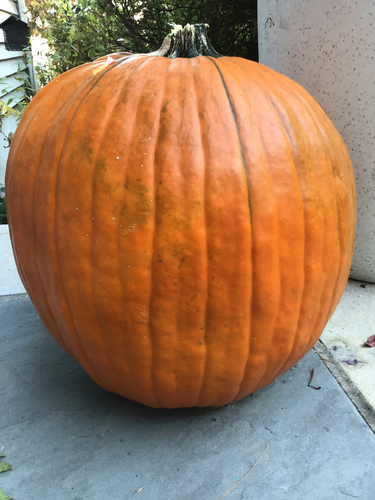
How to care for American pumpkin
Watering
Pumpkin (Cucurbita pepo) has large, broad leaves that lose a lot of water, and its roots are fairly shallow, so it needs deep, even moisture rather than frequent sprinkles. Water the soil at the base of the plant, aiming for about 2.5 cm of water per week in the growing season, more during hot spells and fruit filling. Keep the leaves as dry as you can to reduce powdery mildew, which is common on this species.
Does it need water today?
Push a finger 5 cm into the soil near the base of the plant. If it feels dry, water deeply; if it is still moist, wait a day or two. For potted plants, lift the pot: a light pot that feels very light needs water. Wilting leaves in the afternoon that recover by evening are normal on hot days, but wilting in the morning means the plant needs water now.
Water early in the morning so the soil is wet before the heat of the day and the leaves dry quickly. Once the fruits start to swell, a steady supply matters most, because irregular watering can cause cracking and bitter, watery flesh.
Overwatering
Pumpkin roots need oxygen, and this species is prone to root and stem rot in heavy, waterlogged soil. Its thick stems can rot quickly at the soil line when the ground stays soggy for days.
Symptoms: Yellowing lower leaves, soft or brown stem bases, a sour smell from the soil, and sudden wilting even though the soil is wet.
Solutions: Stop watering and let the top 5 cm dry. Improve drainage by adding compost or raising the bed. In pots, make sure drainage holes are open and empty any saucer after watering.
Underwatering
Pumpkin plants transpire heavily through large leaves, so they wilt fast when water runs short. Fruit set and size suffer most when the plant is dry during flowering and fruit filling.
Symptoms: Leaves droop and feel crisp at the edges, flowers drop without setting fruit, and young pumpkins stop growing or shrivel.
Solutions: Water deeply right away and mulch the soil. Water again in the morning the next day if leaves stay limp. Avoid giving a large amount of water all at once to very dry soil, which can run off; soak it in two passes instead.
Sunlight
Pumpkin (Cucurbita pepo) is a warm-season crop that needs full sun to produce strong vines, many flowers, and large, well-coloured fruit. In partial shade, vines grow long and thin, flower less, and fruits may stay small or soft. Choose the sunniest, most open spot in your garden.
- Ideal: Full sun · 6-8 hours of direct sun
- Tolerates: Full sun, Partial sun
- Best spot in a room: At the window
- Artificial light: Indoors, a pumpkin plant needs a strong south-facing window or a full-spectrum grow light for 12 to 14 hours a day. Keep the light about 15 to 30 cm above the leaves and raise it as the plant grows. Pumpkins grown indoors need hand pollination and a lot of space, so they are best raised outdoors.
Too little light
Pumpkin needs a lot of solar energy to make the sugars for its large leaves and heavy fruit. Low light makes the plant stretch toward any available light, and it cannot support strong flowering.
Symptoms: Long, pale, weak stems, small leaves spaced far apart, few or no female flowers, and fruit that stays small or aborts.
Solutions: Move the plant to the sunniest spot available, or thin nearby shade such as tall plants or fences. Prune away crowded side shoots so more light reaches the main vines and developing fruit.
Too much sun
Pumpkin handles strong sun well in most climates, but in very hot, dry summers the large leaves and exposed fruit can suffer from heat stress. The skin of young fruit can scald when first exposed to intense afternoon sun.
Symptoms: Crispy, bleached or brown patches on leaves, wilting in the afternoon that does not recover in the evening, and pale, sunburned areas on the fruit skin.
Solutions: Keep the soil moist with mulch so roots stay cool. In very hot regions, provide light shade during the hottest afternoons, or lay a leaf or cloth over exposed young fruit for a few days.
Temperature
Cucurbita pepo, the pumpkin, is a warm-season annual that grows fastest between 18 and 30 °C. Sow seeds only after the soil has warmed to at least 15 °C and all frost danger has passed. Frost kills the plant outright, and growth stalls when nights drop below about 10 °C.
- Ideal: 18–30 °C
- Tolerates: -1–38 °C
- Hardiness zones: 9-11 (grown as annual elsewhere)
Fertilizing
Cucurbita pepo is a heavy feeder that builds a large vine and many big fruits in a short season. Feed it moderately in early growth, then shift toward phosphorus and potassium once female flowers appear so the plant puts its energy into fruit rather than leaves.
- Slow-release fertilizer: Mix a balanced slow-release granular fertilizer into the planting hole or bed once at planting time in late spring. Do not repeat it unless the plants are clearly pale and growing slowly.
- Balanced all-purpose fertilizer such as 10-10-10 or 14-14-14, Compost or well-rotted manure worked into the soil before planting, Low-nitrogen fruit-setting fertilizer (for example 5-10-10) once flowering begins, Liquid seaweed or fish emulsion as a light supplement
Soil
Pumpkin (Cucurbita pepo) grows best in deep, fertile, well-drained soil rich in organic matter. It needs steady moisture because its large leaves transpire heavily, but waterlogged roots quickly rot. Aim for a slightly acidic to neutral pH between 6.0 and 7.0.
- Rich loam-compost mix: About 40% good garden loam, 40% well-rotted compost or manure, and 20% coarse sand or perlite.
- Container potting mix: Peat-free or peat-based general potting mix blended with 20% compost and a handful of perlite for drainage.
- Raised bed garden soil: A blend of topsoil, mature compost, and aged manure, worked to at least 30 cm deep before planting.
- pH 6–7
Repotting
Pumpkin (Cucurbita pepo) has a fleshy taproot-and-lateral root system that resents disturbance, so move it as early as possible and handle the root ball gently. Use a container with excellent drainage holes.
- How often: Repot each season only when a young plant outgrows its container; pumpkins are usually grown from seed directly in the ground or in a large tub and are rarely moved more than once.
- New pot: Start seedlings in 8-10 cm pots, then move to a container of at least 40-50 litres (about 15-20 gallons) with a 40 cm or wider opening for a bush type, or a fully sized bed for a vining type.
- Repotting season: Spring, Summer
How to repot
- Tip the seedling gently from its old pot, supporting the stem at soil level with two fingers.
- Loosen any tightly circling roots with your fingers, but keep the main root intact.
- Set the root ball in the new container so the top of the soil sits about 2 cm below the rim.
- Backfill around the root ball with fresh mix and firm it lightly with your palms.
- Water thoroughly until water drains from the holes, then place the pot in a sunny, sheltered spot.
Pruning
Pumpkin plants bloom on the ends of vines and set fruit on side shoots, so remove only what is needed. Never remove more than about one third of the leaf area at once, because the leaves feed the developing fruit. Always use clean, sharp pruners and wipe them with rubbing alcohol between plants to avoid spreading disease.
Pruning season: Summer, Autumn
How to prune
- In early summer, once the main vine is about 1.5 m long, pinch out the growing tip to encourage side branches.
- Keep two or three of the strongest side vines and remove the rest by cutting them at the base where they join the main stem.
- Remove yellowing, brown, or powdery-white leaves by cutting the leaf stalk close to the main vine.
- When a fruit has set and is about the size of a fist, remove any extra fruit on the same vine, leaving two or three per plant.
- Place a board or straw under each developing fruit to keep it off damp soil and prevent rot.
- In autumn, after fruit has ripened and the vines have died back, cut the vines off at ground level and compost them if healthy, or discard them if diseased.
Propagation
Direct seeding in warm soil · Spring, Summer
- Wait until the soil is at least 15°C and all danger of frost has passed, usually late spring in most of the Northern Hemisphere.
- Dig a planting mound about 60 cm across and mix in a large spadeful of compost.
- Push two or three seeds of Cucurbita pepo about 2.5 cm deep, spaced 60 cm apart around the mound.
- Keep the soil evenly moist until seedlings appear, which usually takes 5 to 10 days.
- When seedlings have two true leaves, thin to the strongest one per mound by snipping the others at soil level rather than pulling them, to avoid disturbing roots.
Indoor seed starting · Spring
- Start seeds indoors about 3 to 4 weeks before your last frost date, since pumpkin plants resent root disturbance.
- Sow one seed per 9 cm pot or biodegradable pot filled with seed-starting mix, 2.5 cm deep.
- Place pots somewhere at 21 to 27°C and keep the mix moist but not waterlogged.
- Harden seedlings off over 7 to 10 days, starting with a few hours outdoors in mild weather and gradually increasing exposure.
- Transplant carefully when the weather is settled, keeping the root ball intact and setting the plant at the same depth it grew in its pot.
Saving seed from mature fruit · Autumn
- Choose a healthy, fully ripe pumpkin from an open-pollinated variety, since fruit from hybrid F1 varieties will not grow true to type.
- Leave the fruit on the vine until the stem dries and the rind hardens completely.
- Cut the pumpkin open, scoop out the seeds, and rinse them free of pulp in a sieve.
- Spread the seeds on a paper towel or screen in a warm, dry room for one to two weeks, turning them occasionally.
- Store dry seeds in a labeled paper envelope in a cool, dark, dry place. Viable seed usually lasts about 4 to 6 years.
Pumpkins are heavy feeders and grow fast in warm weather, so give each mound plenty of compost and water deeply once or twice a week rather than shallowly every day. Plant seeds in their final spot whenever possible for the strongest plants.
About American pumpkin
Also known as: Summer squash, Zucchini, Acorn squash, Field pumpkin
- Plant type: annual vine, herb, climber
- Lifespan: annual
- Distribution: Native to Mesoamerica, mainly eastern and central Mexico.
- Mature height: Trailing vines up to 3-5 m; bush types 0.5-1 m
- Bloom time: Summer
Pets · People
Pets: Safe · People: Safe. Fruit, flesh and seeds are non-toxic and widely eaten. Leaves and stems have prickly hairs that can irritate the skin, and the fruit can cause mild stomach upset in animals if large amounts are eaten.
Common problems
- Powdery mildew: White powdery patches on leaves, often in humid or crowded conditions; improve airflow and choose resistant varieties.
- Squash vine borer: Larvae bore into stems causing sudden wilting; wrap stem bases and inspect regularly.
- Blossom end rot: Dark sunken patches on fruit caused by irregular watering and calcium uptake problems.
- Squash bugs: Sap-sucking insects that cause leaf wilting and blackening; remove eggs from leaf undersides.
- Bacterial wilt: Spread by cucumber beetles, causing rapid wilting of whole plants; remove affected plants promptly.
Uses
Cucurbita pepo is grown worldwide as a food crop for fruit, flowers and seeds. Pumpkins are used for pies, soups and carving, summer squashes such as zucchini are eaten fresh, and seeds are pressed for oil in parts of Central and Eastern Europe. It is also a major ornamental plant in autumn decorations.
Is it edible?
Fruit flesh, young fruits, flowers and seeds are all edible when cooked; seeds are often roasted, and the flowers are eaten fried or stuffed.
History & legends
Cucurbita pepo is one of the earliest domesticated plants in the Americas, grown alongside maize and beans in the traditional Three Sisters system. Indigenous peoples valued it as food and for containers made from dried shells, and it spread to Europe after 1492.
Did you know?
Pumpkin flowers open only for one day, and male and female blossoms appear separately on the same plant, so pollinating insects are essential.
Frequently asked questions
How often should I water American pumpkin?
every 2 days. Pumpkin (Cucurbita pepo) has large, broad leaves that lose a lot of water, and its roots are fairly shallow, so it needs deep, even moisture rather than frequent sprinkles. Water the soil at the base of the plant, aiming for about 2.5 cm of water per week in the growing season, more during hot spells and fruit filling. Keep the leaves as dry as you can to reduce powdery mildew, which is common on this species. Push a finger 5 cm into the soil near the base of the plant. If it feels dry, water deeply; if it is still moist, wait a day or two. For potted plants, lift the pot: a light pot that feels very light needs water. Wilting leaves in the afternoon that recover by evening are normal on hot days, but wilting in the morning means the plant needs water now.
How much light does American pumpkin need?
Full sun (6-8 hours of direct sun). Pumpkin (Cucurbita pepo) is a warm-season crop that needs full sun to produce strong vines, many flowers, and large, well-coloured fruit. In partial shade, vines grow long and thin, flower less, and fruits may stay small or soft. Choose the sunniest, most open spot in your garden.
What temperature does American pumpkin like?
18–30 °C. Cucurbita pepo, the pumpkin, is a warm-season annual that grows fastest between 18 and 30 °C. Sow seeds only after the soil has warmed to at least 15 °C and all frost danger has passed. Frost kills the plant outright, and growth stalls when nights drop below about 10 °C.
Is American pumpkin toxic to cats and dogs?
It is safe for cats and dogs. Fruit, flesh and seeds are non-toxic and widely eaten. Leaves and stems have prickly hairs that can irritate the skin, and the fruit can cause mild stomach upset in animals if large amounts are eaten.
What are the most common problems of American pumpkin?
Powdery mildew: White powdery patches on leaves, often in humid or crowded conditions; improve airflow and choose resistant varieties. Squash vine borer: Larvae bore into stems causing sudden wilting; wrap stem bases and inspect regularly. Blossom end rot: Dark sunken patches on fruit caused by irregular watering and calcium uptake problems. Squash bugs: Sap-sucking insects that cause leaf wilting and blackening; remove eggs from leaf undersides. Bacterial wilt: Spread by cucumber beetles, causing rapid wilting of whole plants; remove affected plants promptly.
When should I repot American pumpkin?
Repot each season only when a young plant outgrows its container; pumpkins are usually grown from seed directly in the ground or in a large tub and are rarely moved more than once.. Pumpkin (Cucurbita pepo) has a fleshy taproot-and-lateral root system that resents disturbance, so move it as early as possible and handle the root ball gently. Use a container with excellent drainage holes.
How do I propagate American pumpkin?
Direct seeding in warm soil, Indoor seed starting, Saving seed from mature fruit. Wait until the soil is at least 15°C and all danger of frost has passed, usually late spring in most of the Northern Hemisphere. Dig a planting mound about 60 cm across and mix in a large spadeful of compost. Push two or three seeds of Cucurbita pepo about 2.5 cm deep, spaced 60 cm apart around the mound. Keep the soil evenly moist until seedlings appear, which usually takes 5 to 10 days. When seedlings have two true leaves, thin to the strongest one per mound by snipping the others at soil level rather than pulling them, to avoid disturbing roots.
How this guide was written
Verdiss writes each guide with AI from botanical references and checks the species against iNaturalist and Plants of the World Online (Kew). Readers can rate every guide in the app.
Sources
Verdiss's information is for general guidance. Never eat or use a plant as medicine based on an app: ask a professional.