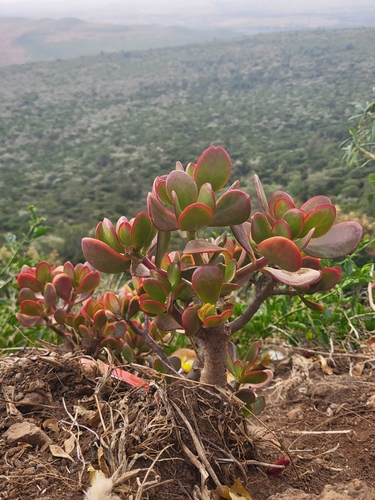
How to care for jade plant
Watering
Jade plant (Crassula ovata) is a succulent that stores water in its thick, glossy leaves and stems, so it prefers to dry out fully between drinks. Water deeply until it runs out of the drainage holes, then wait until the soil is dry before watering again. In winter, when growth slows, water much less often. Always use a pot with drainage holes and a gritty cactus or succulent mix.
Does it need water today?
Push a finger about 3 cm (1 inch) into the soil. If it feels completely dry and crumbly, it is time to water. You can also lift the pot: if it feels light, the soil is dry; if it feels heavy, wait. Look at the leaves too: slightly wrinkled or soft leaves signal thirst, while firm, plump leaves mean it is fine.
Water less rather than more. A jade plant handles a dry spell far better than soggy roots, and most houseplant jades are killed by too much water, not too little.
Overwatering
Jade plants grow in dry, rocky terrain in South Africa and Mozambique, where their roots are adapted to brief soakings followed by long dry periods. Their fleshy stems and leaves store water, so constantly wet soil quickly suffocates the roots and invites rot.
Symptoms: Soft, translucent, or mushy stems near the base, leaves that drop easily when touched, yellowing leaves, and a sour or musty smell from the soil.
Solutions: Stop watering immediately and let the soil dry out. Gently remove the plant, cut away any black or mushy roots with clean scissors, and let the cut ends dry for a day or two. Repot into fresh, dry, gritty mix in a pot with drainage holes, then wait several days before the first light watering.
Underwatering
Jade plants store water in their leaves, so they tolerate drought better than most houseplants. However, after very long dry spells the plant starts drawing on its reserves, which shows in its leaves and stems.
Symptoms: Wrinkled, puckered, or slightly shrivelled leaves, leaves that look dull or lose their gloss, and older leaves dropping in small numbers.
Solutions: Water thoroughly until water drains from the bottom, then let it drain completely. Recovery takes a few weeks, so do not overcorrect with frequent watering. Plump leaves usually return within one to two weeks.
Sunlight
Jade plant (Crassula ovata) grows best in bright light and benefits from direct sun once it is acclimated. Bright light keeps its stems firm and compact and its leaves a healthy green, sometimes with red edges on the leaf tips when it gets strong sun. Indoors, a sunny window is ideal. Rotate the pot a quarter turn every few weeks so it grows evenly.
- Ideal: Bright, indirect light · 4-6 hours of bright light per day
- Tolerates: Full sun, Partial sun, Bright, indirect light
- Best spot in a room: At the window
- Artificial light: If natural light is weak, use a full-spectrum LED grow light about 30 cm (12 inches) above the plant for 12 to 14 hours a day. Jade plants stretch and grow leggy in low light, so supplementary light helps them stay sturdy.
Too little light
Jade plants evolved in open, sunny habitats, so they need strong light to keep their growth compact. Without enough light, their stems stretch toward the nearest window and their leaves become thin and pale.
Symptoms: Leggy, stretched growth with long gaps between leaves, pale or weak green leaves, leaves that drop, and a lopsided shape leaning toward the light.
Solutions: Move the plant closer to the brightest window, ideally a south- or west-facing one. Add a grow light if needed. Rotate the pot regularly and prune leggy stems in spring to encourage bushier growth.
Too much sun
Although jade plants like sun, a sudden move from low light into intense, hot afternoon sun can burn their thick leaves. Their waxy surface can protect them, but unshaded glass amplifies heat and scorches the leaf tissue.
Symptoms: Brown, bleached, or crispy patches on the sun-facing side of leaves, leaves that look faded or wrinkled, and red tints that become patchy and dry.
Solutions: Move the plant back a short distance from the window or add a sheer curtain during the hottest hours. Acclimate it gradually over two weeks when moving it into stronger light. Damaged leaves will not recover, but the plant will grow new healthy ones.
Temperature
Jade plants (Crassula ovata) thrive in warm, dry indoor conditions and prefer daytime temperatures of 18 to 24°C with cooler nights around 10 to 15°C. They are native to semi-arid South Africa and Mozambique, so they tolerate heat well but are damaged by frost and prolonged cold, wet soil.
- Ideal: 15–24 °C
- Tolerates: 5–35 °C
- Hardiness zones: 10-12
Fertilizing
Jade plants are light feeders that grow slowly, so too much fertilizer causes leggy, weak growth and salt buildup that damages roots. Feed only during the active growing season from spring to early autumn, and skip feeding in winter when the plant rests.
- Slow-release fertilizer: Once a year in early spring, when new growth begins.
- Balanced liquid houseplant fertilizer diluted to half strength, Cactus and succulent fertilizer with low nitrogen, Slow-release granular fertilizer formulated for succulents
Soil
Jade plants need a porous, fast-draining mix that dries out between waterings, because their succulent roots suffer in soggy soil. A pot with a drainage hole is essential, and the mix should never stay wet for days.
- Commercial cactus and succulent mix: Peat or coir base blended with pumice, perlite, or coarse sand, usually about half mineral material.
- DIY jade mix: Two parts standard potting soil, one part perlite or pumice, and one part coarse horticultural sand or grit.
- Bonsai or akadama-style mix: Calcined clay granules, pumice, and a small amount of fine bark or organic matter, which holds some moisture while still draining well.
- pH 6–7.5
Repotting
Jade plants have thick, fleshy stems and succulent roots that rot quickly in wet soil, so repot only when the plant is root-bound or top-heavy and always into fast-draining mix. Wait until the soil has been dry for several days before you start.
- How often: every 2-3 years
- New pot: Move up only one pot size, about 2-5 cm wider than the current pot, with a drainage hole in the base.
- Repotting season: Spring, Summer
How to repot
- Gently tip the plant out of its pot, supporting the stems at the base with one hand.
- Loosen the root ball with your fingers and shake off old, crumbly soil.
- Trim any soft, brown, or mushy roots with clean scissors and let the cut ends dry for a day or two.
- Place a layer of fresh mix in the new pot, set the plant so it sits at the same depth as before, and fill around the roots, firming gently.
- Leave the soil surface about 1 cm below the rim to allow room for watering.
- Wait 3-5 days before watering lightly, then return the plant to bright, indirect light.
Pruning
Prune in spring or early summer, when the plant is growing actively and will recover quickly. Make cuts just above a leaf node or a pair of leaves, and avoid leaving bare stubs that can die back. Never remove more than about one quarter of the plant at once, since a jade plant needs leaves to make energy.
Pruning season: Spring, Summer
How to prune
- Look at the whole plant first and identify any dead, shriveled, or soft stems that need to come out entirely.
- Cut each unwanted stem back to its base or to a main branch, using a clean angled cut.
- To encourage branching, pinch or cut the tip of a long stem just above a leaf pair. Two new shoots usually grow from that point.
- Remove any fallen leaves and debris from the pot to reduce the chance of rot.
- Keep the plant in bright light and water lightly for about a week after pruning, until the cut ends have sealed over.
Propagation
Leaf cuttings · Spring, Summer
- Choose a healthy, plump leaf from the outer part of a mature jade plant and twist it gently off the stem so the base comes away cleanly.
- Let the leaf callus for two to three days in a dry, shaded spot until the cut end feels dry to the touch.
- Lay the leaf on top of barely moist cactus or succulent mix, base down, without burying it.
- Mist the soil lightly every few days, keeping it barely damp, in bright indirect light at about 18 to 24 °C.
- Roots and a tiny rosette usually appear within four to eight weeks. Keep watering sparing until the new plant has several leaves.
Stem cuttings · Spring, Summer
- Using clean, sharp scissors or a knife, cut a non-flowering stem tip that is at least 7 to 10 cm long.
- Remove the lowest pair of leaves so that a short bare section of stem is exposed.
- Allow the cut end to dry and callus for three to five days in a shaded place.
- Insert the bare end about 2 cm deep into dry or barely moist succulent mix and set the pot in bright, indirect light.
- Water only when the soil has fully dried out. Roots typically form within three to six weeks, and the cutting can then be treated as a young plant.
Jade plant cuttings are very forgiving, but the most common cause of failure is overwatering. The cut end must callus before it touches soil, and the mix should stay on the dry side until roots form. Even a leaf that wrinkles slightly is often still alive and can root.
About jade plant
Also known as: Jade plant, Money plant, Lucky plant, Friendship tree
- Plant type: succulent, shrub
- Lifespan: perennial
- Distribution: Native to the southern and eastern parts of South Africa and southern Mozambique.
- Mature height: 0.6-2 m indoors, up to 3 m or more in the wild
- Bloom time: Late winter to early spring, usually only on mature plants in good light
Pets · People
Pets: Toxic · People: Toxic. Listed by the ASPCA as toxic to cats, dogs and horses. Ingestion can cause vomiting, lethargy, lack of coordination and loss of appetite; the leaves are the main concern and symptoms are usually mild.
Common problems
- Root rot: Caused by overwatering and soggy soil; leaves turn soft and yellow and the trunk may collapse. Reduce watering and repot into dry mix if caught early.
- Leaf drop: Often caused by low light, cold drafts, or sudden changes in watering or location; a few lost leaves can be normal.
- Etiolation: Stretched, weak growth with wide spacing between leaves, caused by insufficient light. Move to a brighter spot gradually.
- Mealybugs: White cottony pests hiding in leaf axils and on stems; wipe with alcohol on a cotton swab and treat with insecticidal soap.
- Shriveled leaves: Wrinkled leaves indicate underwatering or, in older plants, natural leaf loss; water thoroughly if the soil is fully dry.
Uses
Primarily ornamental, grown as a houseplant, bonsai subject and garden shrub in frost-free climates. It is a popular feng shui and gift plant in many countries.
Is it edible?
not edible
History & legends
Jade plants were brought to Europe in the 18th century and became popular as houseplants during the Victorian era. In East Asian traditions the plant is associated with jade, a precious stone, and with wealth and good fortune.
Did you know?
Jade plants are often given as gifts for good luck and prosperity, and in some cultures a plant received from someone else is believed to carry their good fortune.
Frequently asked questions
How often should I water jade plant?
every 14 days. Jade plant (Crassula ovata) is a succulent that stores water in its thick, glossy leaves and stems, so it prefers to dry out fully between drinks. Water deeply until it runs out of the drainage holes, then wait until the soil is dry before watering again. In winter, when growth slows, water much less often. Always use a pot with drainage holes and a gritty cactus or succulent mix. Push a finger about 3 cm (1 inch) into the soil. If it feels completely dry and crumbly, it is time to water. You can also lift the pot: if it feels light, the soil is dry; if it feels heavy, wait. Look at the leaves too: slightly wrinkled or soft leaves signal thirst, while firm, plump leaves mean it is fine.
How much light does jade plant need?
Bright, indirect light (4-6 hours of bright light per day). Jade plant (Crassula ovata) grows best in bright light and benefits from direct sun once it is acclimated. Bright light keeps its stems firm and compact and its leaves a healthy green, sometimes with red edges on the leaf tips when it gets strong sun. Indoors, a sunny window is ideal. Rotate the pot a quarter turn every few weeks so it grows evenly.
What temperature does jade plant like?
15–24 °C. Jade plants (Crassula ovata) thrive in warm, dry indoor conditions and prefer daytime temperatures of 18 to 24°C with cooler nights around 10 to 15°C. They are native to semi-arid South Africa and Mozambique, so they tolerate heat well but are damaged by frost and prolonged cold, wet soil.
Is jade plant toxic to cats and dogs?
It is toxic to cats and dogs: keep it out of their reach. Listed by the ASPCA as toxic to cats, dogs and horses. Ingestion can cause vomiting, lethargy, lack of coordination and loss of appetite; the leaves are the main concern and symptoms are usually mild.
What are the most common problems of jade plant?
Root rot: Caused by overwatering and soggy soil; leaves turn soft and yellow and the trunk may collapse. Reduce watering and repot into dry mix if caught early. Leaf drop: Often caused by low light, cold drafts, or sudden changes in watering or location; a few lost leaves can be normal. Etiolation: Stretched, weak growth with wide spacing between leaves, caused by insufficient light. Move to a brighter spot gradually. Mealybugs: White cottony pests hiding in leaf axils and on stems; wipe with alcohol on a cotton swab and treat with insecticidal soap. Shriveled leaves: Wrinkled leaves indicate underwatering or, in older plants, natural leaf loss; water thoroughly if the soil is fully dry.
When should I repot jade plant?
every 2-3 years. Jade plants have thick, fleshy stems and succulent roots that rot quickly in wet soil, so repot only when the plant is root-bound or top-heavy and always into fast-draining mix. Wait until the soil has been dry for several days before you start.
How do I propagate jade plant?
Leaf cuttings, Stem cuttings. Choose a healthy, plump leaf from the outer part of a mature jade plant and twist it gently off the stem so the base comes away cleanly. Let the leaf callus for two to three days in a dry, shaded spot until the cut end feels dry to the touch. Lay the leaf on top of barely moist cactus or succulent mix, base down, without burying it. Mist the soil lightly every few days, keeping it barely damp, in bright indirect light at about 18 to 24 °C. Roots and a tiny rosette usually appear within four to eight weeks. Keep watering sparing until the new plant has several leaves.
How this guide was written
Verdiss writes each guide with AI from botanical references and checks the species against iNaturalist and Plants of the World Online (Kew). Readers can rate every guide in the app.
Sources
Verdiss's information is for general guidance. Never eat or use a plant as medicine based on an app: ask a professional.