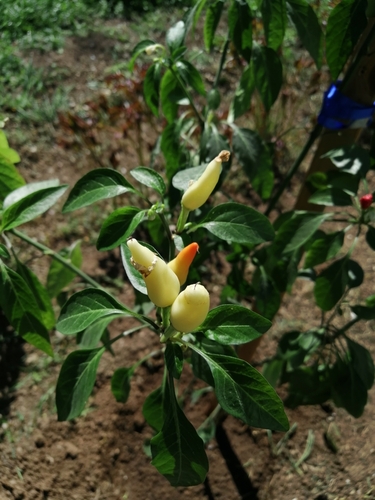
How to care for chili pepper
Watering
Chili pepper (Capsicum annuum) likes evenly moist soil that is never soggy. Let the top 2-3 cm of compost dry out between waterings, then soak the pot until water runs from the drainage holes. Water at the soil level rather than over the leaves, since wet foliage invites fungal spots. Indoors, plants in small pots and warm rooms need water more often than the table above suggests when they are flowering or fruiting.
Does it need water today?
Push a finger 2-3 cm into the soil. If it feels dry, water now. If it feels damp, wait a day and check again. Lift the pot too: a light pot means the soil is dry, a heavy pot means it is still wet.
Chili peppers drop flowers and fruit when their watering is uneven, so keep the schedule steady rather than drenching once a week. A layer of mulch outdoors helps hold moisture between waterings.
Overwatering
Chili pepper roots need air as well as water, and Capsicum annuum is prone to root rot when its soil stays wet. Waterlogged roots cannot take up oxygen and begin to decay, which quickly shuts down the whole plant.
Symptoms: Yellowing lower leaves, wilting even though the soil is wet, a sour or musty smell from the pot, and flower or fruit drop.
Solutions: Stop watering and let the top layer dry. Make sure the pot has drainage holes and sits free of its saucer water. If the stem is soft at the base, repot into fresh, well-draining compost with extra perlite and trim any black, mushy roots.
Underwatering
Chili pepper has thin, fast-transpiring leaves and a shallow root system, so it wilts quickly once the compost dries out. Repeated drying stresses the plant and reduces flowering and fruit set.
Symptoms: Drooping leaves that feel limp, dry crispy leaf edges, soil pulling away from the pot sides, and blossoms or small fruit falling off.
Solutions: Water thoroughly until it drains, then wait 20-30 minutes. Plants that have dried out badly can be soaked by bottom watering. Once they perk up, return to a regular schedule and consider a moisture-holding mulch.
Sunlight
Chili pepper (Capsicum annuum) is a sun-loving plant that needs strong light to set flowers and ripen fruit. Plants grown in too little light stay leafy and produce few or small chilies. Gradually move young plants into brighter light over a week or two to avoid scorched leaves.
- Ideal: Full sun · 6-8 hours of direct sun per day
- Tolerates: Full sun, Partial sun, Bright, indirect light
- Best spot in a room: At the window
- Artificial light: A full-spectrum LED grow light set 15-30 cm above the plant for 12-14 hours a day helps indoor chili peppers flower and fruit, especially in winter or in north-facing rooms.
Too little light
Capsicum annuum uses sunlight to make the energy that fuels flowers and fruit. Without enough light it stretches toward the dimmest spot and invests in leaves instead of chilies.
Symptoms: Tall, leggy stems with long gaps between leaves, pale green foliage, flowers that drop without setting fruit, and a lack of new growth.
Solutions: Move the plant to the brightest south- or west-facing window, or outdoors into full sun once nights stay above 10°C. Add a grow light if natural light stays weak, and rotate the pot weekly so all sides receive light.
Too much sun
Chili pepper can handle strong sun, but in very hot summers at 35°C or more, intense afternoon light combined with heat can burn its leaves and stress the plant.
Symptoms: Bleached or papery patches on leaves facing the sun, leaves curling inward, and flowers that fall during heat spells.
Solutions: Provide light shade from 12:00 to 16:00 during heatwaves using a shade cloth or a spot behind taller plants. Increase watering on hot days and move container plants to partial shade if scorching appears.
Temperature
Chili pepper (Capsicum annuum) is a warm-season tropical perennial grown as an annual outdoors. It needs warm days and nights to set fruit; keep it above 15°C at night and never let it sit in frost. Plants stall and drop flowers when nights stay below about 13°C or days climb above about 32°C for long stretches.
- Ideal: 18–29 °C
- Tolerates: 10–35 °C
- Hardiness zones: 10-11 (grown as annual elsewhere)
Fertilizing
Chili pepper needs moderate feeding. Too much nitrogen produces tall, leafy plants with few peppers, so switch to a fertilizer with more phosphorus and potassium as soon as the first flowers appear. Check soil pH and keep it between 6.0 and 6.8 for the best nutrient uptake.
- Slow-release fertilizer: Once at planting time in spring, mix a slow-release granular fertilizer into the soil or potting mix, following the package rate. Do not repeat it during the season.
- Balanced liquid fertilizer such as 10-10-10 for the first weeks after transplanting, Low-nitrogen tomato or vegetable fertilizer with higher phosphorus and potassium once flowering starts, Compost or well-rotted manure worked into the soil before planting, Calcium-containing feed or garden lime when soil calcium is low
Soil
Chili pepper grows best in a slightly acidic to neutral, well-drained soil that stays evenly moist but never waterlogged. Rich, fertile soil supports strong fruiting.
- Loose peat-free potting mix with perlite: Peat-free multipurpose compost mixed with about 25% perlite or horticultural grit
- Garden loam amended with compost: Well-drained garden soil mixed with 1 part compost to 2 parts soil, with a handful of sand for drainage
- pH 6–6.8
Repotting
Use a pot with drainage holes and a loose, peat-free potting mix. Chili pepper roots are fine and sensitive, so handle the root ball gently.
- How often: Every year for young chili pepper plants; every 2 years once mature
- New pot: Move up only one pot size at a time, about 2-5 cm wider in diameter. Chili peppers in pots that are too large stay wet and rot.
- Repotting season: Spring, Summer
How to repot
- Tip the pot on its side and gently slide the plant out, supporting the stem at the base
- Loosen the outer roots with your fingers and trim any dark, mushy roots with clean scissors
- Set a layer of fresh mix in the new pot so the top of the root ball sits about 2 cm below the rim
- Position the plant upright in the centre and fill around the sides with mix, firming gently as you go
- Water thoroughly until it drains from the holes, then add more mix if the level has dropped
- Keep the plant out of direct midday sun for about a week while the roots settle
Pruning
Use clean, sharp snips and sterilize the blades with rubbing alcohol between plants. Chili peppers are perennials in frost-free conditions, but in most home gardens they are grown as annuals, so pruning mainly shapes the plant and protects its harvest.
Pruning season: Spring, Summer
How to prune
- When the plant is about 15 to 20 cm tall, pinch off the growing tip just above a leaf node to encourage side branching.
- Remove the first flower buds that form on young plants, so energy goes into roots and branches rather than an early small harvest. This is optional but helpful in cooler climates.
- Once the plant is established, cut out any weak, crossing, or damaged branches at their base.
- Remove yellowing or diseased leaves promptly and dispose of them rather than composting.
- Thin the centre of dense bushes to open airflow, but never remove more than about one third of the foliage at once.
- In autumn, when frost approaches, you may cut the plant back hard to bring indoor-grown plants through winter, or harvest remaining fruit and remove the plant.
Propagation
Seed sowing · Winter, Spring
- Sow chili pepper seeds indoors 8 to 10 weeks before your last frost date, when night temperatures stay above 10°C.
- Fill a seed tray with a light seed-starting mix and press seeds 0.5 cm deep, one or two per cell.
- Keep the mix warm at 24 to 29°C; a heat mat helps, because Capsicum annuum seeds germinate slowly, often in 7 to 21 days.
- Keep the surface evenly moist but never soggy, and cover the tray with a clear dome until seedlings appear.
- Once seedlings have two true leaves, thin to the strongest one per cell and move them to 10 cm pots.
Stem cutting · Spring, Summer
- Choose a healthy, non-flowering side shoot about 10 cm long from a mature plant.
- Cut just below a leaf node with clean scissors and strip the lower leaves.
- Dip the cut end in rooting hormone, then insert it into moist perlite or a 50/50 perlite and peat mix.
- Place the cutting in bright, indirect light at 21 to 26°C and mist lightly to keep humidity high.
- Roots usually form within 2 to 4 weeks. Pot it up once you feel resistance when gently tugging the stem.
Chili pepper seeds need warmth more than light to sprout, so a spot on top of the refrigerator or a heat mat often works better than a sunny windowsill. Dry extracted seeds on a paper towel for a week before storing them in a cool, dark, dry place.
About chili pepper
Also known as: Chili pepper, Sweet pepper, Bell pepper, Cayenne pepper
- Plant type: herb, shrub
- Lifespan: perennial in its native tropical range but usually grown as an annual in temperate gardens
- Distribution: Native to Mesoamerica and northern South America, where it was first domesticated thousands of years ago.
- Mature height: 0.5-1.5 m
- Bloom time: Late spring to late summer
Pets · People
Pets: Toxic · People: Mildly toxic. Fruits, leaves and seeds are not considered seriously toxic by ASPCA, but capsaicin in the fruit can cause mouth irritation, vomiting and stomach upset in dogs, cats and children; the plant is generally listed as non-toxic but best kept out of reach.
Common problems
- Blossom end rot: Black, leathery patches on the fruit bottom caused by irregular watering and calcium uptake problems; keep soil evenly moist.
- Aphids: Clusters of small sap-sucking insects on new shoots and buds; wash off with water or use insecticidal soap.
- Flower drop: Flowers fall without setting fruit, often triggered by temperatures above 32°C or below 15°C, or dry air.
- Root rot: Yellowing and wilting from waterlogged soil and poor drainage; let soil dry between waterings.
- Powdery mildew: White powdery coating on leaves in humid, crowded conditions; improve airflow and remove affected leaves.
Uses
Capsicum annuum is grown worldwide as a vegetable and spice crop. Sweet bell peppers, jalapeños, Anaheim, paprika and cayenne types are all cultivars of this species, used fresh, dried, smoked or powdered in cuisines from Mexico to Hungary and Korea. Its fruits also yield capsaicin for topical pain-relief products and oleoresin for food colouring.
Is it edible?
The ripe and unripe fruits are edible, raw or cooked; leaves are not commonly eaten, and seeds and membranes carry most of the heat.
History & legends
Archaeological evidence from Mexico suggests chilies were domesticated around 6,000 years ago, and they were central to Aztec and Maya diets and ritual. After Columbus reached the Americas, chilies spread rapidly to Europe, Africa and Asia, becoming integral to many local cuisines within a few centuries.
Did you know?
The heat of a chili comes from capsaicin, which is concentrated in the placental membranes inside the fruit rather than in the seeds, as many people assume.
Frequently asked questions
How often should I water chili pepper?
every 3 days. Chili pepper (Capsicum annuum) likes evenly moist soil that is never soggy. Let the top 2-3 cm of compost dry out between waterings, then soak the pot until water runs from the drainage holes. Water at the soil level rather than over the leaves, since wet foliage invites fungal spots. Indoors, plants in small pots and warm rooms need water more often than the table above suggests when they are flowering or fruiting. Push a finger 2-3 cm into the soil. If it feels dry, water now. If it feels damp, wait a day and check again. Lift the pot too: a light pot means the soil is dry, a heavy pot means it is still wet.
How much light does chili pepper need?
Full sun (6-8 hours of direct sun per day). Chili pepper (Capsicum annuum) is a sun-loving plant that needs strong light to set flowers and ripen fruit. Plants grown in too little light stay leafy and produce few or small chilies. Gradually move young plants into brighter light over a week or two to avoid scorched leaves.
What temperature does chili pepper like?
18–29 °C. Chili pepper (Capsicum annuum) is a warm-season tropical perennial grown as an annual outdoors. It needs warm days and nights to set fruit; keep it above 15°C at night and never let it sit in frost. Plants stall and drop flowers when nights stay below about 13°C or days climb above about 32°C for long stretches.
Is chili pepper toxic to cats and dogs?
It is toxic to cats and dogs: keep it out of their reach. Fruits, leaves and seeds are not considered seriously toxic by ASPCA, but capsaicin in the fruit can cause mouth irritation, vomiting and stomach upset in dogs, cats and children; the plant is generally listed as non-toxic but best kept out of reach.
What are the most common problems of chili pepper?
Blossom end rot: Black, leathery patches on the fruit bottom caused by irregular watering and calcium uptake problems; keep soil evenly moist. Aphids: Clusters of small sap-sucking insects on new shoots and buds; wash off with water or use insecticidal soap. Flower drop: Flowers fall without setting fruit, often triggered by temperatures above 32°C or below 15°C, or dry air. Root rot: Yellowing and wilting from waterlogged soil and poor drainage; let soil dry between waterings. Powdery mildew: White powdery coating on leaves in humid, crowded conditions; improve airflow and remove affected leaves.
When should I repot chili pepper?
Every year for young chili pepper plants; every 2 years once mature. Use a pot with drainage holes and a loose, peat-free potting mix. Chili pepper roots are fine and sensitive, so handle the root ball gently.
How do I propagate chili pepper?
Seed sowing, Stem cutting. Sow chili pepper seeds indoors 8 to 10 weeks before your last frost date, when night temperatures stay above 10°C. Fill a seed tray with a light seed-starting mix and press seeds 0.5 cm deep, one or two per cell. Keep the mix warm at 24 to 29°C; a heat mat helps, because Capsicum annuum seeds germinate slowly, often in 7 to 21 days. Keep the surface evenly moist but never soggy, and cover the tray with a clear dome until seedlings appear. Once seedlings have two true leaves, thin to the strongest one per cell and move them to 10 cm pots.
How this guide was written
Verdiss writes each guide with AI from botanical references and checks the species against iNaturalist and Plants of the World Online (Kew). Readers can rate every guide in the app.
Sources
Verdiss's information is for general guidance. Never eat or use a plant as medicine based on an app: ask a professional.