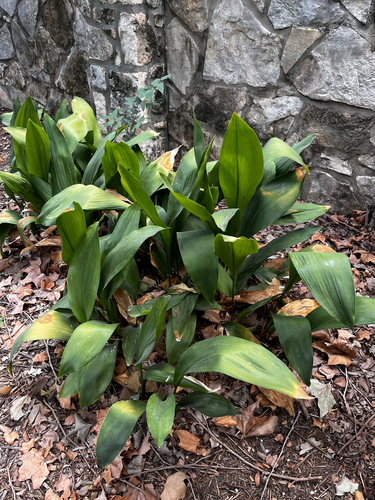
How to care for cast-iron plant
Watering
The cast-iron plant (Aspidistra elatior) is famously tough and prefers to dry out between drinks. Its thick, leathery rhizomes store water, so overwatering is a far bigger risk than neglect. Water thoroughly when the top few centimetres of compost are dry, letting excess drain away, and never leave the pot standing in water. Water less in winter, when growth slows and the compost takes much longer to dry.
Does it need water today?
Push a finger 3 to 4 cm into the compost. If it feels dry, water; if it feels cool and moist, wait. You can also lift the pot: a light pot means it is thirsty, a heavy pot means it can wait. Leaves that curl slightly and look dull can signal dryness, but a healthy plant can tolerate short dry spells.
Always err on the side of underwatering. The cast-iron plant recovers well from a dry spell, but soggy compost quickly rots its rhizomes, which are the plant's lifeline.
Overwatering
The cast-iron plant stores water in its thick rhizomes and has few fine roots, so wet compost suffocates the root system quickly. Cool, poorly lit rooms make this worse because the compost stays damp for weeks. Its tough leaves hide early rot, so problems often advance before they are obvious.
Symptoms: Yellowing leaves that turn soft and mushy, a sour or rotten smell from the compost, black or brown soft rhizomes at the base, and a wobbly plant that lifts out of the pot easily with dark, slimy roots.
Solutions: Stop watering immediately and let the compost dry out. Remove the plant, cut away any soft or black rhizome tissue with a clean knife, dust cuts with sulphur powder or cinnamon, and let them callous for a day. Repot into fresh, fast-draining compost in a pot with drainage holes, and wait about a week before watering lightly.
Underwatering
Although tolerant of drought, the cast-iron plant still needs enough moisture to keep its rhizomes plump and its leaves turgid. Prolonged dryness in a hot, bright room, especially near a heater, pushes it past its tolerance. It usually survives, but growth stalls and leaves suffer.
Symptoms: Leaves that become limp, lose their glossy sheen, and develop crispy brown tips or edges. The compost pulls away from the pot wall, and the soil feels bone dry several centimetres down.
Solutions: Water thoroughly until it drains from the base, then let it soak for a few minutes before emptying the saucer. Trim crispy brown leaf tips with clean scissors. Move the plant away from direct heat and set a regular check, such as every Sunday, so you do not forget it.
Sunlight
The cast-iron plant is one of the best low-light houseplants, tolerating deep shade where many others fail. It grows most vigorously in bright, indirect light, and its leaves stay greener and glossier with some sun. Direct midday sun, especially through glass, scorches the broad leaves into pale or brown patches. Variegated cultivars need brighter light than the plain green form to keep their stripes.
- Ideal: Partial sun · 2-4 hours of gentle morning or late-afternoon sun, or 6 or more hours of bright, indirect light
- Tolerates: Bright, indirect light, Shade, Partial sun
- Best spot in a room: Near the window
- Artificial light: Fluorescent or LED grow lights work well in windowless rooms. Place a full-spectrum LED about 30 to 45 cm above the foliage and run it 10 to 12 hours a day. Plants in dark offices will survive, but they grow very slowly, so rotate the pot occasionally to keep it even.
Too little light
The cast-iron plant grows slowly in weak light and rarely needs more than occasional attention, but chronically dim conditions reduce its ability to produce new leaves. Because it is so forgiving, dim light is more often a slow decline than an emergency.
Symptoms: Leaves look dull and dark green with fewer new shoots, the plant stops producing fresh growth for months, and older leaves may yellow and die back gradually.
Solutions: Move the pot closer to a bright window, ideally an east-facing one, or set it within 1 to 2 m of a bright north or west window. Add a full-spectrum LED grow light for 10 to 12 hours a day if the room is windowless. Wipe the leaves monthly to remove dust that blocks light.
Too much sun
Its broad, thin leaves are adapted to filtered forest light, so strong direct sun quickly bleaches and dehydrates them. Glass magnifies heat, which makes south- or west-facing windows risky in summer. Scorched tissue does not recover, so damaged leaves must be removed.
Symptoms: Pale yellow or bleached patches on the upper leaf surface, brown dry edges or spots, and leaves that look papery or crispy where the sun hit them.
Solutions: Move the plant a metre or more back from the window or pull a sheer curtain across it during the strongest midday hours. Cut off badly scorched leaves at the base with clean scissors. New leaves that emerge in the shade should be green and healthy.
Temperature
Cast-iron plant (Aspidistra elatior) is famously tough and tolerates low light, dry air and neglect, but it grows best in steady, mild warmth. Keep it between about 13°C and 24°C, away from cold drafts and hot radiators. It is hardy only to light frost in the ground, so bring it indoors before nights fall below about 5°C.
- Ideal: 13–24 °C
- Tolerates: -5–35 °C
- Hardiness zones: 7-11
Fertilizing
Cast-iron plant grows slowly and stores little energy, so it needs only light feeding. It is most responsive in spring and summer, when light and warmth support new leaves. Feed only when the soil is already moist, never when it is dry or the plant is dormant in winter.
- Slow-release fertilizer: Once a year in early spring, just as new growth begins, is enough. Cast-iron plant is a slow grower and does not need frequent feeding.
- Balanced liquid houseplant fertilizer, such as a 10-10-10 or 20-20-20 formula, diluted to half the label strength, Slow-release granular fertilizer for houseplants or ornamentals, Organic options such as diluted seaweed extract or fish emulsion
Soil
Cast-iron plants (Aspidistra elatior) grow naturally in the shaded forest floors of East Asia, where soil is loose, rich in leaf litter, and drains freely. Use a mix that holds some moisture but never stays soggy, since their thick rhizomes rot quickly in waterlogged conditions.
- Peat-free all-purpose potting mix with added perlite: About 70 percent good-quality peat-free compost mixed with 30 percent perlite or horticultural grit
- Loam-based potting mix: John Innes No. 2 or similar loam-based compost mixed with 20 percent grit to improve drainage
- Woodland-style mix for indoor plants: Equal parts potting compost, coir, and fine bark chips, with a small handful of perlite
- pH 6–7.5
Repotting
Cast-iron plants (Aspidistra elatior) tolerate being pot-bound for years, so repot only when roots clearly fill the container. Their thick, fleshy rhizomes rot easily in soggy soil, so a well-draining mix and a pot that is not oversized matter more than frequent changes.
- How often: Every 3-5 years, as cast-iron plants grow slowly and dislike disturbance
- New pot: Move up only one size, about 2-5 cm wider in diameter, into a pot with drainage holes
- Repotting season: Spring, Summer
How to repot
- Tip the pot on its side and gently tap the edges until the root ball slides out
- Loosen the outer roots with your fingers and trim away any black, mushy roots with clean scissors
- Remove about a third of the old soil from around the root ball, taking care not to tear the thick rhizomes
- Place a layer of fresh mix in the new pot so the crown sits about 2 cm below the rim
- Set the plant in the centre, fill around the roots with mix, and firm it gently with your fingers
- Water thoroughly until it drains out of the bottom, then let excess drain away fully
Pruning
Cast-iron plants need very little pruning. Remove only leaves that are dead, badly damaged, or clearly unhealthy, cutting them at the base of the leaf stalk near the soil line.
Pruning season: Spring, Summer, Autumn
How to prune
- Inspect each leaf and identify those that are fully brown, dried, or badly torn.
- Hold the leaf stalk gently and cut it cleanly at the base, close to the soil, using sharp shears.
- Do not leave stubs sticking up, and do not cut more than a few leaves at once, since the plant needs its remaining foliage to make energy.
- Wipe the tools with rubbing alcohol before and after cutting.
- Trim only the brown tips of otherwise healthy leaves if you prefer a neater look, following the leaf's natural shape.
- Remove flower stalks if they appear near the soil, since the small flowers are low and hidden and do not need to be kept.
Propagation
Division of rhizomes · Spring, Summer
- Wait until the plant is mature, with a dense clump of many leaf shoots, usually after several years in the same pot.
- Water the plant a day before you start so the roots are moist and the soil holds together.
- Tip the pot on its side, slide the root ball out, and gently pull or cut the thick, creeping rhizome into sections.
- Make sure each section has at least three to five healthy leaves and a good set of roots.
- Pot each division in fresh, well-draining potting mix, at the same depth it grew before, and water lightly.
- Keep the divisions in bright, indirect light and out of hot sun until new leaves appear, which usually takes several weeks.
Leaf cuttings grown in water or soil · Spring, Summer
- Choose a healthy, mature leaf and cut it at the base, close to the rhizome, with a clean sharp knife.
- Trim the leaf to a few centimetres if it is very long, so it is easier to handle.
- Insert the cut end into moist potting mix or stand it in a glass of water, keeping the base just covered.
- Keep the cutting warm at about 20 to 24 °C in bright, indirect light, and mist the soil lightly when it dries.
- Be patient: roots and new growth are slow, and many leaf cuttings rot before they root, so expect low success.
Division is the most reliable way to multiply cast-iron plants. Propagate in spring or early summer, when the plant is actively growing and recovers fastest, and avoid winter when growth is nearly stopped.
About cast-iron plant
Also known as: Cast-iron plant, Bar room plant, Parlour palm, Barroom plant
- Plant type: herb, rhizomatous perennial, foliage plant
- Lifespan: perennial
- Distribution: Native to forest understorey in southern Japan (Kyushu, Ryukyu Islands) and Taiwan.
- Mature height: 40-75 cm
- Bloom time: Late winter to early spring, rarely indoors
Pets · People
Pets: Safe · People: Safe. Not listed as toxic to cats, dogs or humans by the ASPCA; it is generally considered non-toxic, though eating large amounts of any plant may upset the stomach.
Common problems
- Brown leaf tips: Usually caused by dry air, fluctuating watering or fluoride and salts in tap water; use filtered or rainwater if persistent.
- Overwatering and root rot: Soggy soil causes rhizome rot and mushy leaf bases; repot into fresh, free-draining mix and water less often.
- Scale insects: Brown bumps on leaves and stems, often in dry indoor air; wipe off with a damp cloth or treat with horticultural oil.
- Spider mites: Fine stippling and webbing in hot, dry rooms; mist leaves and increase humidity around the plant.
- Yellowing lower leaves: Normal ageing of old leaves; remove them at the base when they turn yellow.
Uses
Valued as a tough ornamental houseplant and in shaded landscape beds in mild climates, and widely used in interior landscaping offices and public buildings. Traditionally used in Japan for ornamental cultivation and in some folk remedies, though these are not well documented.
Is it edible?
Not edible.
History & legends
Introduced to Britain from Japan in the 1820s, it became hugely popular in the Victorian era, when it was grown in dim parlours and public houses where other plants failed. Its tolerance of smoke and gas lighting earned it a place in music halls and bars, and it remains a symbol of resilience and endurance.
Did you know?
Victorian households prized it so much for surviving gas lamps and smoky rooms that it became a fixture of parlours and was nicknamed the cast-iron plant.
Frequently asked questions
How often should I water cast-iron plant?
every 10 days. The cast-iron plant (Aspidistra elatior) is famously tough and prefers to dry out between drinks. Its thick, leathery rhizomes store water, so overwatering is a far bigger risk than neglect. Water thoroughly when the top few centimetres of compost are dry, letting excess drain away, and never leave the pot standing in water. Water less in winter, when growth slows and the compost takes much longer to dry. Push a finger 3 to 4 cm into the compost. If it feels dry, water; if it feels cool and moist, wait. You can also lift the pot: a light pot means it is thirsty, a heavy pot means it can wait. Leaves that curl slightly and look dull can signal dryness, but a healthy plant can tolerate short dry spells.
How much light does cast-iron plant need?
Partial sun (2-4 hours of gentle morning or late-afternoon sun, or 6 or more hours of bright, indirect light). The cast-iron plant is one of the best low-light houseplants, tolerating deep shade where many others fail. It grows most vigorously in bright, indirect light, and its leaves stay greener and glossier with some sun. Direct midday sun, especially through glass, scorches the broad leaves into pale or brown patches. Variegated cultivars need brighter light than the plain green form to keep their stripes.
What temperature does cast-iron plant like?
13–24 °C. Cast-iron plant (Aspidistra elatior) is famously tough and tolerates low light, dry air and neglect, but it grows best in steady, mild warmth. Keep it between about 13°C and 24°C, away from cold drafts and hot radiators. It is hardy only to light frost in the ground, so bring it indoors before nights fall below about 5°C.
Is cast-iron plant toxic to cats and dogs?
It is safe for cats and dogs. Not listed as toxic to cats, dogs or humans by the ASPCA; it is generally considered non-toxic, though eating large amounts of any plant may upset the stomach.
What are the most common problems of cast-iron plant?
Brown leaf tips: Usually caused by dry air, fluctuating watering or fluoride and salts in tap water; use filtered or rainwater if persistent. Overwatering and root rot: Soggy soil causes rhizome rot and mushy leaf bases; repot into fresh, free-draining mix and water less often. Scale insects: Brown bumps on leaves and stems, often in dry indoor air; wipe off with a damp cloth or treat with horticultural oil. Spider mites: Fine stippling and webbing in hot, dry rooms; mist leaves and increase humidity around the plant. Yellowing lower leaves: Normal ageing of old leaves; remove them at the base when they turn yellow.
When should I repot cast-iron plant?
Every 3-5 years, as cast-iron plants grow slowly and dislike disturbance. Cast-iron plants (Aspidistra elatior) tolerate being pot-bound for years, so repot only when roots clearly fill the container. Their thick, fleshy rhizomes rot easily in soggy soil, so a well-draining mix and a pot that is not oversized matter more than frequent changes.
How do I propagate cast-iron plant?
Division of rhizomes, Leaf cuttings grown in water or soil. Wait until the plant is mature, with a dense clump of many leaf shoots, usually after several years in the same pot. Water the plant a day before you start so the roots are moist and the soil holds together. Tip the pot on its side, slide the root ball out, and gently pull or cut the thick, creeping rhizome into sections. Make sure each section has at least three to five healthy leaves and a good set of roots. Pot each division in fresh, well-draining potting mix, at the same depth it grew before, and water lightly. Keep the divisions in bright, indirect light and out of hot sun until new leaves appear, which usually takes several weeks.
How this guide was written
Verdiss writes each guide with AI from botanical references and checks the species against iNaturalist and Plants of the World Online (Kew). Readers can rate every guide in the app.
Sources
Verdiss's information is for general guidance. Never eat or use a plant as medicine based on an app: ask a professional.