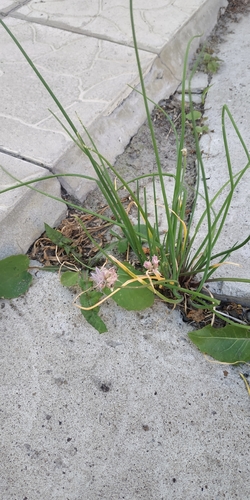
How to care for Chives
Watering
Chives (Allium schoenoprasum) like evenly moist soil that never dries out completely, but they hate sitting in water. Their shallow, grass-like roots drink quickly in warm weather and slowly in cool weather. Water when the top 2-3 cm of soil feels dry, and pour until water runs out of the drainage holes. Indoors, empty the saucer after 15 minutes so the roots do not rot.
Does it need water today?
Push your finger 2-3 cm into the soil near the base of the clump. If it feels dry and crumbly, water now. If it feels cool and damp, wait a day. You can also lift the pot: a dry pot feels noticeably lighter than a freshly watered one.
Chives wilt dramatically when thirsty, but the leaves usually perk up within a few hours after a good drink. If they are yellow and mushy at the base, you are watering too often rather than too little.
Overwatering
Chives grow from a bulb-like base and fine roots that need oxygen in the soil. When the pot stays soggy, the roots cannot breathe and start to rot, which is the most common reason indoor chives die. Cold weather makes this worse because the soil dries very slowly.
Symptoms: Yellowing leaves starting at the base, soft or mushy bulbs, a sour or rotten smell from the soil, fungus gnats hovering over the pot, and sudden collapse of the whole clump.
Solutions: Stop watering and let the soil dry to 3 cm deep. Tip the plant out, cut away any black or mushy bulbs and roots with clean scissors, and repot into fresh, gritty potting mix in a pot with drainage holes. Water sparingly for the next two weeks.
Underwatering
Chives have shallow roots and thin, hollow leaves that lose water quickly, especially in pots on sunny windowsills or in hot summer weather. Because the roots sit near the surface, the soil dries out faster than you may expect.
Symptoms: Leaves turn dull, grey-green, and limp, tips become brown and dry and crisp, and growth slows so the leaves stay short and thin.
Solutions: Water thoroughly until the soil is evenly moist, then check again in a day. Snip off dead or browned leaves at the base to encourage fresh growth. Mulch outdoor plants with 3-5 cm of compost or straw to hold moisture between waterings.
Sunlight
Chives (Allium schoenoprasum) grow best in full sun, which keeps their leaves dense, green, and flavorful. In partial shade they still grow, but they become floppier and taste milder. Strong light also helps the plant form the small flowers that are edible and attract bees.
- Ideal: Full sun · 6-8 hours of direct sun per day
- Tolerates: Full sun, Partial sun, Bright, indirect light
- Best spot in a room: At the window
- Artificial light: If you grow chives indoors without enough sun, use a full-spectrum LED grow light 15-30 cm above the plant for 12-14 hours a day. Keep the light on a timer so the plant gets a steady routine, and rotate the pot weekly so the leaves grow evenly.
Too little light
Chives need strong light to make the sugars that feed their leaves and bulbs. In low light they stretch toward any available brightness, using energy on height instead of thick, healthy foliage.
Symptoms: Long, pale, floppy leaves that lean toward the window, thin stems that bend or fall over, few or no flowers, and a weaker, less pungent flavor.
Solutions: Move the pot to the sunniest south- or west-facing window, or set it outdoors in full sun for part of the day. Add a grow light if needed, and trim the leaves to about 5 cm to encourage compact new growth.
Too much sun
Chives tolerate sun well, but in hot, dry conditions or behind glass the intense light and heat can scorch their thin leaves and dry the shallow root zone quickly.
Symptoms: Leaf tips turn white, pale yellow, or brown and crispy, leaves look bleached, and the plant wilts in the afternoon even when the soil is moist.
Solutions: Move the plant back a little from a hot south window or give it light afternoon shade during heatwaves, which are common in mid-summer. Water a little more often in hot weather and mulch the soil to keep roots cool.
Temperature
Chives (Allium schoenoprasum) are cold-hardy perennial bulbs that thrive in cool, temperate conditions. They die back to the ground in winter and regrow from bulbs each spring. They prefer 10 to 24°C during the growing season and tolerate hard frost, but they struggle in prolonged heat above about 30°C.
- Ideal: 10–24 °C
- Tolerates: -30–35 °C
- Hardiness zones: 3-9
Fertilizing
Chives grow mainly for their leaves, so they need steady nitrogen for green growth, along with phosphorus and potassium for healthy bulbs. Feed them lightly and regularly during active growth rather than heavily all at once, and avoid feeding them through winter when they are dormant.
- Slow-release fertilizer: Apply a balanced slow-release granular fertilizer once a year in early spring, as new growth begins. Chives in pots benefit from a light top-up of compost each spring instead.
- Balanced general-purpose liquid fertilizer (for example, 10-10-10), Compost or well-rotted manure, Slow-release granular fertilizer with balanced nutrients, Fish emulsion or seaweed-based liquid feed
Soil
Chives grow best in fertile, moisture-retentive soil that drains freely. They tolerate a range of soils but become weak and sparse in heavy clay or in sand that dries out in days. Their shallow, fibrous roots need consistent moisture without waterlogging.
- Loamy potting mix: Roughly 50% good-quality peat-free potting compost, 30% garden loam or topsoil, and 20% perlite or coarse sand
- Garden bed loam: Garden soil enriched with 3-5 cm of well-rotted compost worked into the top 20 cm
- Container mix for herbs: A commercial herb or vegetable mix with added grit or perlite to improve drainage
- pH 6–7
Repotting
Chives form dense clumps of thin, hollow bulbs and fibrous roots. Dividing the clump when repotting keeps the plant vigorous and gives you more plants for free.
- How often: every 2-3 years, or when the clump becomes crowded and the pot is full of bulbs and roots
- New pot: Choose a pot 2-5 cm wider than the root ball, about 15-20 cm across for a typical clump of chives, with at least one drainage hole
- Repotting season: Spring, Autumn
How to repot
- Tip the pot on its side and gently ease the root ball out, tapping the sides if needed
- Shake off loose old soil and tease the roots apart with your fingers
- Divide the clump into sections of 4-6 bulbs each, cutting through the root mass with a knife if the roots are tightly knotted
- Discard any dead, mushy, or dark-brown bulbs and roots
- Place a layer of fresh potting mix in the new pot, set each division upright at the same depth it grew before, and fill around the roots
- Firm the soil gently, leaving about 2 cm of space below the rim for watering, and water thoroughly until it drains
Pruning
Use clean, sharp scissors or a knife, and cut chive leaves to about 5 cm above the soil line. Never strip the plant bare; leave at least a third of the foliage so it can keep growing.
Pruning season: Spring, Summer, Autumn
How to prune
- Choose a dry morning so cut edges heal quickly.
- Gather a handful of leaves at the outer edge of the clump and cut them about 5 cm above the soil.
- Work around the clump, cutting leaves evenly so no single area is left bare.
- If flower buds appear, snip them off at the base unless you want to harvest the edible pink flowers.
- Remove any brown, damaged, or yellowing leaves at the base to keep the clump airy.
- Water lightly at the base and add a thin layer of compost around the clump to support regrowth.
Propagation
Division of clumps · Spring, Autumn
- Wait until your chives have formed a dense clump, usually after two or three years in the same spot.
- In early spring, when new green shoots are about 5 cm tall, or in early autumn, dig up the whole clump with a garden fork.
- Shake off loose soil and gently pull or cut the clump into smaller sections, each with roots and several bulbs attached.
- Replant each division at the same depth it grew before, spacing them about 20 cm apart.
- Water well and keep the soil evenly moist for the first two weeks while the roots settle.
Seed sowing · Spring, Autumn
- Sow chive seeds indoors about 6 to 8 weeks before the last spring frost, or sow outdoors in autumn in mild climates.
- Fill a seed tray with fine, moist seed compost and scatter the seeds on the surface, then cover them with about 0.5 cm of compost.
- Keep the tray at 15 to 20 °C; chive seed usually sprouts in 7 to 14 days.
- Once seedlings have two true leaves, thin them or move them into individual pots.
- Harden seedlings off for a week before planting outdoors, after the danger of frost has passed.
Dividing chives every three to four years keeps the clump vigorous and prevents the centre from becoming woody. Chive seeds lose viability quickly, so use fresh seed for the best results.
About Chives
Also known as: Chive, Common chive, Graslauch
- Plant type: herb, bulbous perennial
- Lifespan: perennial
- Distribution: Native to temperate Europe, northern Asia and North America, including mountain and arctic regions.
- Mature height: 15-40 cm
- Bloom time: Late spring to early summer
Pets · People
Pets: Safe · People: Safe. Chives are listed as non-toxic to dogs, cats and horses by the ASPCA; the mild onion compounds are only a concern in large quantities.
Common problems
- Rust fungus: Orange pustules appear on leaves in humid conditions; remove affected leaves and improve airflow.
- Onion thrips: Tiny insects cause silvery streaks and distorted tips; wash plants with water or use insecticidal soap.
- Bulb rot: Waterlogged soil causes soft, yellowing bases and collapse; improve drainage and reduce watering.
- Leaf tip dieback: Brown, dry tips usually result from drought stress or a lack of water in summer heat.
- Downy mildew: Grey fuzz on leaves in wet, cool weather; space plants for airflow and water at the base.
Uses
Chives are a staple culinary herb, with finely snipped leaves added to soups, eggs, potatoes, dressings and cream cheese; they lose flavour when cooked for long. The flowers are used in salads and vinegars. In traditional European medicine the plant was used as a mild digestive and appetite stimulant, and it is a useful component of kitchen gardens for its pest-deterring scent.
Is it edible?
Leaves and flowers are edible; the bulbs are edible but rarely harvested for the kitchen. Use fresh leaves, snipped with scissors.
History & legends
Chives have been cultivated since ancient times in China and Europe, and were valued by Roman and medieval gardeners for medicine and flavour. In old European folklore, chives were hung over doorways to ward off evil and were believed to protect against illness.
Did you know?
Chives are one of the few Allium species whose leaves are eaten, and their flowers are edible too, tasting faintly of onion.
Frequently asked questions
How often should I water Chives?
every 7 days. Chives (Allium schoenoprasum) like evenly moist soil that never dries out completely, but they hate sitting in water. Their shallow, grass-like roots drink quickly in warm weather and slowly in cool weather. Water when the top 2-3 cm of soil feels dry, and pour until water runs out of the drainage holes. Indoors, empty the saucer after 15 minutes so the roots do not rot. Push your finger 2-3 cm into the soil near the base of the clump. If it feels dry and crumbly, water now. If it feels cool and damp, wait a day. You can also lift the pot: a dry pot feels noticeably lighter than a freshly watered one.
How much light does Chives need?
Full sun (6-8 hours of direct sun per day). Chives (Allium schoenoprasum) grow best in full sun, which keeps their leaves dense, green, and flavorful. In partial shade they still grow, but they become floppier and taste milder. Strong light also helps the plant form the small flowers that are edible and attract bees.
What temperature does Chives like?
10–24 °C. Chives (Allium schoenoprasum) are cold-hardy perennial bulbs that thrive in cool, temperate conditions. They die back to the ground in winter and regrow from bulbs each spring. They prefer 10 to 24°C during the growing season and tolerate hard frost, but they struggle in prolonged heat above about 30°C.
Is Chives toxic to cats and dogs?
It is safe for cats and dogs. Chives are listed as non-toxic to dogs, cats and horses by the ASPCA; the mild onion compounds are only a concern in large quantities.
What are the most common problems of Chives?
Rust fungus: Orange pustules appear on leaves in humid conditions; remove affected leaves and improve airflow. Onion thrips: Tiny insects cause silvery streaks and distorted tips; wash plants with water or use insecticidal soap. Bulb rot: Waterlogged soil causes soft, yellowing bases and collapse; improve drainage and reduce watering. Leaf tip dieback: Brown, dry tips usually result from drought stress or a lack of water in summer heat. Downy mildew: Grey fuzz on leaves in wet, cool weather; space plants for airflow and water at the base.
When should I repot Chives?
every 2-3 years, or when the clump becomes crowded and the pot is full of bulbs and roots. Chives form dense clumps of thin, hollow bulbs and fibrous roots. Dividing the clump when repotting keeps the plant vigorous and gives you more plants for free.
How do I propagate Chives?
Division of clumps, Seed sowing. Wait until your chives have formed a dense clump, usually after two or three years in the same spot. In early spring, when new green shoots are about 5 cm tall, or in early autumn, dig up the whole clump with a garden fork. Shake off loose soil and gently pull or cut the clump into smaller sections, each with roots and several bulbs attached. Replant each division at the same depth it grew before, spacing them about 20 cm apart. Water well and keep the soil evenly moist for the first two weeks while the roots settle.
How this guide was written
Verdiss writes each guide with AI from botanical references and checks the species against iNaturalist and Plants of the World Online (Kew). Readers can rate every guide in the app.
Sources
Verdiss's information is for general guidance. Never eat or use a plant as medicine based on an app: ask a professional.