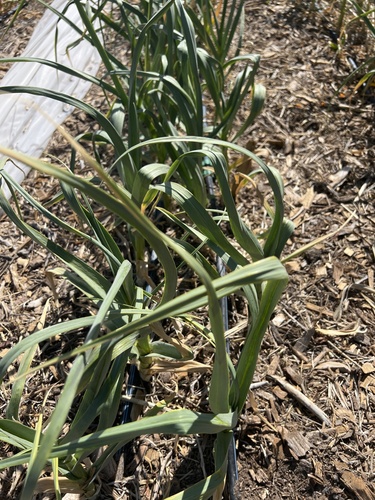
How to care for Garlic
Watering
Garlic (Allium sativum) grows from cloves and needs steady moisture while its roots establish, then less water as the bulbs mature. Keep the soil evenly moist but never soggy during active growth, and stop watering about 2 to 3 weeks before harvest so the bulb skins can dry and cure. Indoor garlic grown in a pot needs more frequent checks than garlic in the ground, because containers dry out faster and can waterlog if the drainage hole is blocked.
Does it need water today?
Push your finger about 3 to 4 cm into the soil near the plant. If it feels dry at that depth, water thoroughly; if it feels moist, wait a day or two and check again. You can also lift the pot: a light pot means it is dry, a heavy pot means it still holds water.
Water at the base of the plant in the morning so the leaves stay dry, since damp foliage in humid air can encourage fungal disease in garlic.
Overwatering
Garlic bulbs rot quickly in waterlogged soil because the cloves need air around their roots to stay healthy. Wet, cold soil also invites fungal diseases such as white rot (Sclerotium cepivorum) and basal rot, which can destroy a crop.
Symptoms: Yellowing lower leaves, a soft or mushy bulb base, a sour or rotten smell from the soil, and wilting even though the soil is wet.
Solutions: Stop watering and let the top few centimetres dry out. Improve drainage by adding grit or moving the pot to a raised spot. In the garden, lift affected bulbs, remove rotten material, and plant in a better-drained bed next season.
Underwatering
Garlic has shallow roots and needs consistent moisture to form plump bulbs, especially during leaf growth in spring. Prolonged drought stops bulb swelling and makes the cloves small and hard.
Symptoms: Leaf tips turning brown and dry, leaves curling or drooping, and small bulbs with thin, papery cloves at harvest.
Solutions: Water deeply until moisture reaches the root zone, then keep the soil evenly damp. Apply a 5 cm layer of mulch such as straw to slow evaporation. Increase watering frequency during hot, dry weather.
Sunlight
Garlic (Allium sativum) bulbs need full sun to build energy for forming large bulbs. Plants grown in partial shade produce leaves but smaller bulbs. Garlic is a cool-season crop that grows its foliage in autumn and winter, so it benefits from full sun during the long spring days before harvest in early summer.
- Ideal: Full sun · 6-8 hours of direct sun
- Tolerates: Full sun, Partial sun
- Best spot in a room: At the window
- Artificial light: If growing garlic indoors, use a full-spectrum LED grow light set 15 to 30 cm above the plant for 12 to 14 hours a day. Indoor garlic rarely forms full-sized bulbs, so it is best grown indoors mainly as a novelty or for green garlic shoots.
Too little light
Garlic forms bulbs through photosynthesis, so weak light makes the plant put energy into tall, floppy leaves instead of swelling the cloves underground. Low light is one of the main reasons home-grown garlic produces small bulbs.
Symptoms: Long, pale, weak leaves that flop over, plants that grow slowly, and very small or single-clove bulbs at harvest.
Solutions: Move the pot to the sunniest window, ideally a south-facing one, or supplement with a grow light. In the garden, choose a site clear of tree and building shade and avoid planting too close to taller crops.
Too much sun
Garlic tolerates strong sun well in cool climates, but in very hot, dry summers intense afternoon heat can stress the leaves and dry out the soil faster. Garlic naturally finishes its growth in early summer, so extreme heat late in the season can reduce bulb quality.
Symptoms: Leaf tips that turn brown and crispy, pale or bleached leaves, and bulbs that split or dry out prematurely.
Solutions: Provide light afternoon shade with a shade cloth when temperatures exceed about 30°C. Mulch around the plants to keep the roots cool and the soil moist, and water more often during heat waves.
Temperature
Garlic is a hardy bulb crop that needs a cold period to form good bulbs. Plant cloves in autumn so they experience winter chill, then harvest in early summer when the lower leaves yellow. Garlic grows best with cool, moist conditions while leaves develop and warm, dry weather as bulbs mature.
- Ideal: 0–24 °C
- Tolerates: -25–35 °C
- Hardiness zones: 3-9
Fertilizing
Garlic is a heavy feeder with a shallow root system, so it needs steady nitrogen early on for leaf growth. Nitrogen should taper off in late spring so bulbs can form and wrap properly. Good soil drainage matters as much as nutrients.
- Slow-release fertilizer: Work a balanced slow-release or compost amendment into the bed once in autumn before planting. Do not add more slow-release fertilizer after the bulbs begin forming in late spring.
- Compost or well-rotted manure worked into the soil before planting, Balanced granular fertilizer with equal N-P-K, such as 10-10-10, Fish emulsion or liquid seaweed for quick nitrogen during leaf growth, Sulfur-rich fertilizer, since garlic uses sulfur for flavor compounds
Soil
Allium sativum needs loose, fertile, well-draining soil that stays evenly moist but never waterlogged. Heavy clay that holds water can rot the cloves, so drainage is the first priority.
- Loamy garden soil: Roughly 40% sand, 40% silt, and 20% clay, enriched with well-rotted compost
- Sandy loam potting mix: A blend of garden loam, coarse sand, and compost, with perlite added for extra drainage
- Container mix for vegetables: Peat-free or peat-based potting soil combined with compost and a handful of slow-release organic fertiliser
- pH 6–7.5
Repotting
Garlic grows from individual cloves, which are replanted pointy end up. Containers need drainage holes, and the bulbs need full sun and steady moisture without waterlogging.
- How often: Every 1-2 years for container-grown garlic, or replant fresh cloves each season; garlic is an annual and is not repotted like perennial houseplants
- New pot: A container at least 25-30 cm deep and wide, with 10-15 cm between bulbs, so each Allium sativum bulb has room to form a full head
- Repotting season: Autumn, Spring
How to repot
- Fill the container with fresh, well-draining mix to within 5 cm of the rim.
- Dig holes 5 cm deep, spacing cloves 10-15 cm apart.
- Place each clove pointy end up with the flat, rooting base down.
- Cover the cloves with soil, firm it gently, and water thoroughly so the mix settles.
- Mulch lightly with straw to keep moisture even and suppress weeds.
- When planting in autumn, expect roots to form before winter; in spring, plant as soon as the soil can be worked.
Pruning
Garlic is not pruned in the usual sense. The only cutting it needs is removing the flower stalk, called the scape, from hardneck varieties. Softneck varieties rarely send up scapes and need no cutting at all. Remove any yellowing or damaged outer leaves only if they are clearly diseased; the green leaves are needed to feed the bulb until harvest.
Pruning season: Summer
How to prune
- Identify the scape as the tall, stiff stalk rising from the centre of the leaves, usually before the flower head opens.
- Cut the scape cleanly at the point where it leaves the uppermost leaf, using sharp shears.
- Save the scapes to eat; they are tender and can be chopped into cooking, or pickled.
- Stop cutting once most scapes are removed, and leave the remaining leaves green and healthy.
- Stop watering about two weeks before harvest, and allow the leaves to yellow naturally before lifting the bulbs.
Propagation
Planting garlic cloves · Autumn, Spring
- Buy certified disease-free seed garlic from a nursery or garden centre rather than supermarket bulbs, which are often treated to stop sprouting.
- Separate the bulb into individual cloves just before planting, keeping the papery skin on each clove and leaving the basal plate intact.
- Plant autumn cloves about 5 cm deep with the pointed end up and 15 cm apart in rows 30 cm apart, ideally four to six weeks before the ground freezes.
- Plant spring cloves in the same way as soon as the soil can be worked, aiming for a planting date at least two months before midsummer.
- Water lightly after planting and keep the soil evenly moist but never waterlogged until shoots emerge.
Growing from bulbils (topsetting) · Summer, Autumn
- Let some hardneck garlic varieties flower; they produce a cluster of small bulbils, sometimes called topsets, at the top of the flower stalk, known as the scape.
- Cut the scape when it begins to curl once or twice, which directs energy into the bulbils, then let the bulbils mature until their papery covering dries.
- Harvest the bulbils in late summer and store them dry until autumn.
- Plant bulbils about 2 cm deep in autumn; they will form small single bulbs in the first year.
- Expect bulbils to take one to two seasons to reach full-size bulbs, so be patient.
Choose hardneck varieties in cold climates and softneck varieties in milder areas, since softneck types store longer while hardneck types produce more reliable bulbs in frost.
About Garlic
Also known as: Common garlic, Clove garlic, Ail
- Plant type: bulb, herb
- Lifespan: perennial, usually grown as an annual or biennial crop
- Distribution: Native to Central Asia, most likely the Tian Shan and Pamir region, and its exact wild origin remains debated.
- Mature height: 30 to 90 cm
- Bloom time: Early to mid summer when flowering occurs
Pets · People
Pets: Toxic · People: Toxic. Contains thiosulfates and allyl sulfides that can damage red blood cells in dogs and cats (ASPCA lists Allium species as toxic); ingestion of raw or large amounts causes vomiting, diarrhoea and possible anaemia. Keep bulbs away from pets and children.
Common problems
- White rot: Fungal disease (Sclerotium cepivorum) causing yellowing leaves and a white fluffy mould at the base; no effective cure, so avoid planting in infested soil.
- Onion thrips: Tiny insects that scar leaves with silver streaks; control with water sprays and regular weeding.
- Bulb rot: Soft, rotten bulbs caused by waterlogged soil; improve drainage and reduce watering late in the season.
- Rust: Orange pustules on leaves in humid weather; remove affected leaves and improve airflow.
Uses
Garlic is a central culinary spice worldwide, used fresh, roasted, dried and powdered. It has long been used in traditional medicine for digestive and cardiovascular purposes, and in folk remedies, though clinical evidence is mixed.
Is it edible?
Bulbs (cloves), young green shoots, and flower scapes are all edible; raw cloves are pungent and cooking mellows the flavour.
History & legends
Garlic was used by ancient Egyptians, who fed it to labourers building the pyramids according to Herodotus, and it appears in Sumerian and Indian texts. In many cultures it was believed to ward off evil and vampires, and it became a symbol of protection and good health.
Did you know?
Garlic cloves are planted pointed end up, and each clove grown from the bulb produces a new whole bulb, so one clove becomes a full head.
Frequently asked questions
How often should I water Garlic?
every 4 days. Garlic (Allium sativum) grows from cloves and needs steady moisture while its roots establish, then less water as the bulbs mature. Keep the soil evenly moist but never soggy during active growth, and stop watering about 2 to 3 weeks before harvest so the bulb skins can dry and cure. Indoor garlic grown in a pot needs more frequent checks than garlic in the ground, because containers dry out faster and can waterlog if the drainage hole is blocked. Push your finger about 3 to 4 cm into the soil near the plant. If it feels dry at that depth, water thoroughly; if it feels moist, wait a day or two and check again. You can also lift the pot: a light pot means it is dry, a heavy pot means it still holds water.
How much light does Garlic need?
Full sun (6-8 hours of direct sun). Garlic (Allium sativum) bulbs need full sun to build energy for forming large bulbs. Plants grown in partial shade produce leaves but smaller bulbs. Garlic is a cool-season crop that grows its foliage in autumn and winter, so it benefits from full sun during the long spring days before harvest in early summer.
What temperature does Garlic like?
0–24 °C. Garlic is a hardy bulb crop that needs a cold period to form good bulbs. Plant cloves in autumn so they experience winter chill, then harvest in early summer when the lower leaves yellow. Garlic grows best with cool, moist conditions while leaves develop and warm, dry weather as bulbs mature.
Is Garlic toxic to cats and dogs?
It is toxic to cats and dogs: keep it out of their reach. Contains thiosulfates and allyl sulfides that can damage red blood cells in dogs and cats (ASPCA lists Allium species as toxic); ingestion of raw or large amounts causes vomiting, diarrhoea and possible anaemia. Keep bulbs away from pets and children.
What are the most common problems of Garlic?
White rot: Fungal disease (Sclerotium cepivorum) causing yellowing leaves and a white fluffy mould at the base; no effective cure, so avoid planting in infested soil. Onion thrips: Tiny insects that scar leaves with silver streaks; control with water sprays and regular weeding. Bulb rot: Soft, rotten bulbs caused by waterlogged soil; improve drainage and reduce watering late in the season. Rust: Orange pustules on leaves in humid weather; remove affected leaves and improve airflow.
When should I repot Garlic?
Every 1-2 years for container-grown garlic, or replant fresh cloves each season; garlic is an annual and is not repotted like perennial houseplants. Garlic grows from individual cloves, which are replanted pointy end up. Containers need drainage holes, and the bulbs need full sun and steady moisture without waterlogging.
How do I propagate Garlic?
Planting garlic cloves, Growing from bulbils (topsetting). Buy certified disease-free seed garlic from a nursery or garden centre rather than supermarket bulbs, which are often treated to stop sprouting. Separate the bulb into individual cloves just before planting, keeping the papery skin on each clove and leaving the basal plate intact. Plant autumn cloves about 5 cm deep with the pointed end up and 15 cm apart in rows 30 cm apart, ideally four to six weeks before the ground freezes. Plant spring cloves in the same way as soon as the soil can be worked, aiming for a planting date at least two months before midsummer. Water lightly after planting and keep the soil evenly moist but never waterlogged until shoots emerge.
How this guide was written
Verdiss writes each guide with AI from botanical references and checks the species against iNaturalist and Plants of the World Online (Kew). Readers can rate every guide in the app.
Sources
Verdiss's information is for general guidance. Never eat or use a plant as medicine based on an app: ask a professional.