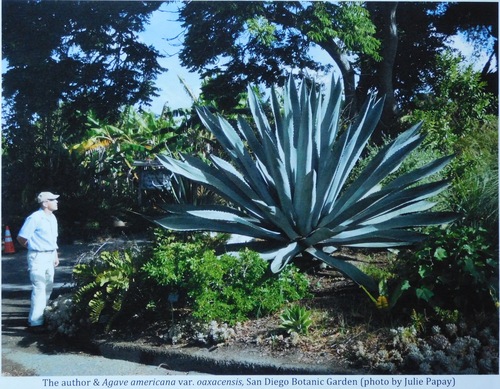
How to care for American century plant
Watering
The American century plant (Agave americana) is a succulent built to store water in its thick, fleshy leaves, so it prefers to dry out fully between drinks. Water deeply, then leave the soil to dry completely before watering again. In winter, when growth slows, water only sparingly, perhaps once every six to eight weeks indoors. Always use a pot with a drainage hole and a gritty cactus or succulent mix.
Does it need water today?
Push a finger or a wooden skewer 5 to 8 cm into the soil. If it comes out dry and clean, water. If there is any dampness or dark soil clinging to it, wait. Also lift the pot: a very light pot means the soil has dried through. Leaves that look plump and firm are a good sign; wrinkled or soft lower leaves mean it needs attention.
Water at the soil level and keep water off the central rosette, where water can sit and cause rot. Empty any saucer within 30 minutes of watering.
Overwatering
Agave americana stores large reserves of water in its leaves and roots, and its roots rot quickly in soggy soil. Constantly wet conditions starve the roots of oxygen and let fungi and bacteria take hold, which is the most common way this species dies indoors.
Symptoms: Soft, mushy leaves at the base, dark or translucent patches, a sour or rotten smell, black roots, and a leaning or loose rosette that pulls out easily.
Solutions: Stop watering immediately. Tip the plant out, cut away any black or mushy roots with a clean knife, and let the cut areas dry for a few days. Repot into fresh, dry gritty mix in a pot with a drainage hole, and wait about a week before watering lightly.
Underwatering
Although tough, Agave americana still needs water to fill its leaves and feed growth. Long dry spells beyond what its leaf reserves can handle cause it to shrink and stress, especially when it is young or in a small pot.
Symptoms: Leaves that look dull grey-green, curl inward, or wrinkle along their length, and a slow, stalled growth. Lower leaves may dry and turn brown at the tips.
Solutions: Give a thorough soak once the soil is fully dry, letting water drain freely. Then return to your normal schedule. Leaves that have only wrinkled usually recover within a few weeks. Brown, papery leaves will not regreen, so trim them off cleanly at the base.
Sunlight
The American century plant thrives in strong, direct sun, which keeps its leaves compact, sturdy, and colored a healthy blue-green. In its native dry, open landscape of Mexico and the southern United States, it receives intense sun for most of the day. Indoors, it needs the brightest spot you have and will stretch and lose its shape in dim corners.
- Ideal: Full sun · 6-8 hours of direct sun
- Tolerates: Full sun, Partial sun, Bright, indirect light
- Best spot in a room: At the window
- Artificial light: If natural light is limited, use a full-spectrum LED grow light placed 15 to 30 cm above the plant for 10 to 12 hours a day. Rotate the pot every week so all sides receive light and the rosette grows evenly.
Too little light
Agave americana needs intense light to build the thick, tough leaves that define it. In low light, its growth becomes weak and elongated, and the rosette loses its structure and tight shape.
Symptoms: Pale or yellowish-green leaves, leaves that are long, thin, and floppy, a leaning rosette, and very slow growth or no growth at all.
Solutions: Move the plant to the sunniest south- or west-facing window, or outdoors into full sun once temperatures stay above 10°C. Increase light gradually over one to two weeks to avoid sunburn. Add a grow light if you cannot provide enough natural sun.
Too much sun
Although it loves sun, Agave americana can scorch when moved suddenly from a shaded spot to intense direct light, especially through glass that magnifies heat. Its thick leaves can be damaged when conditions change too quickly.
Symptoms: Bleached white or tan patches on the leaves, brown scorched spots, or leaf tips that look dry and crispy, mostly on the side facing the sun.
Solutions: Acclimatize the plant over one to two weeks by adding an hour or so of direct sun each day. Move it slightly away from hot glass during the midday hours if scorching appears. Scorched patches will not heal, so leave them alone and let new growth replace them.
Temperature
American century plant grows best in warm, sunny conditions and tolerates short cold spells once it is established. Keep it above about 5°C during active growth, and protect it from prolonged frost, which causes most losses.
- Ideal: 10–30 °C
- Tolerates: -10–45 °C
- Hardiness zones: 8-11
Fertilizing
American century plant grows slowly and needs little feeding. Too much nitrogen produces soft, weak leaves that are more prone to rot and frost damage, so choose a fertilizer with low nitrogen and feed only during the warm growing season.
- Slow-release fertilizer: once a year in early spring, just before active growth begins
- slow-release cactus and succulent fertilizer, balanced granular fertilizer with low nitrogen, diluted liquid succulent fertilizer with a low nitrogen ratio
Soil
American century plant needs a fast-draining, mineral-heavy soil. Its thick leaves store water, so soggy soil around the roots quickly leads to rot. Good drainage matters more than fertility.
- Cactus and succulent mix: About 50-60% mineral material such as pumice, perlite or coarse sand, with 40-50% peat-free potting compost
- Gritty loam mix: Equal parts garden loam or topsoil, coarse sand and perlite or pumice
- Pumice-rich mineral mix: Roughly 70% pumice or lava rock with 30% sharp sand and a small amount of compost
- pH 6.1–7.8
Repotting
American century plant has a shallow, fleshy root system and sharp leaves, so repot with thick gloves and a dry, well-drained mix. Repotting is best done in late spring or early summer when the plant is actively growing.
- How often: Every 3-5 years, or when the plant outgrows its pot or becomes top-heavy
- New pot: Choose a pot only 2-5 cm wider than the root ball, with drainage holes; a heavy terracotta or ceramic pot keeps the plant stable as it grows
- Repotting season: Spring, Summer
How to repot
- Lay the plant on its side on a sheet of newspaper or in a shaded spot to make handling easier
- Gently tip the plant out of its old pot, supporting the base of the leaves rather than pulling on them
- Shake or brush away old soil and trim any dead, black or mushy roots with clean, sharp scissors
- If you are separating offsets, cut them away at their base with a sharp knife and let the cut ends dry for 2-3 days before potting them
- Set the plant in the new pot at the same depth it was growing before, then fill around the roots with fresh mix and firm it lightly
- Leave the soil surface about 2 cm below the pot rim so water does not run over the edge
Pruning
Use only sharp, clean tools and cut close to the stem without damaging the central rosette. Never remove more than a few lower leaves at a time, because the leaves store water and nutrients the plant needs. Keep a close eye on the plant's health, since Agave americana rarely regrows removed leaves.
Pruning season: Spring, Summer, Autumn
How to prune
- Identify leaves that are dead, brown, or clearly damaged at the outer base of the rosette.
- Sterilize your knife or pruners with rubbing alcohol before each cut.
- Cut each leaf off close to the stem, making a clean, straight slice.
- Dust the cut surface with ground cinnamon or sulfur powder to help seal it against infection.
- Place the plant in a dry, sunny spot for a few days so the wounds can callus over before watering resumes.
Propagation
Offsets (pups) separation · Spring, Summer
- Wait until the mother plant has a cluster of offsets, usually small rosettes growing at the base, each at least 15 cm tall with some roots or a visible base.
- Use a clean, sharp knife or pruners to cut each offset away from the mother plant, keeping as many roots as possible.
- Let the cut end dry in a shaded, airy spot for 5 to 7 days until a firm callus forms.
- Plant the offset in a pot filled with fast-draining cactus or succulent mix, setting it just deep enough to stand upright.
- Water lightly only once the soil is fully dry, and keep the pot in bright indirect light at 18 to 30°C.
Bulbils from flower stalk · Summer
- Look for small plantlets forming along the flower stalk of an older plant, which can appear after the flowering period.
- Once a bulbil has its own small leaves and a few roots, gently snap it from the stalk.
- Set the bulbil on top of dry gritty mix, lightly pressing it so the base touches the soil.
- Mist the surface lightly every few days to keep the mix barely moist while roots establish.
- Move the young plant to brighter light gradually as new leaves appear.
Seed sowing · Spring
- Collect dry seed capsules after the flowers fade and the pods split open, which can take many months after flowering.
- Sow seeds on the surface of a sterile, sandy seed mix in a shallow tray and cover them with only a thin layer of grit.
- Keep the tray warm at about 22 to 26°C and lightly moist, with bright light but no direct midday sun.
- Expect germination over several weeks, and keep seedlings in the tray until they are large enough to handle safely.
- Be patient, because seedlings grow very slowly and may take several years to reach a mature size.
Offsets are the most reliable method for home gardeners. Let each cut dry fully before planting, because wet wounds are the main cause of rot in young Agave americana plants.
About American century plant
Also known as: Century plant, Maguey, Great agave, American aloe
- Plant type: succulent, rosette plant
- Lifespan: perennial, monocarpic (dies after flowering)
- Distribution: Native to eastern and central Mexico, where it grows on dry hillsides and open scrub.
- Mature height: Leaves 1-2 m long; flowering stalk 6-12 m tall
- Bloom time: Late spring to summer, once in the plant's life
Pets · People
Pets: Mildly toxic · People: Mildly toxic. The sap can cause skin irritation and contact dermatitis, and ingestion may cause vomiting, diarrhoea and stomach upset. The sharp leaf tips pose a physical injury risk, so keep it out of reach of children and pets.
Common problems
- Root and crown rot: Caused by waterlogged soil; leaves collapse at the base and the plant softens. Prevent with fast-draining soil and sparing watering.
- Mealybugs: White cottony pests that hide between leaf bases; treat with isopropyl alcohol on a cotton swab.
- Frost damage: Leaf tips and centres turn brown or mushy after cold, wet weather; keep dry and protect from frost.
- Sunburn or etiolation: Pale, stretched growth in low light, or scorched patches after sudden exposure to strong sun.
- Leaf spot fungi: Brown spots on leaves from excess moisture; remove affected leaves and improve airflow.
Uses
Widely grown as an ornamental in gardens, xeriscapes and containers across warm regions. In Mexico, its sap is fermented to make pulque and its fibres have been used for rope, paper and cloth. The plant also supplies sisal-like fibre and is grown for mezcal and other agave spirits in some regions.
Is it edible?
The flower stalk and the heart (piña) can be cooked and eaten after roasting to break down the fructans; raw leaves are not edible due to saponins and spines.
History & legends
Agaves have been central to Mesoamerican culture for millennia, used for food, drink and fibre, and associated with deities and fertility in traditional beliefs. After introduction to Europe in the 16th century, the plant became known as the century plant because of the myth that it bloomed only once every hundred years, though in reality the interval is typically 10 to 30 years.
Did you know?
Despite its common name, Agave americana is not a cactus and is not native to America; it is a Mexican plant that was introduced to Europe and elsewhere, and the name reflects a mistaken early assumption about its origin.
Frequently asked questions
How often should I water American century plant?
every 21 days. The American century plant (Agave americana) is a succulent built to store water in its thick, fleshy leaves, so it prefers to dry out fully between drinks. Water deeply, then leave the soil to dry completely before watering again. In winter, when growth slows, water only sparingly, perhaps once every six to eight weeks indoors. Always use a pot with a drainage hole and a gritty cactus or succulent mix. Push a finger or a wooden skewer 5 to 8 cm into the soil. If it comes out dry and clean, water. If there is any dampness or dark soil clinging to it, wait. Also lift the pot: a very light pot means the soil has dried through. Leaves that look plump and firm are a good sign; wrinkled or soft lower leaves mean it needs attention.
How much light does American century plant need?
Full sun (6-8 hours of direct sun). The American century plant thrives in strong, direct sun, which keeps its leaves compact, sturdy, and colored a healthy blue-green. In its native dry, open landscape of Mexico and the southern United States, it receives intense sun for most of the day. Indoors, it needs the brightest spot you have and will stretch and lose its shape in dim corners.
What temperature does American century plant like?
10–30 °C. American century plant grows best in warm, sunny conditions and tolerates short cold spells once it is established. Keep it above about 5°C during active growth, and protect it from prolonged frost, which causes most losses.
Is American century plant toxic to cats and dogs?
It is mildly toxic to cats and dogs. The sap can cause skin irritation and contact dermatitis, and ingestion may cause vomiting, diarrhoea and stomach upset. The sharp leaf tips pose a physical injury risk, so keep it out of reach of children and pets.
What are the most common problems of American century plant?
Root and crown rot: Caused by waterlogged soil; leaves collapse at the base and the plant softens. Prevent with fast-draining soil and sparing watering. Mealybugs: White cottony pests that hide between leaf bases; treat with isopropyl alcohol on a cotton swab. Frost damage: Leaf tips and centres turn brown or mushy after cold, wet weather; keep dry and protect from frost. Sunburn or etiolation: Pale, stretched growth in low light, or scorched patches after sudden exposure to strong sun. Leaf spot fungi: Brown spots on leaves from excess moisture; remove affected leaves and improve airflow.
When should I repot American century plant?
Every 3-5 years, or when the plant outgrows its pot or becomes top-heavy. American century plant has a shallow, fleshy root system and sharp leaves, so repot with thick gloves and a dry, well-drained mix. Repotting is best done in late spring or early summer when the plant is actively growing.
How do I propagate American century plant?
Offsets (pups) separation, Bulbils from flower stalk, Seed sowing. Wait until the mother plant has a cluster of offsets, usually small rosettes growing at the base, each at least 15 cm tall with some roots or a visible base. Use a clean, sharp knife or pruners to cut each offset away from the mother plant, keeping as many roots as possible. Let the cut end dry in a shaded, airy spot for 5 to 7 days until a firm callus forms. Plant the offset in a pot filled with fast-draining cactus or succulent mix, setting it just deep enough to stand upright. Water lightly only once the soil is fully dry, and keep the pot in bright indirect light at 18 to 30°C.
How this guide was written
Verdiss writes each guide with AI from botanical references and checks the species against iNaturalist and Plants of the World Online (Kew). Readers can rate every guide in the app.
Sources
Verdiss's information is for general guidance. Never eat or use a plant as medicine based on an app: ask a professional.